
-The museum of Bled Castle is a true treasure of Slavic history in Slovenia!
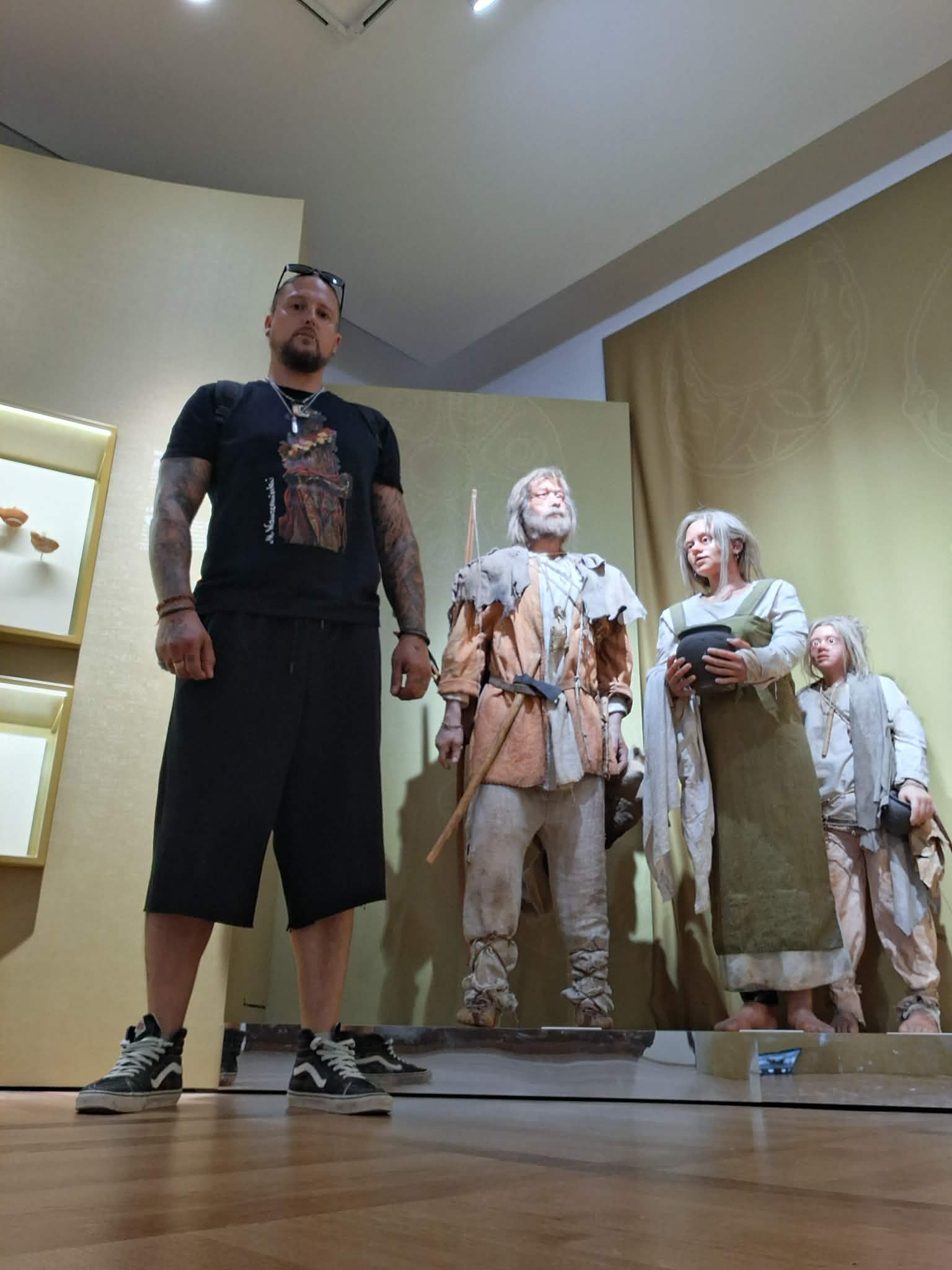
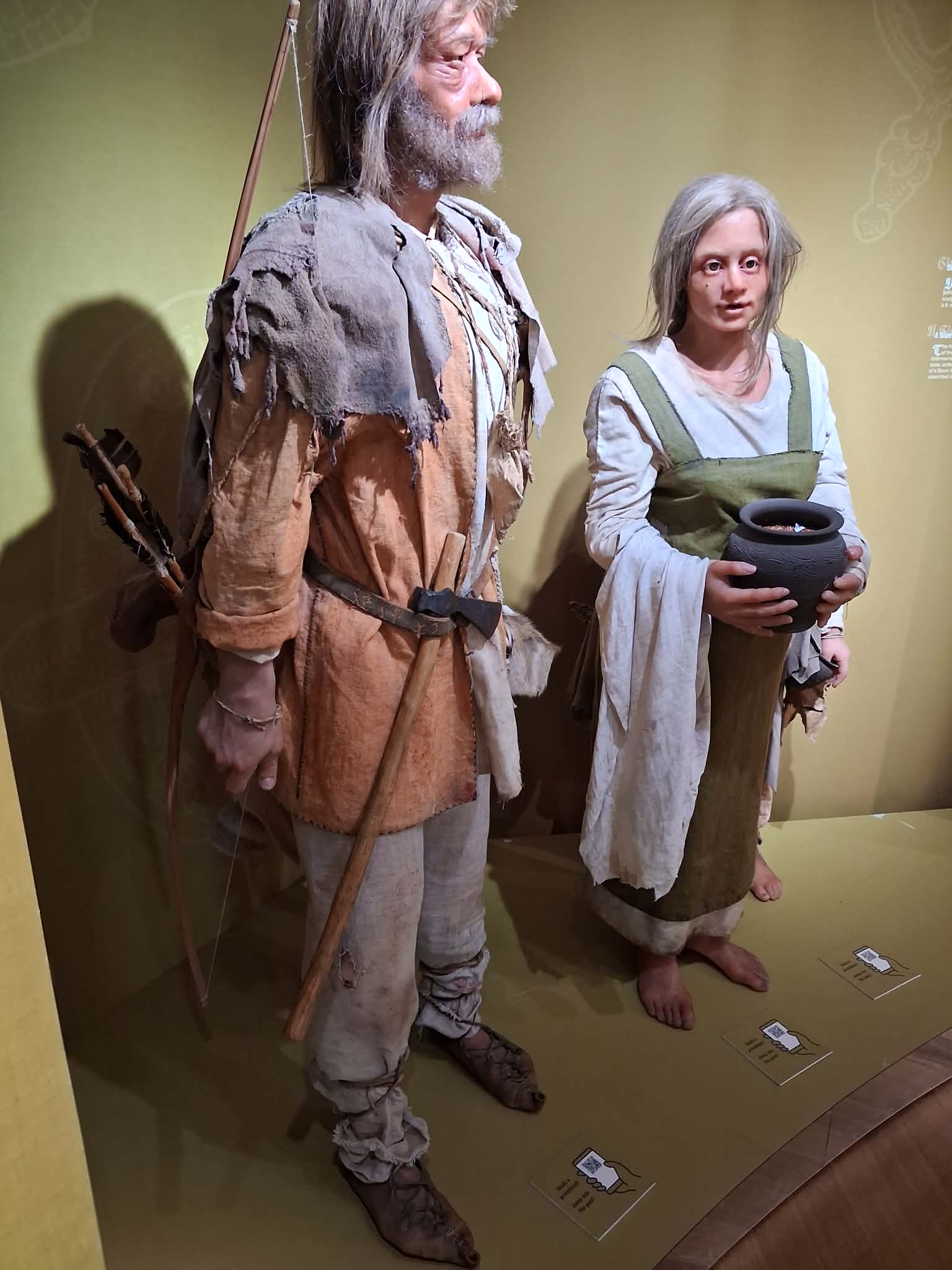
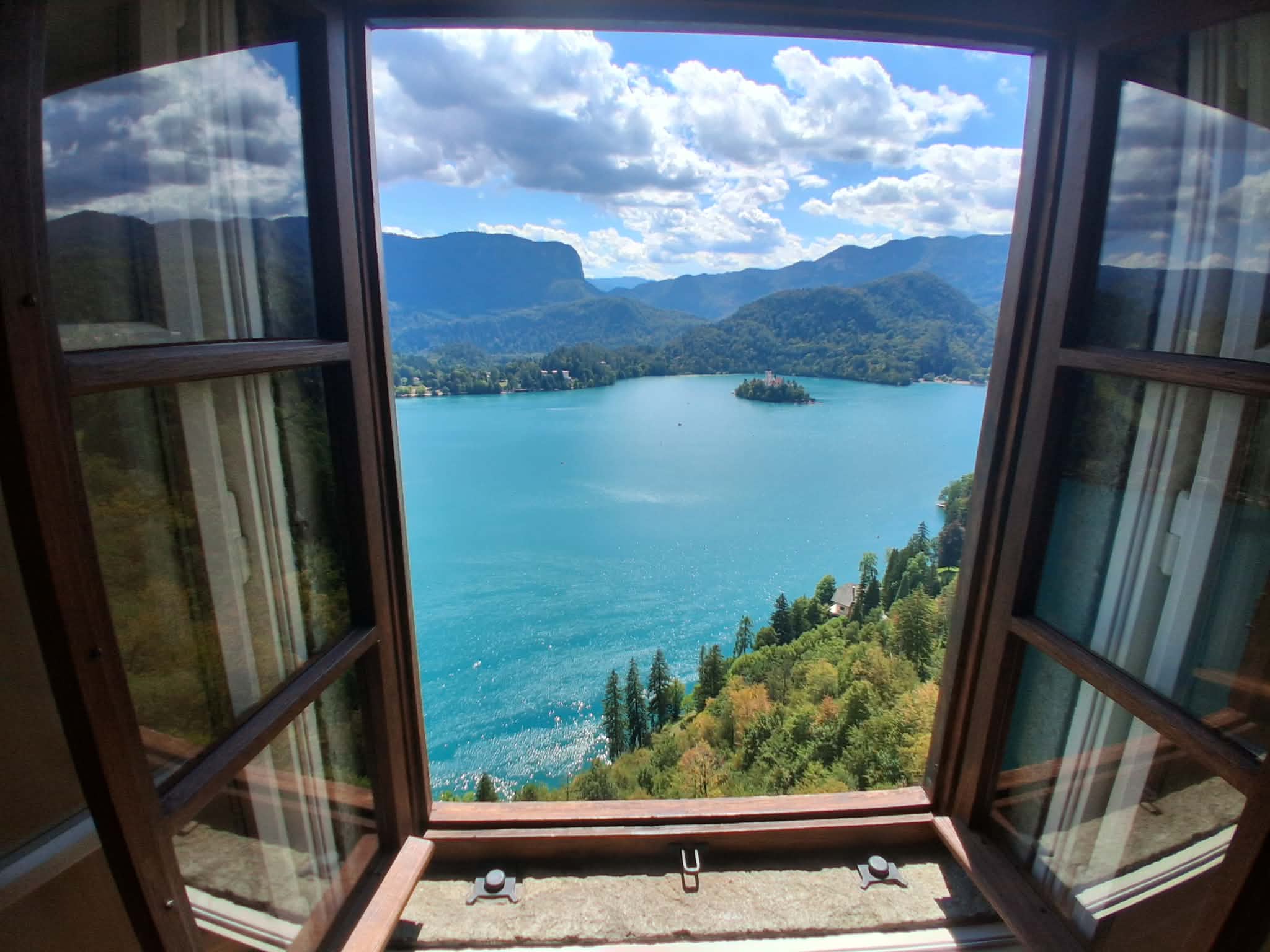
-Perched on its rocky spur overlooking the lake, Bled Castle is one of the most iconic places in Slovenia. Yet behind its medieval walls lies a remarkable museum, managed by the National Museum of Slovenia, which traces the history of the region from prehistory to the Middle Ages. Among its rooms, one of the most fascinating is the one dedicated to the Slavs, the first medieval inhabitants of Bled.
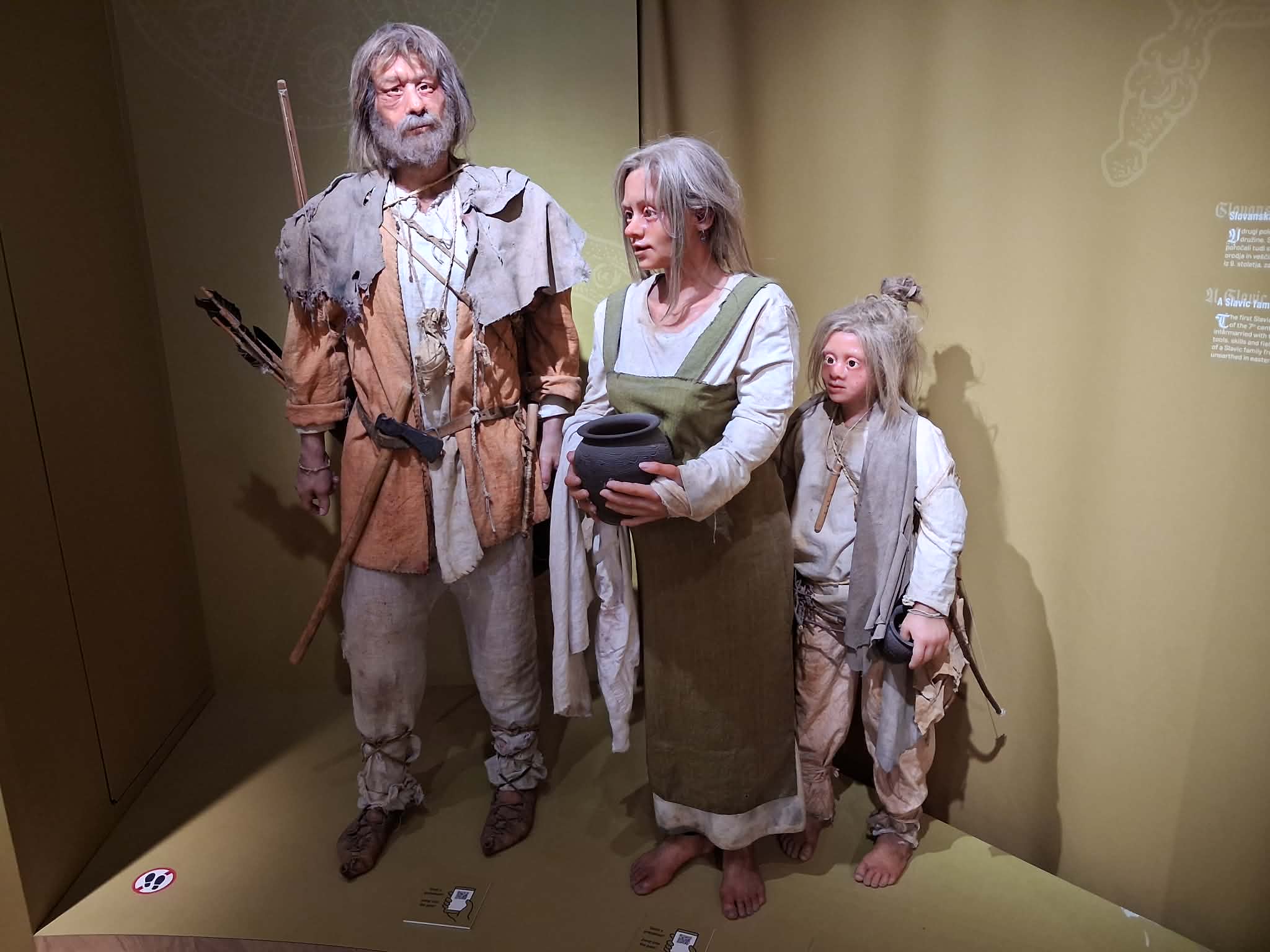
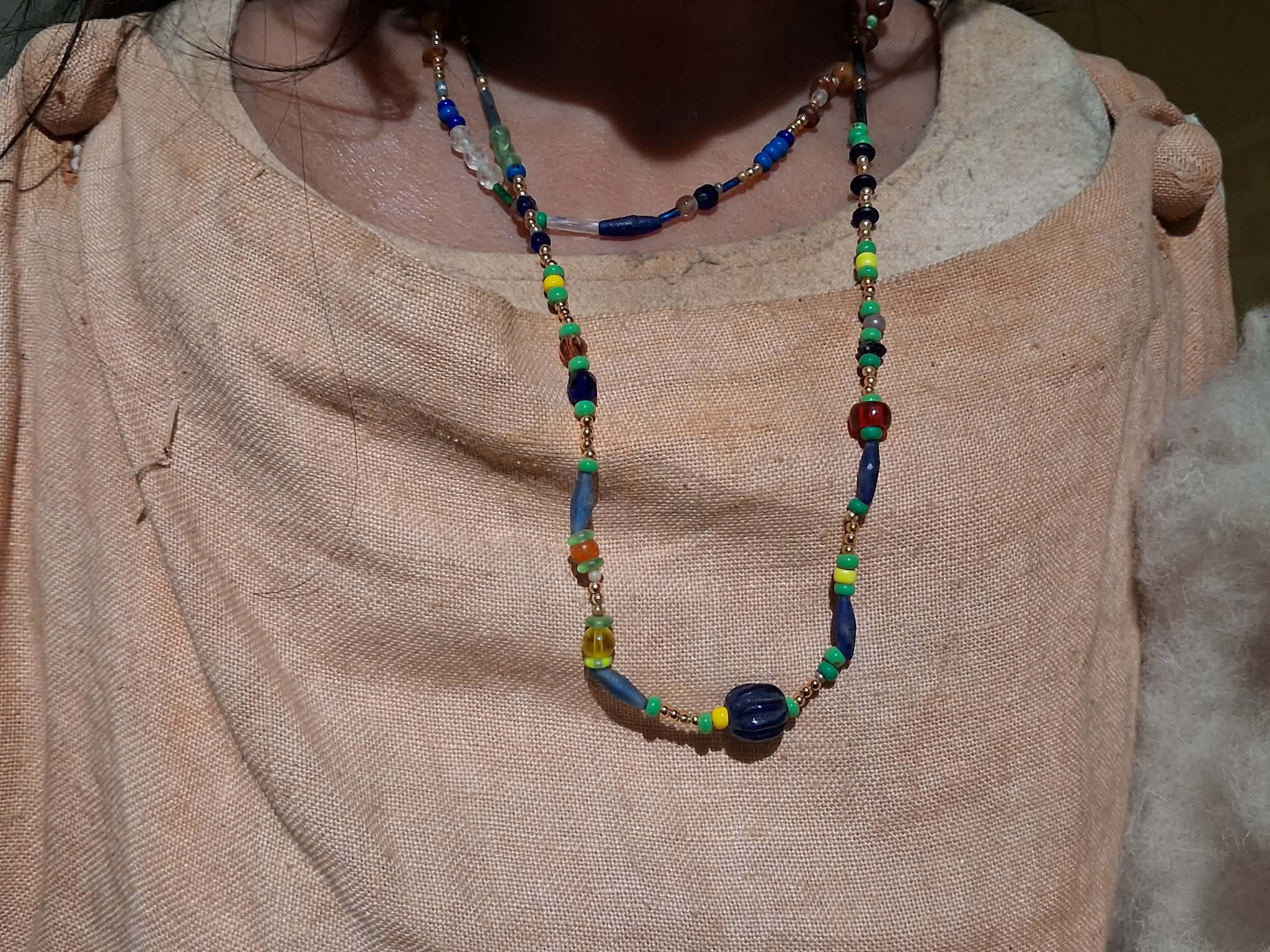
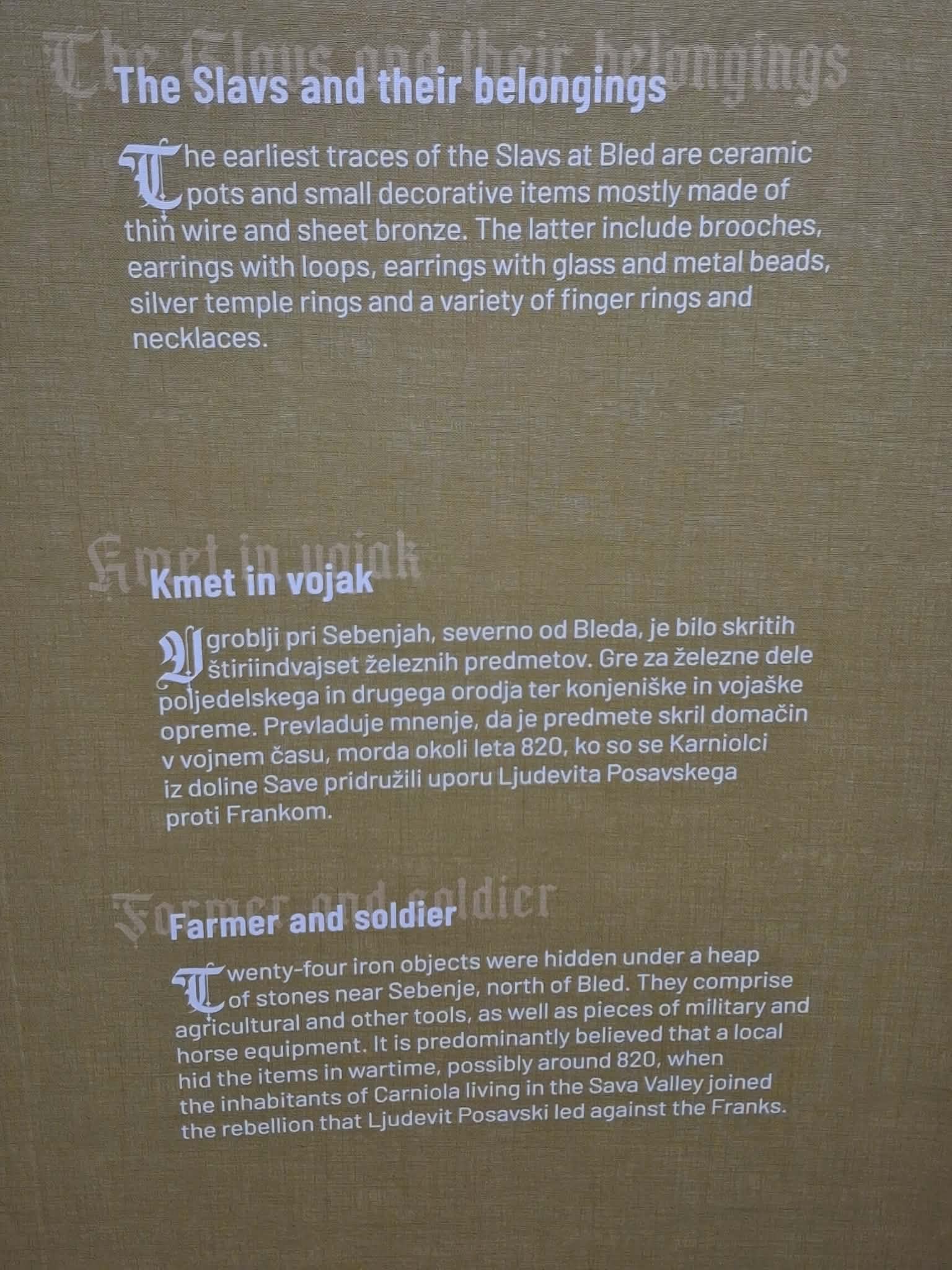
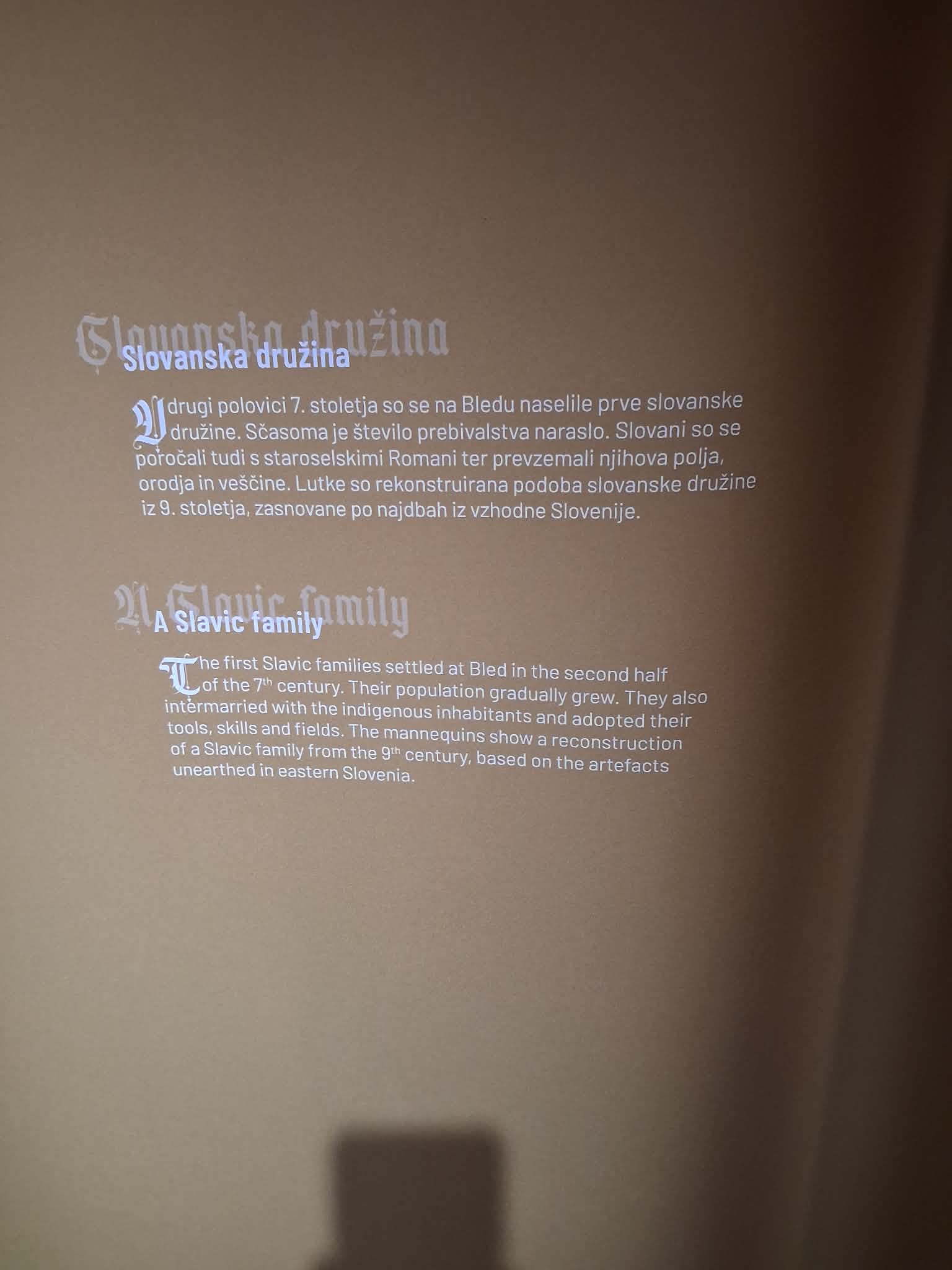
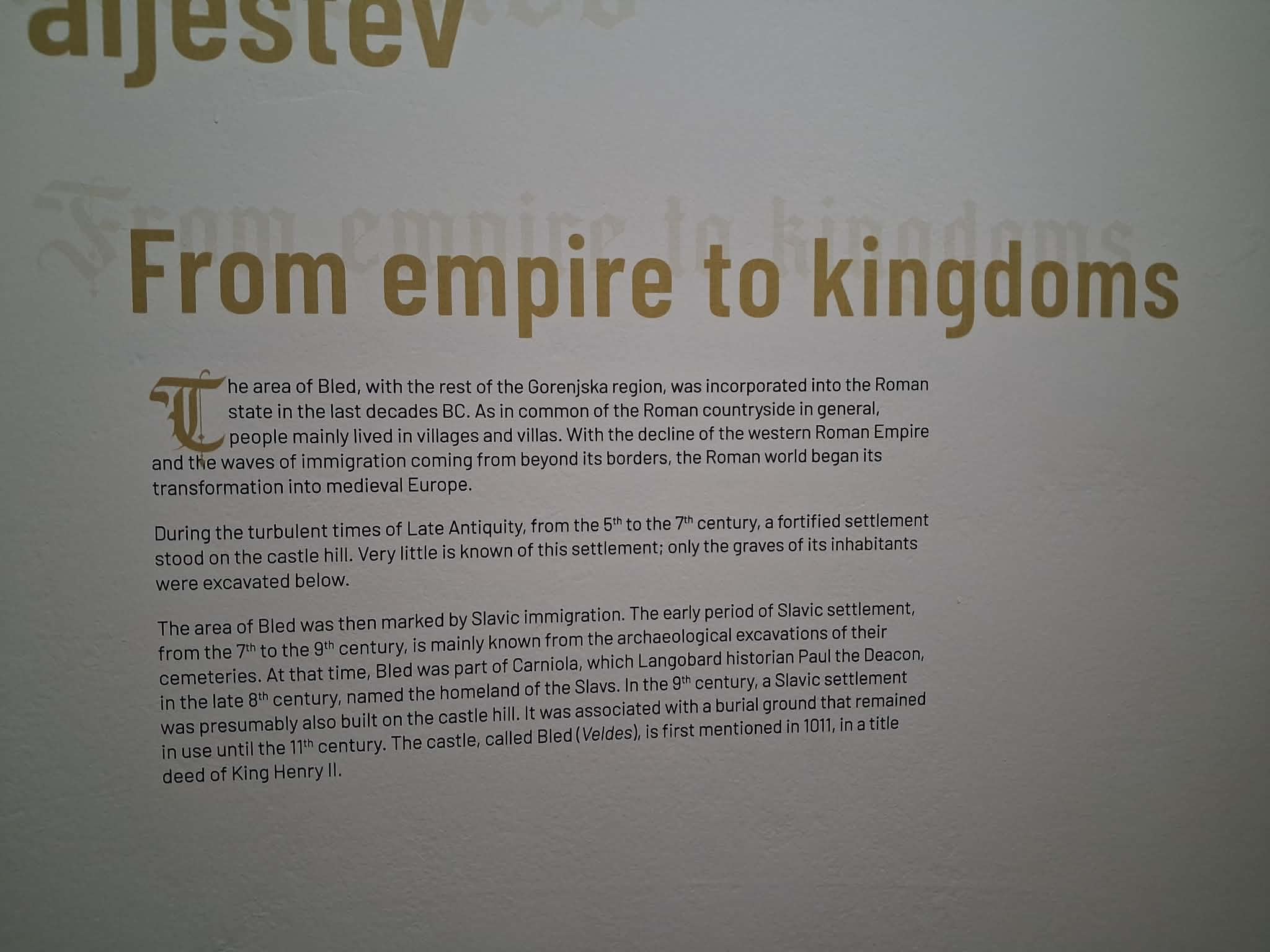
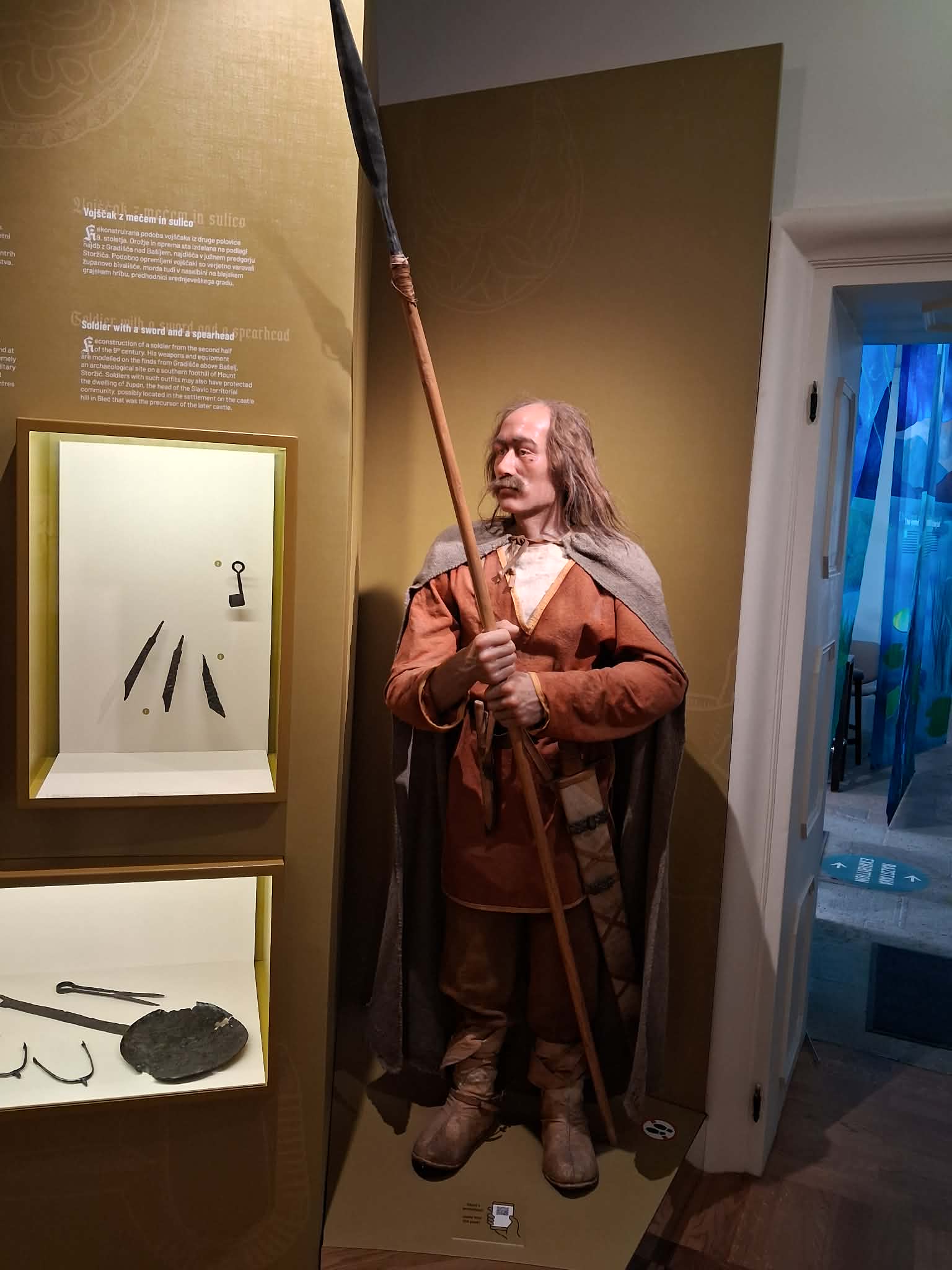
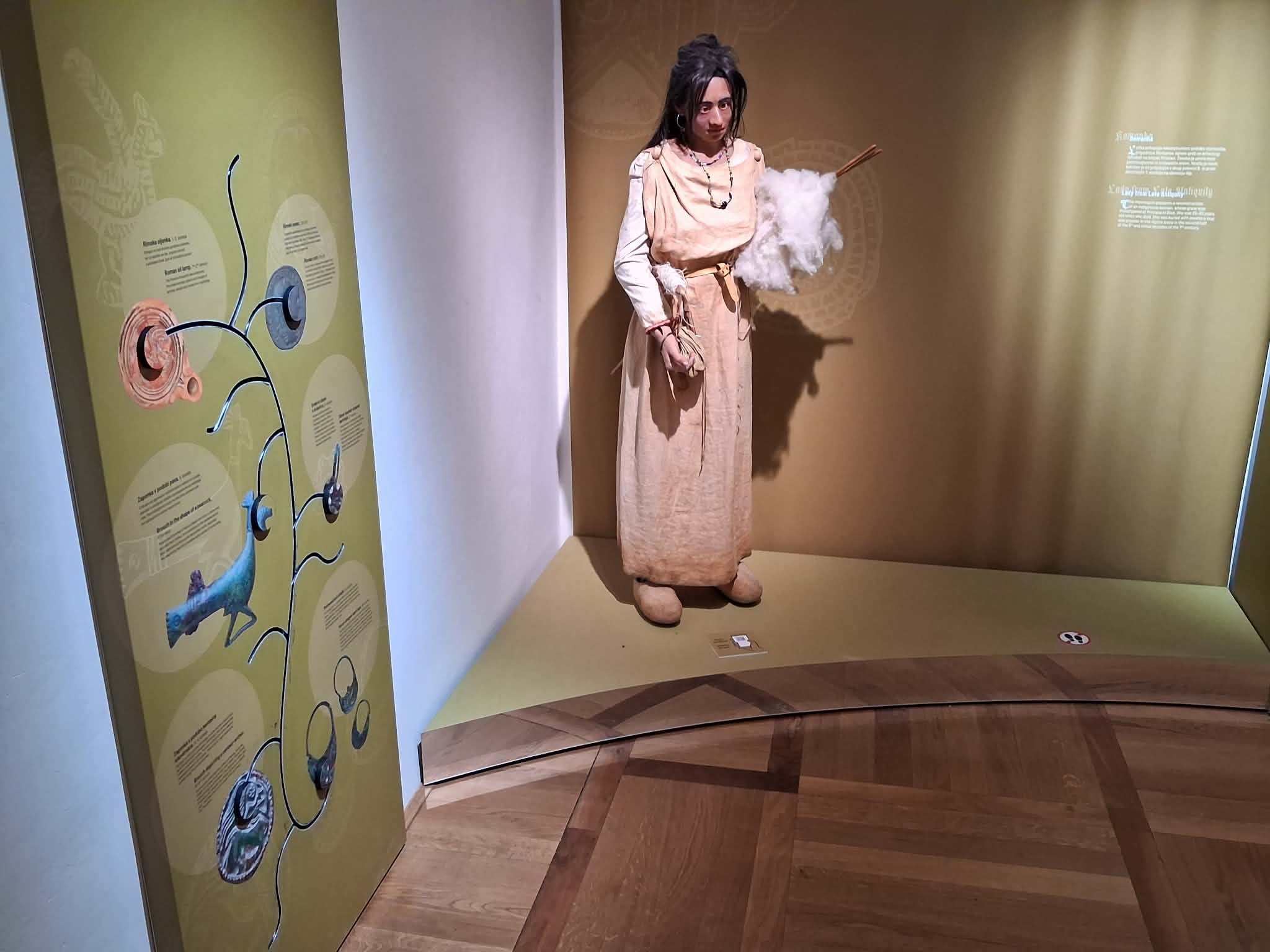
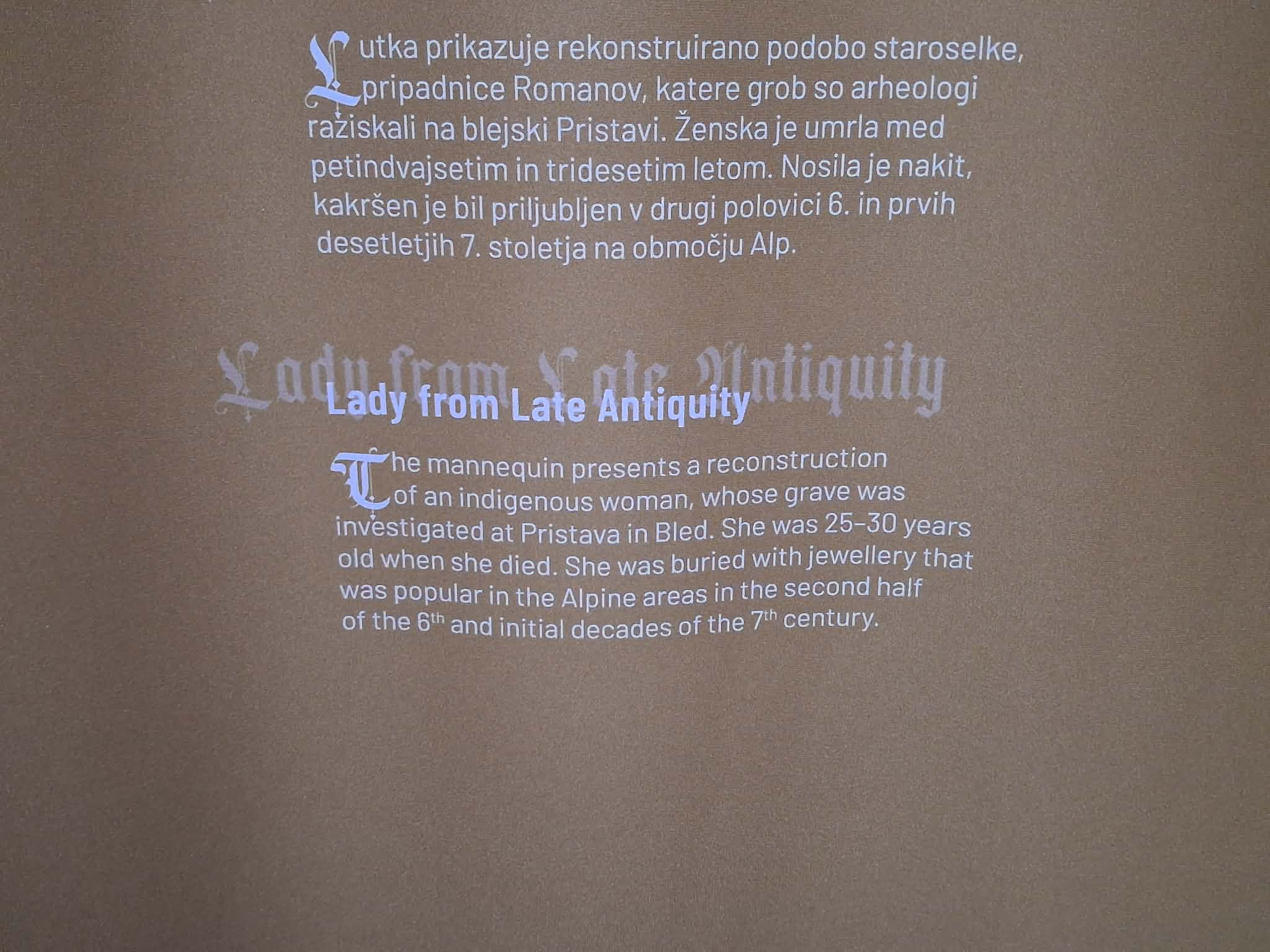
-The Slavs arrived in the Bled region in the 7th century, followed by a second wave settling between the 9th and 10th centuries. Excavations carried out around the castle and the lake have revealed a dense presence: villages, necropolises, cremation sites, and everyday objects. The large necropolis of Pristava, located near the castle, has yielded 80 graves and numerous artefacts that testify to the life, rituals, and craftsmanship of the Slavs of the region.
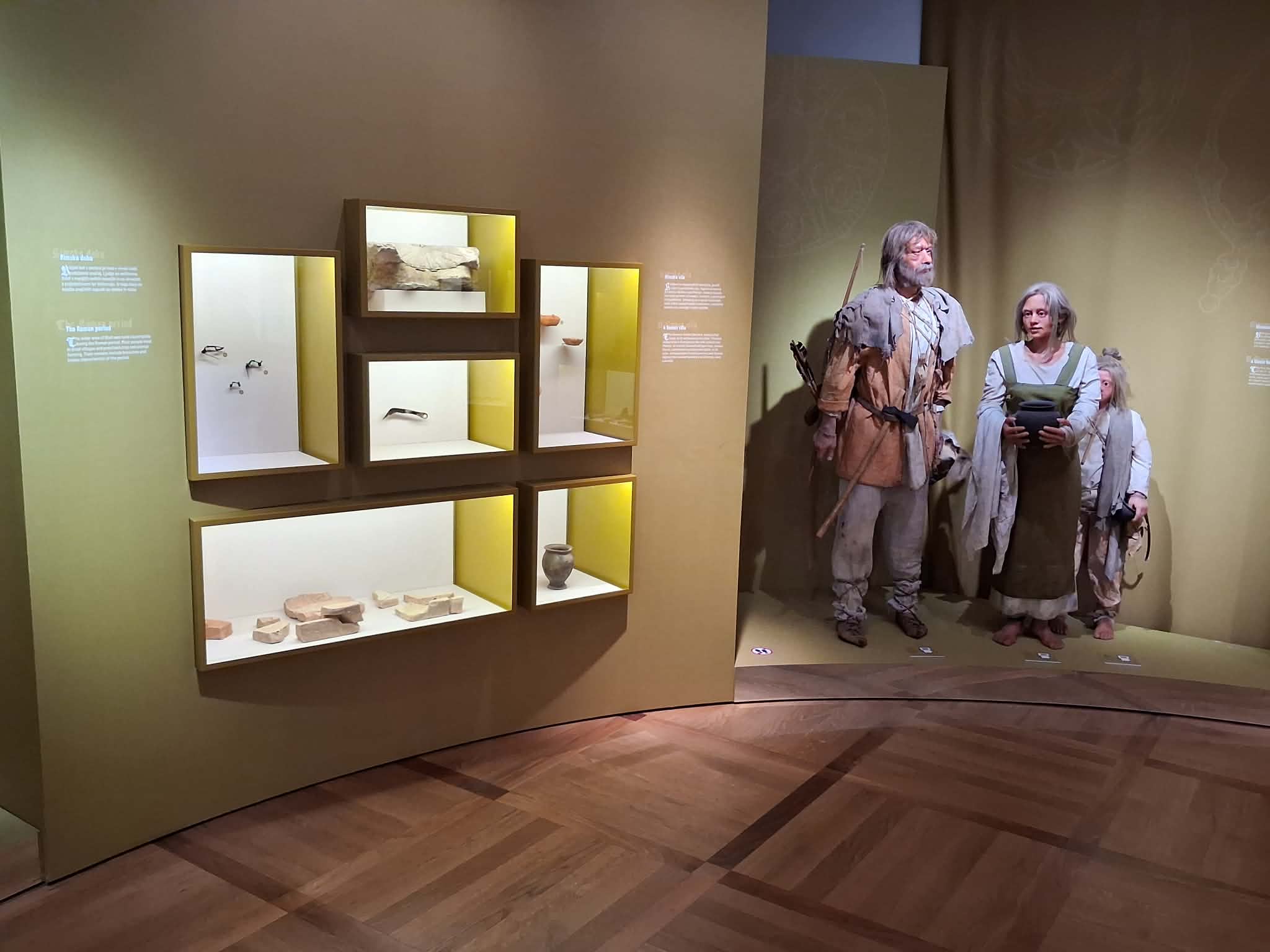
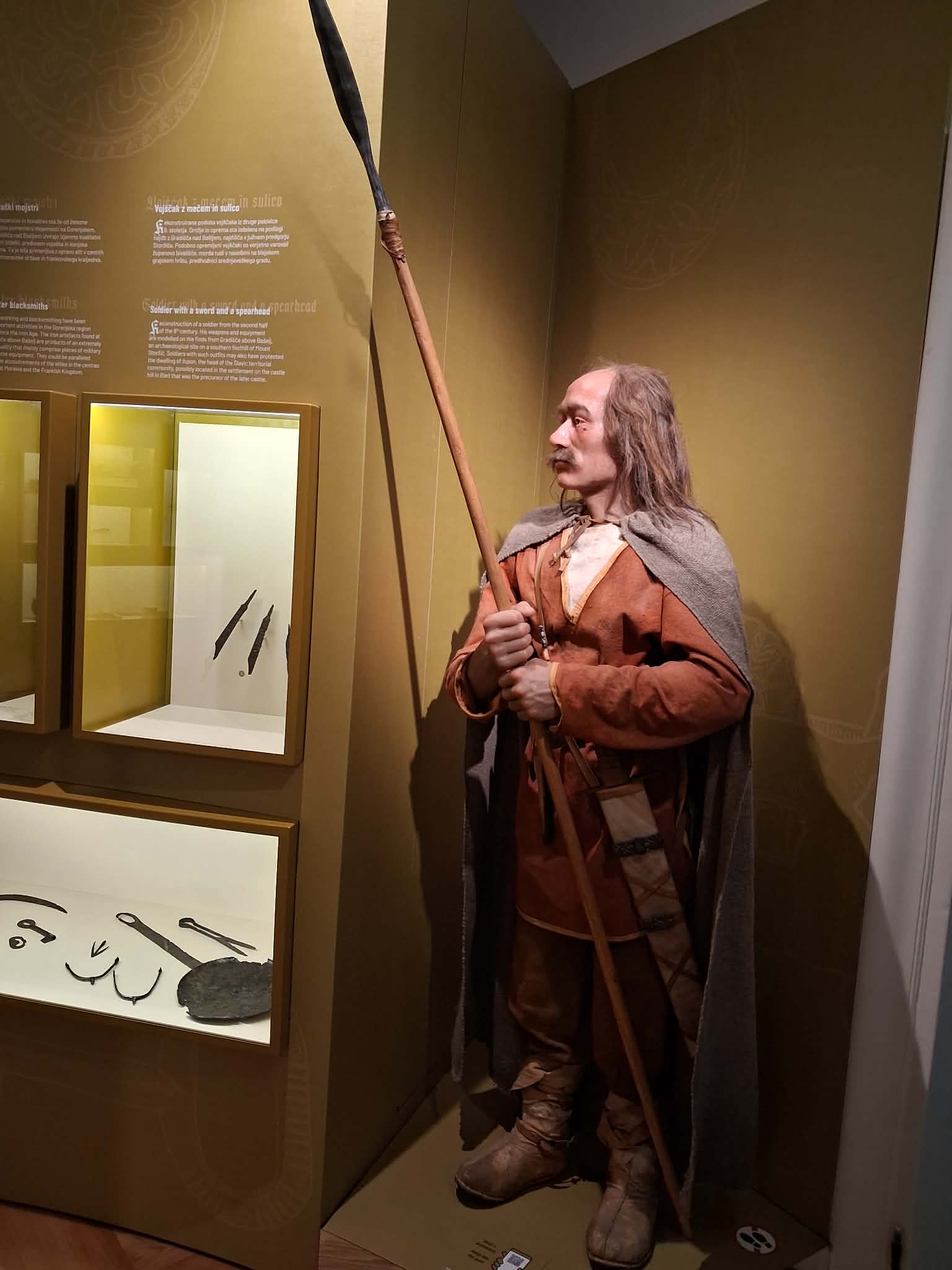
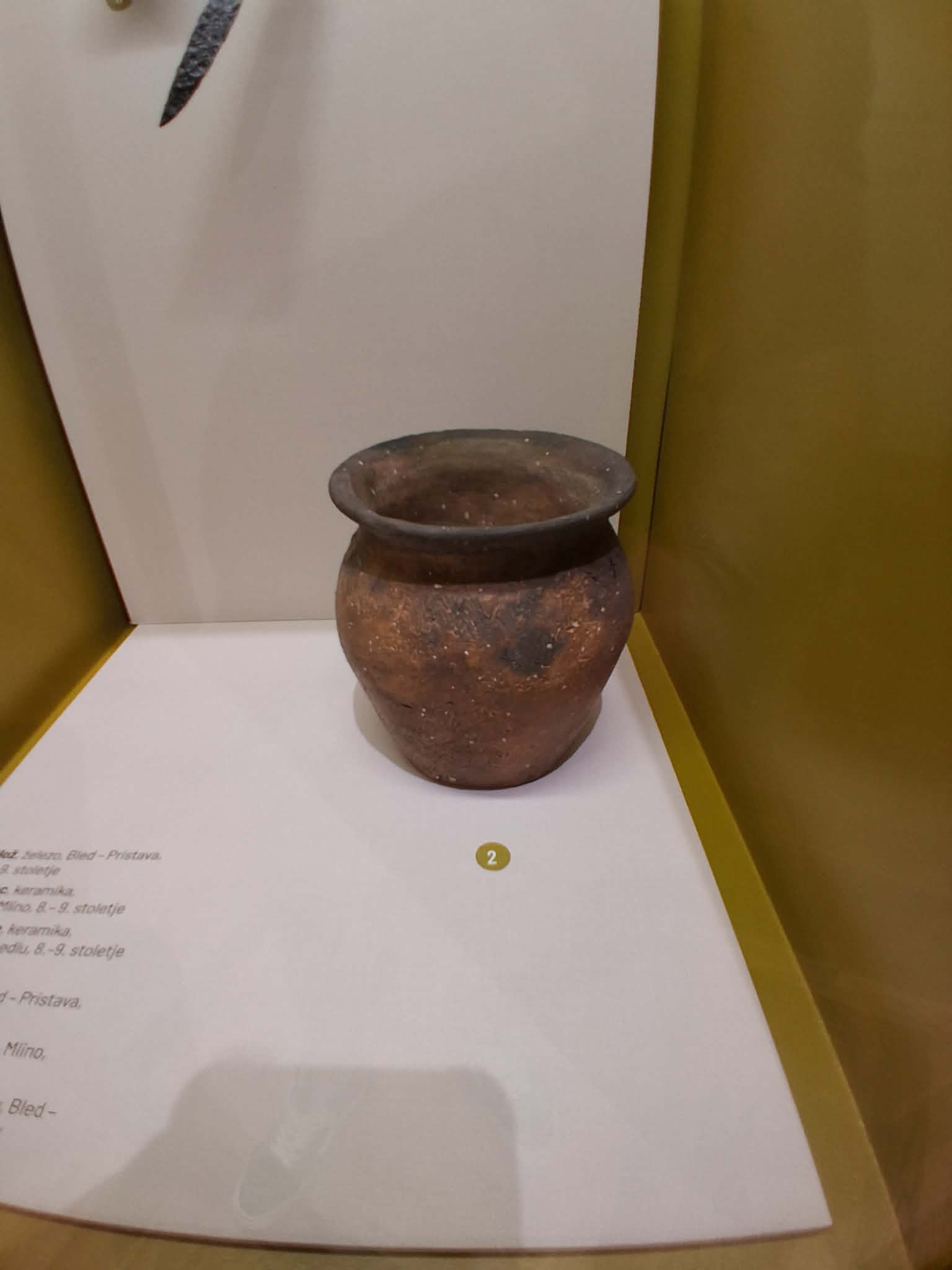
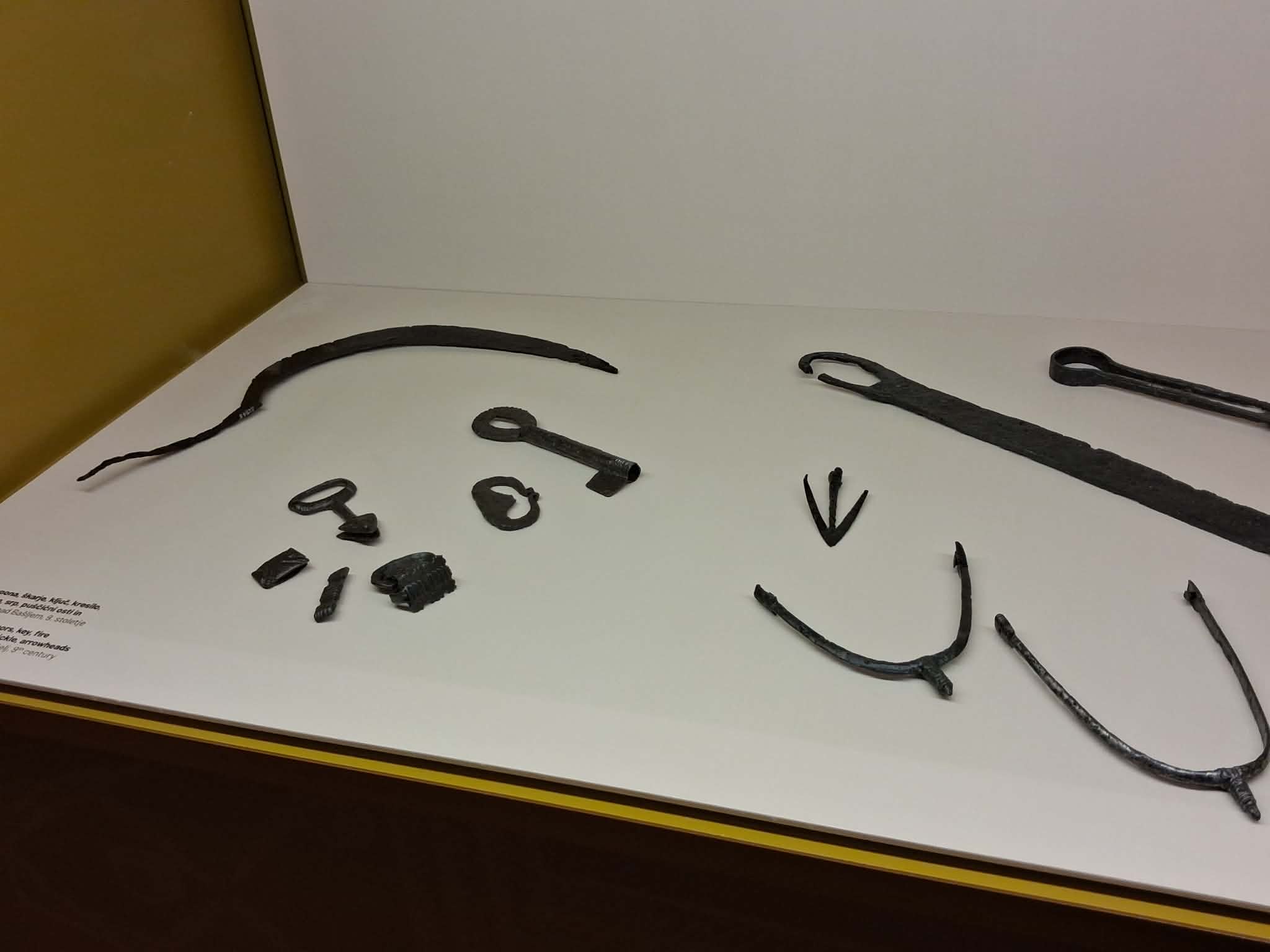
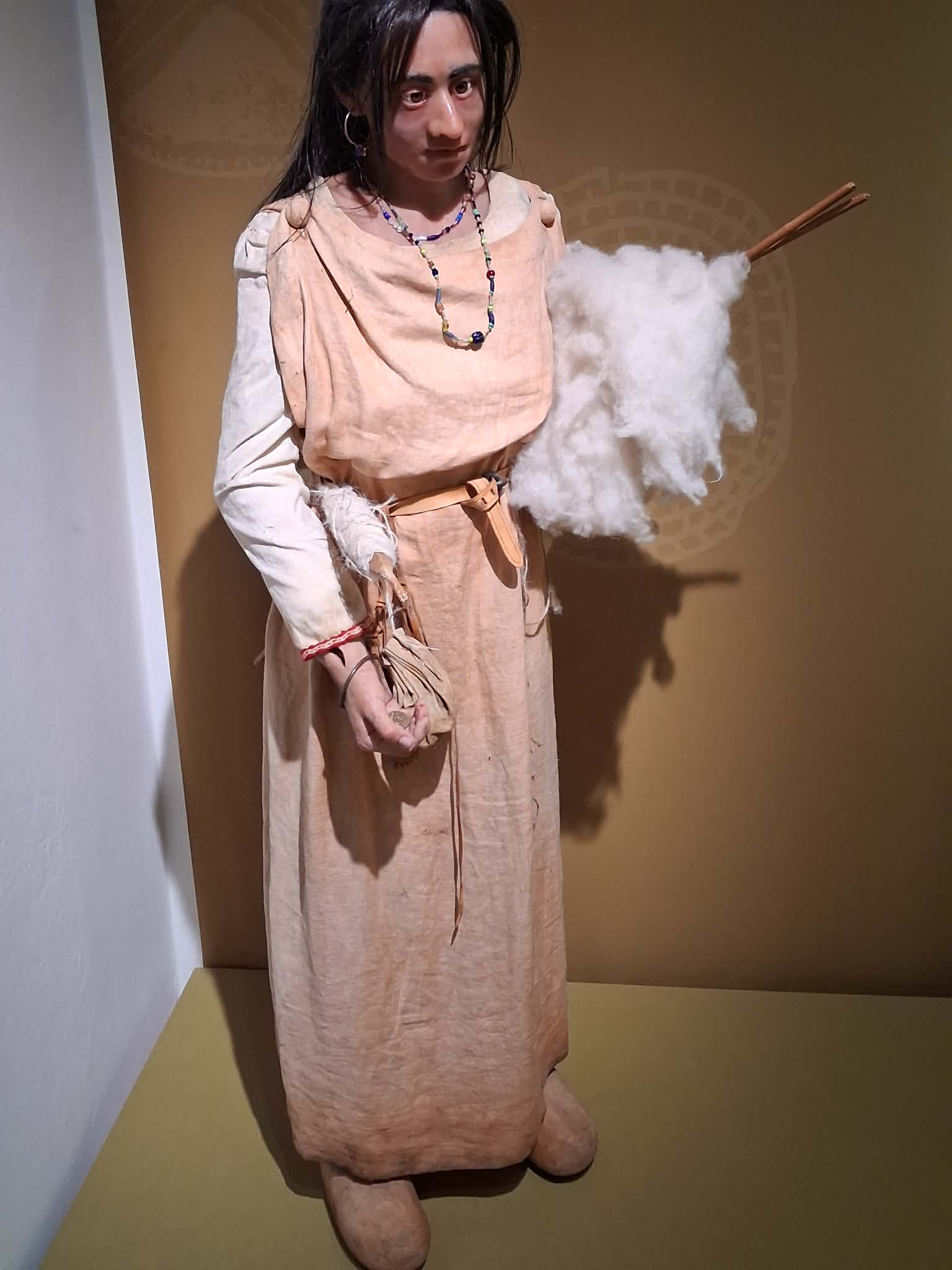
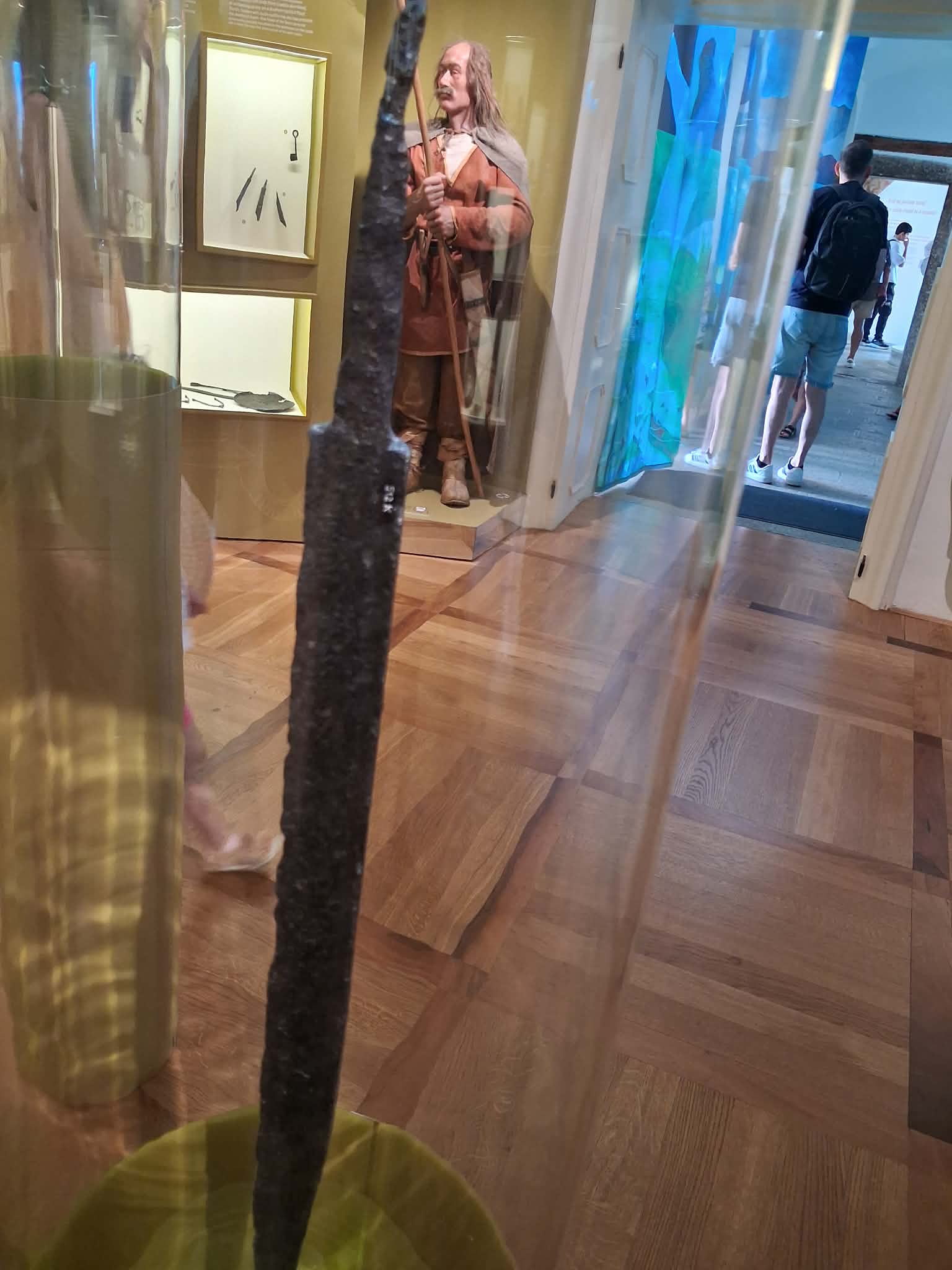
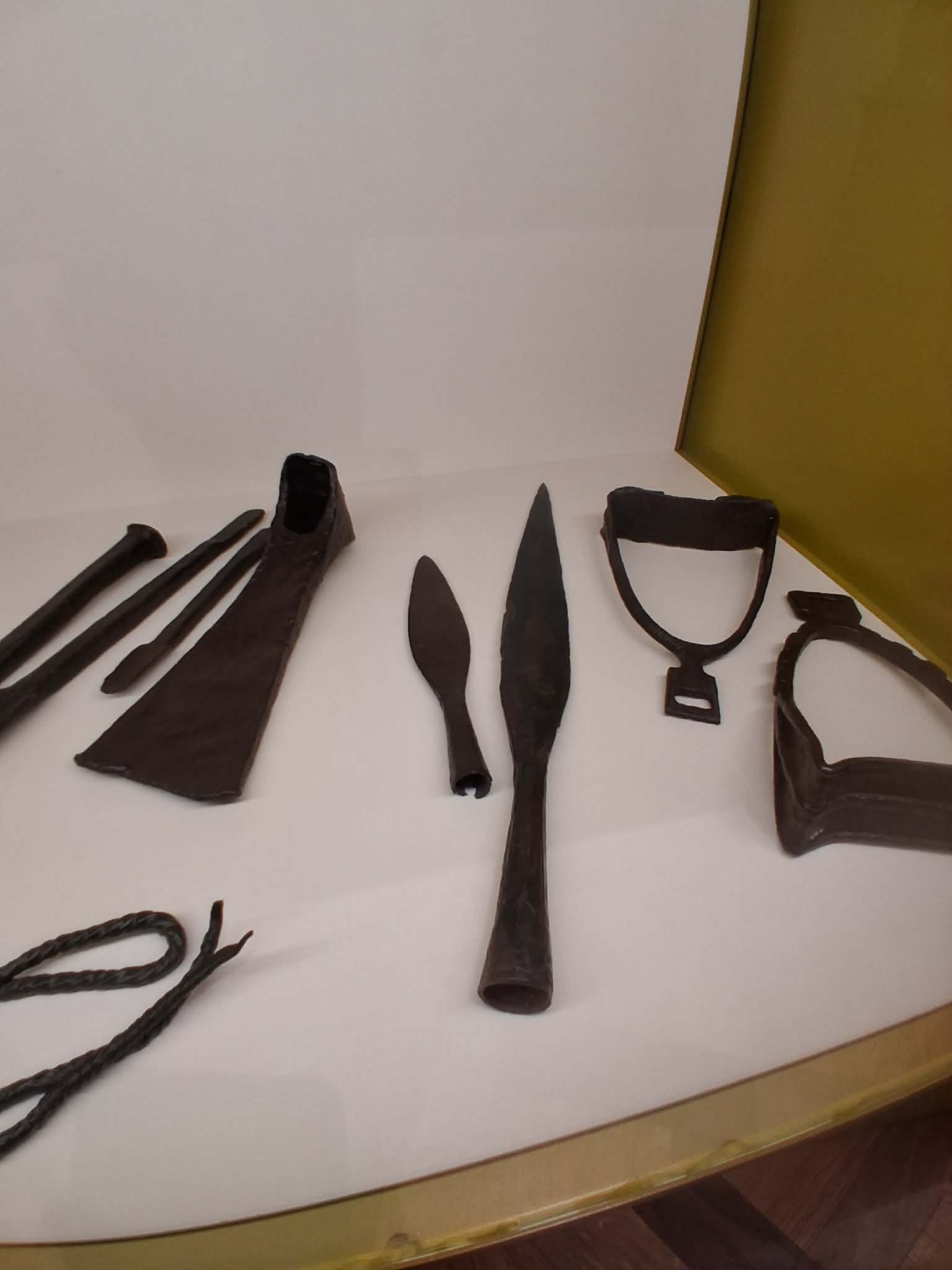
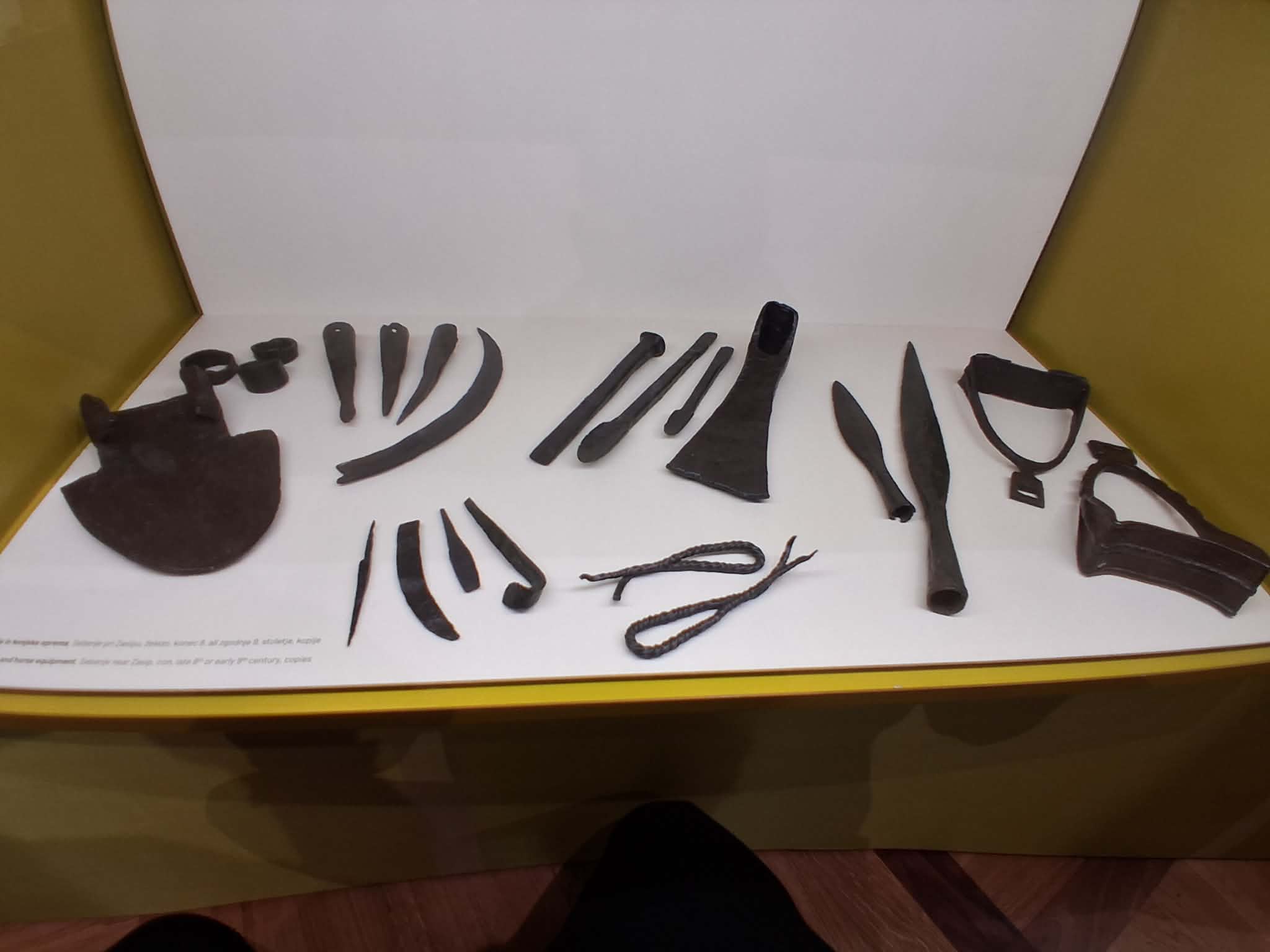
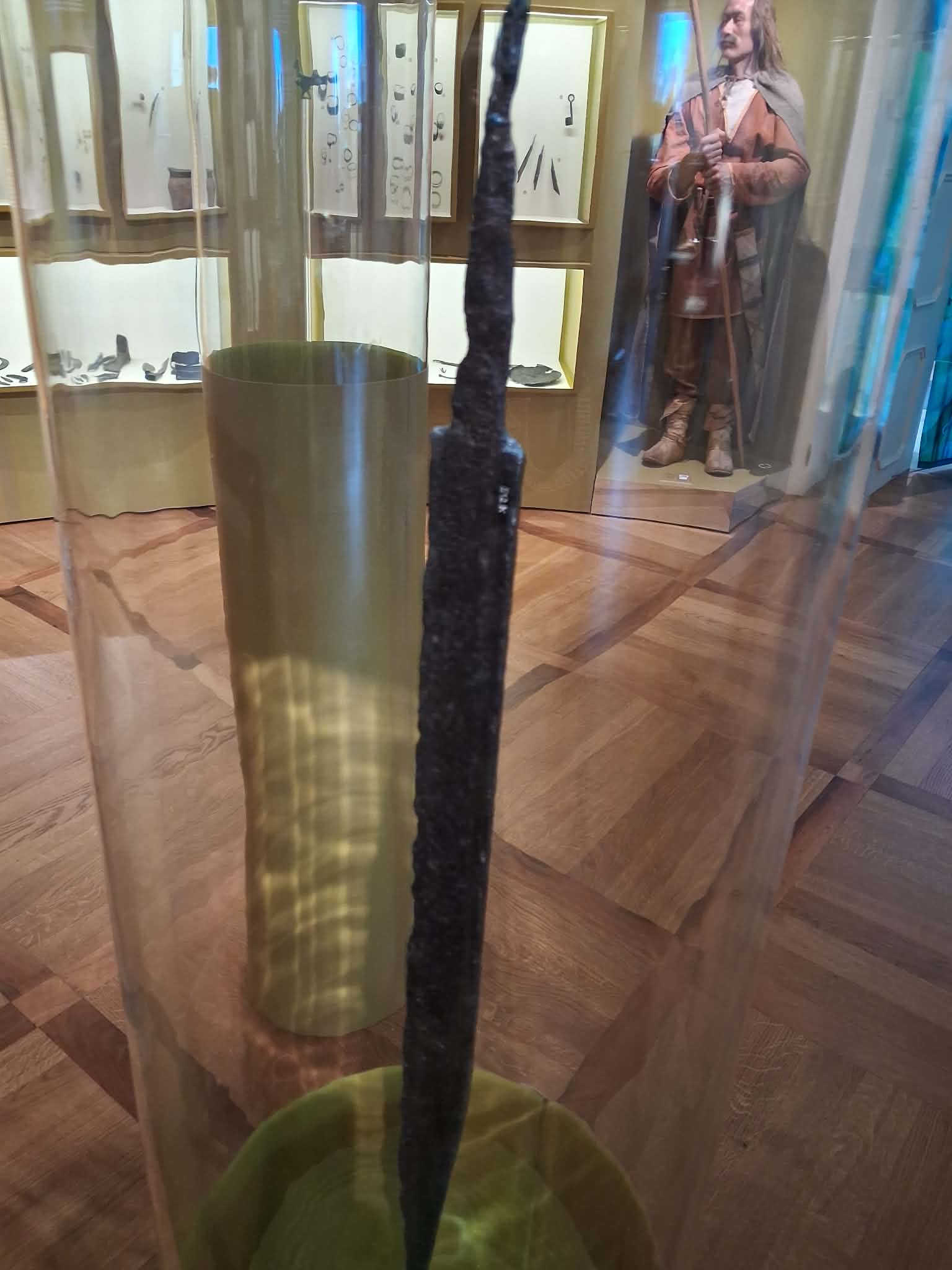
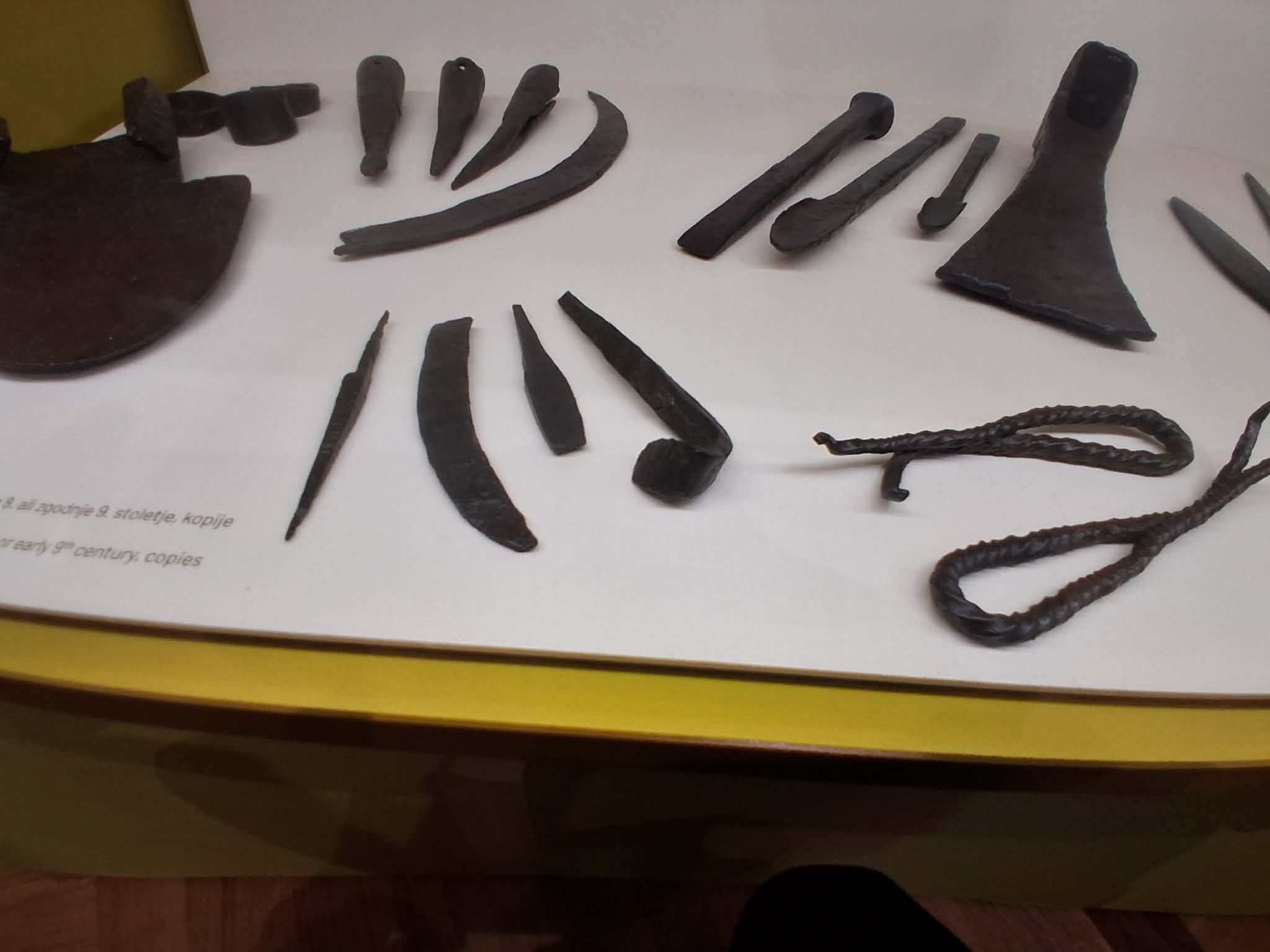
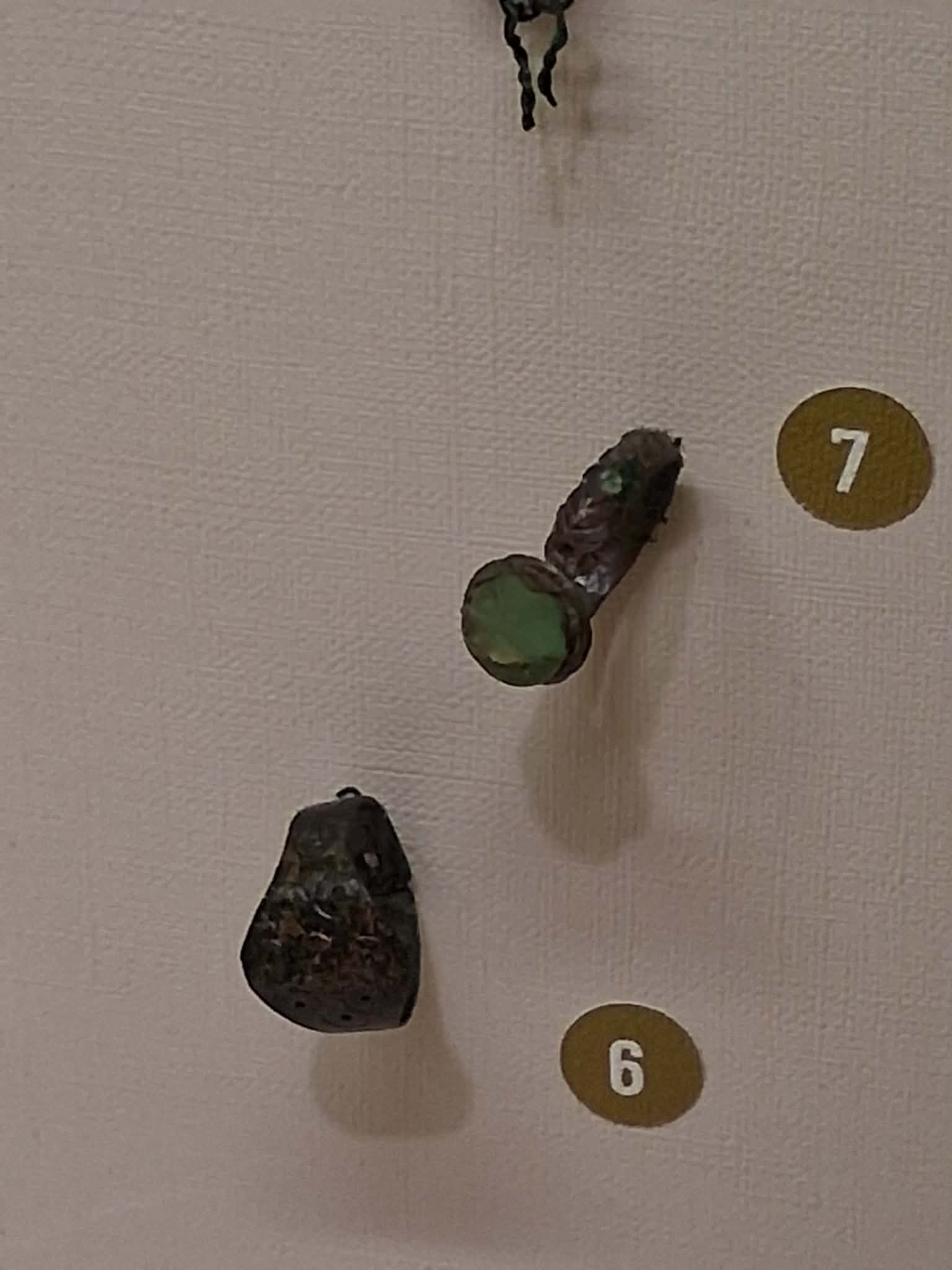
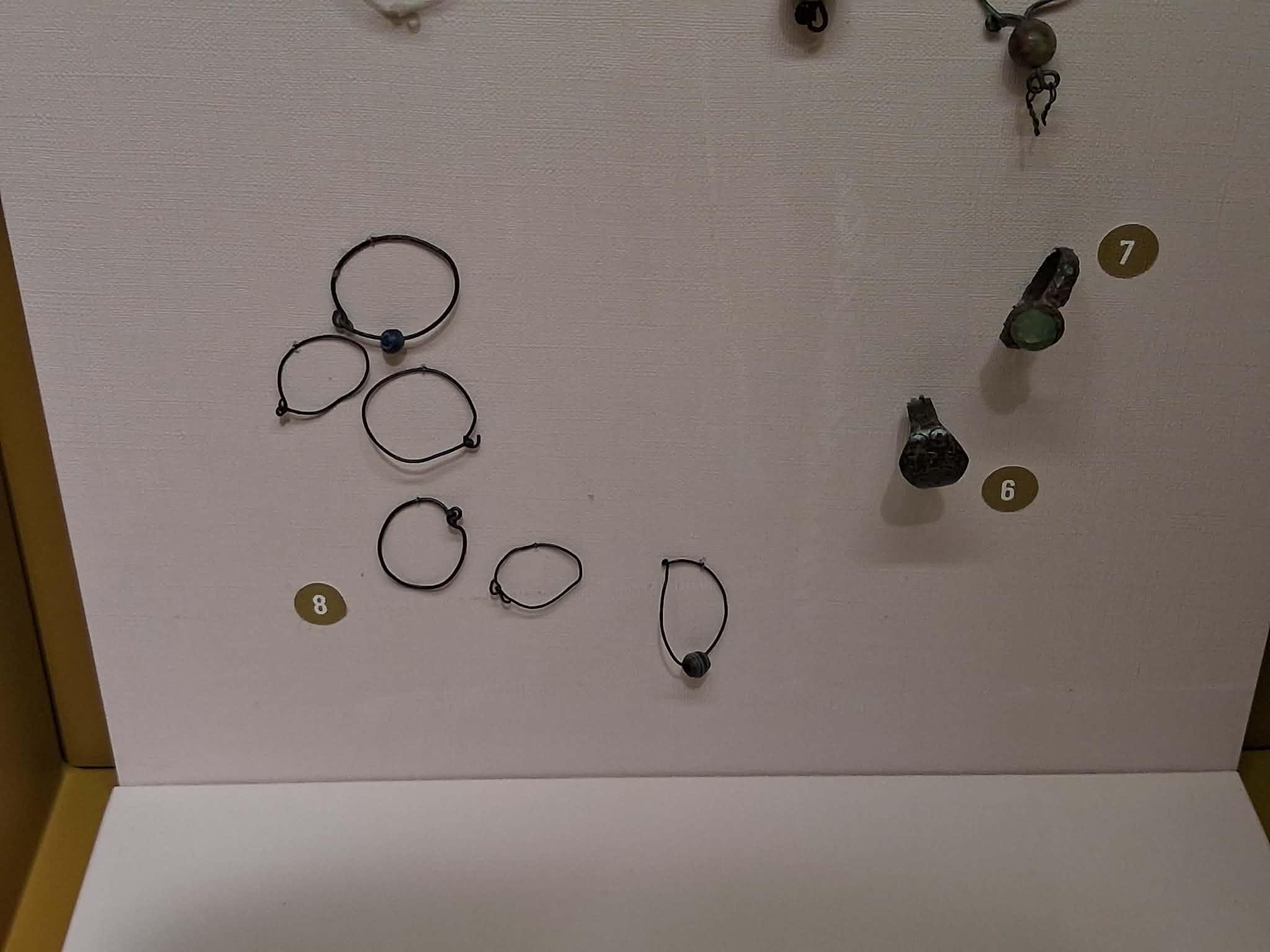
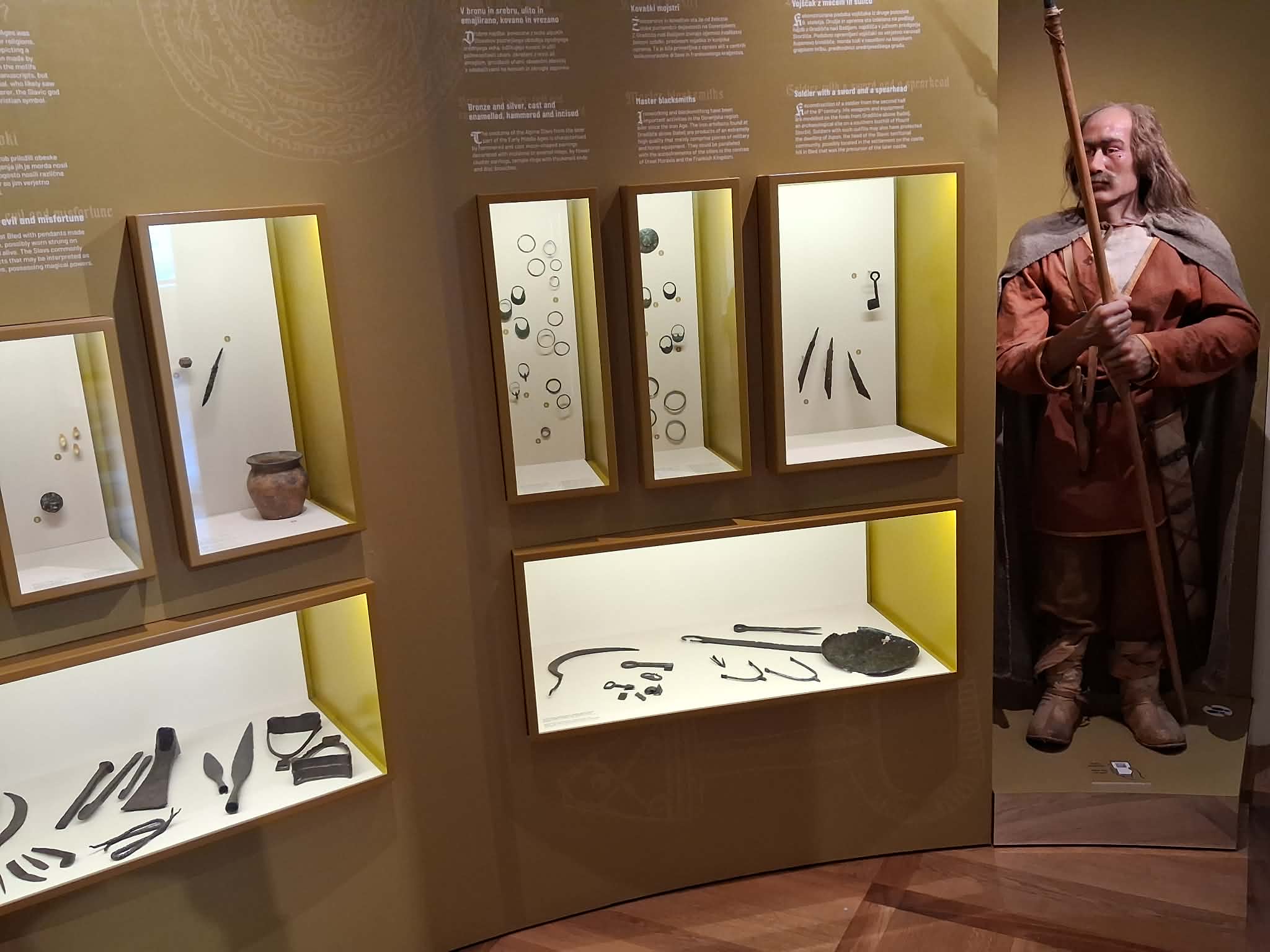
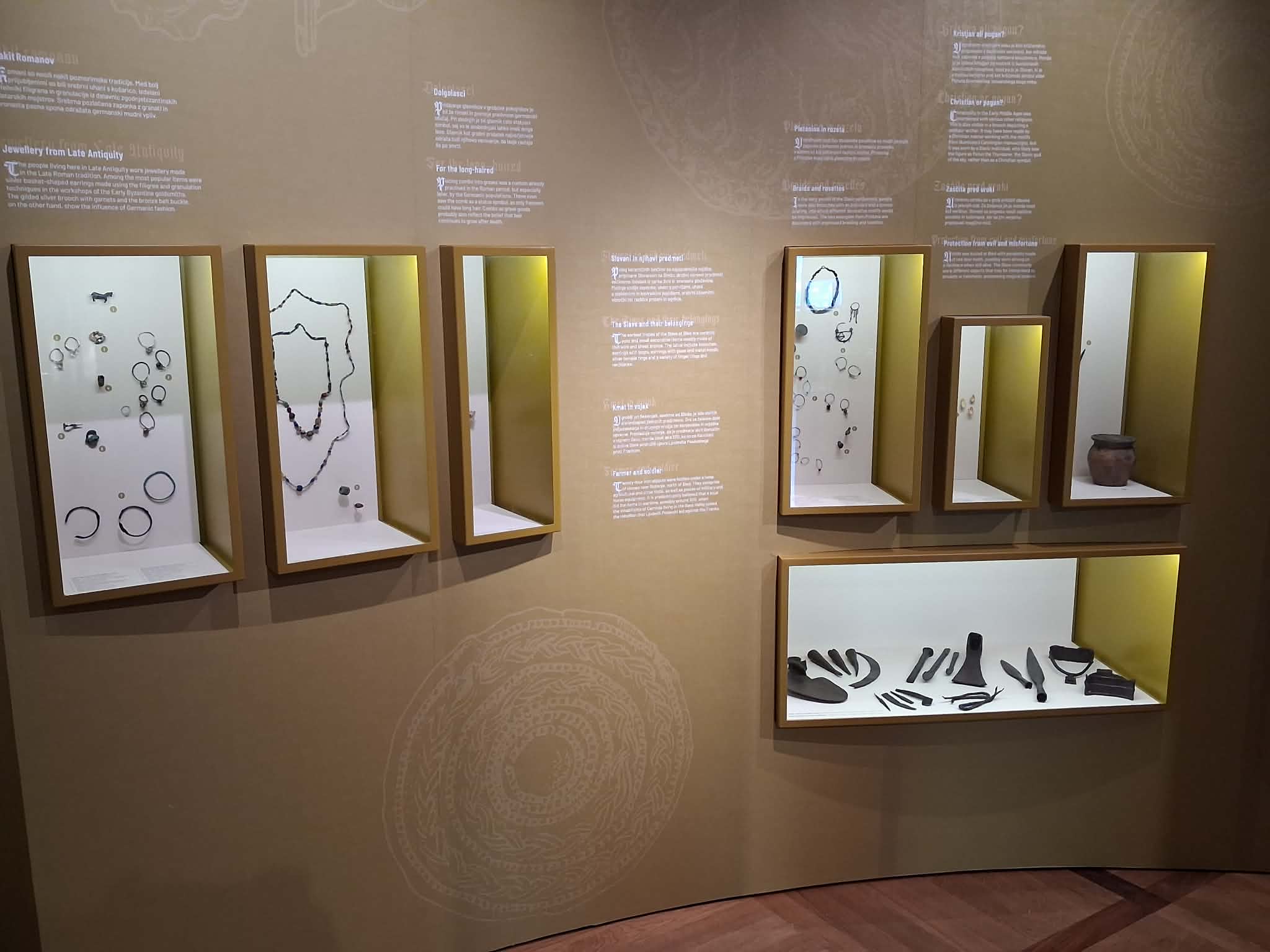
-The part of the museum dedicated to the Slavs presents several categories of archaeological objects, mainly from medieval graves and settlements:
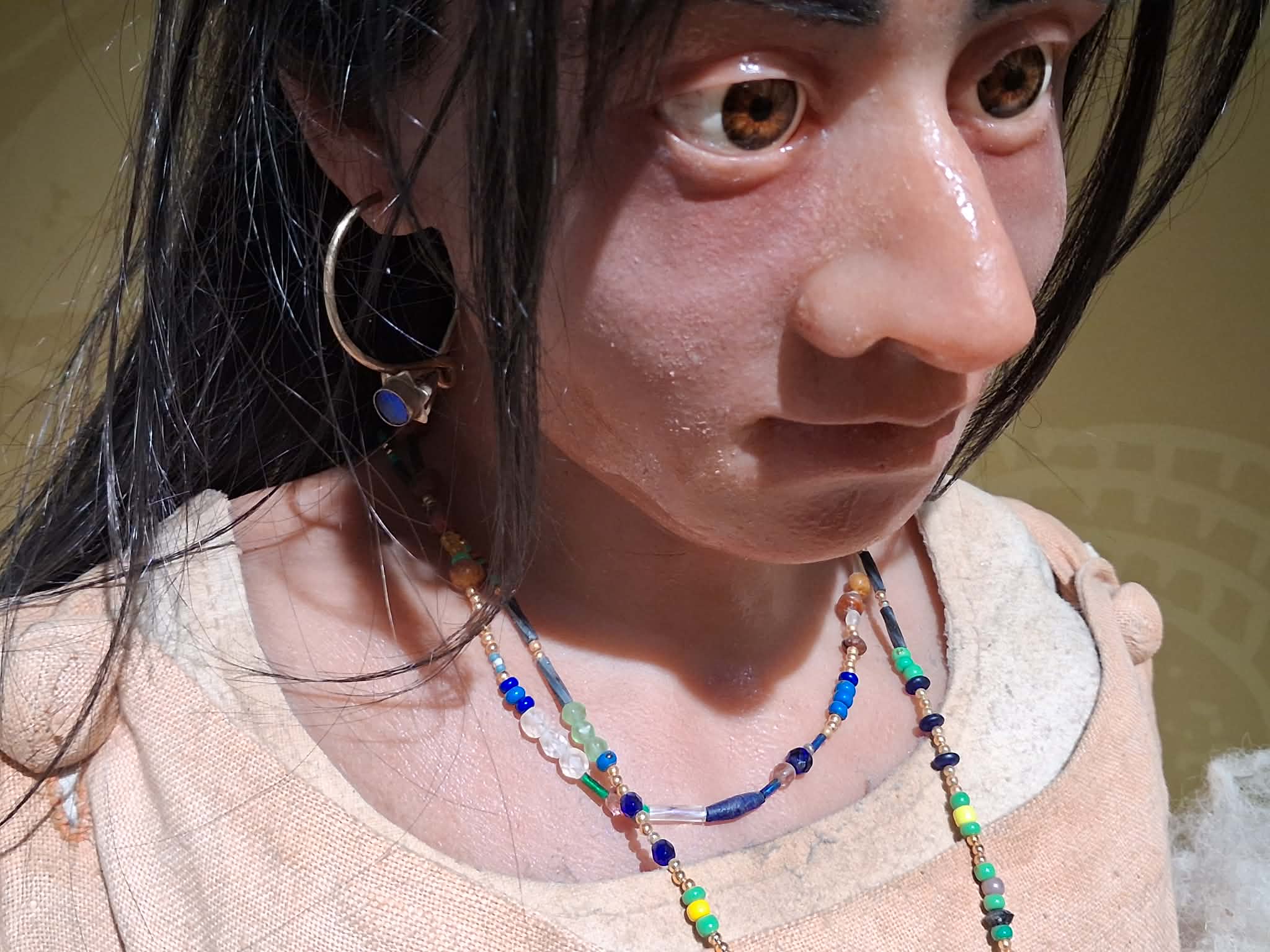
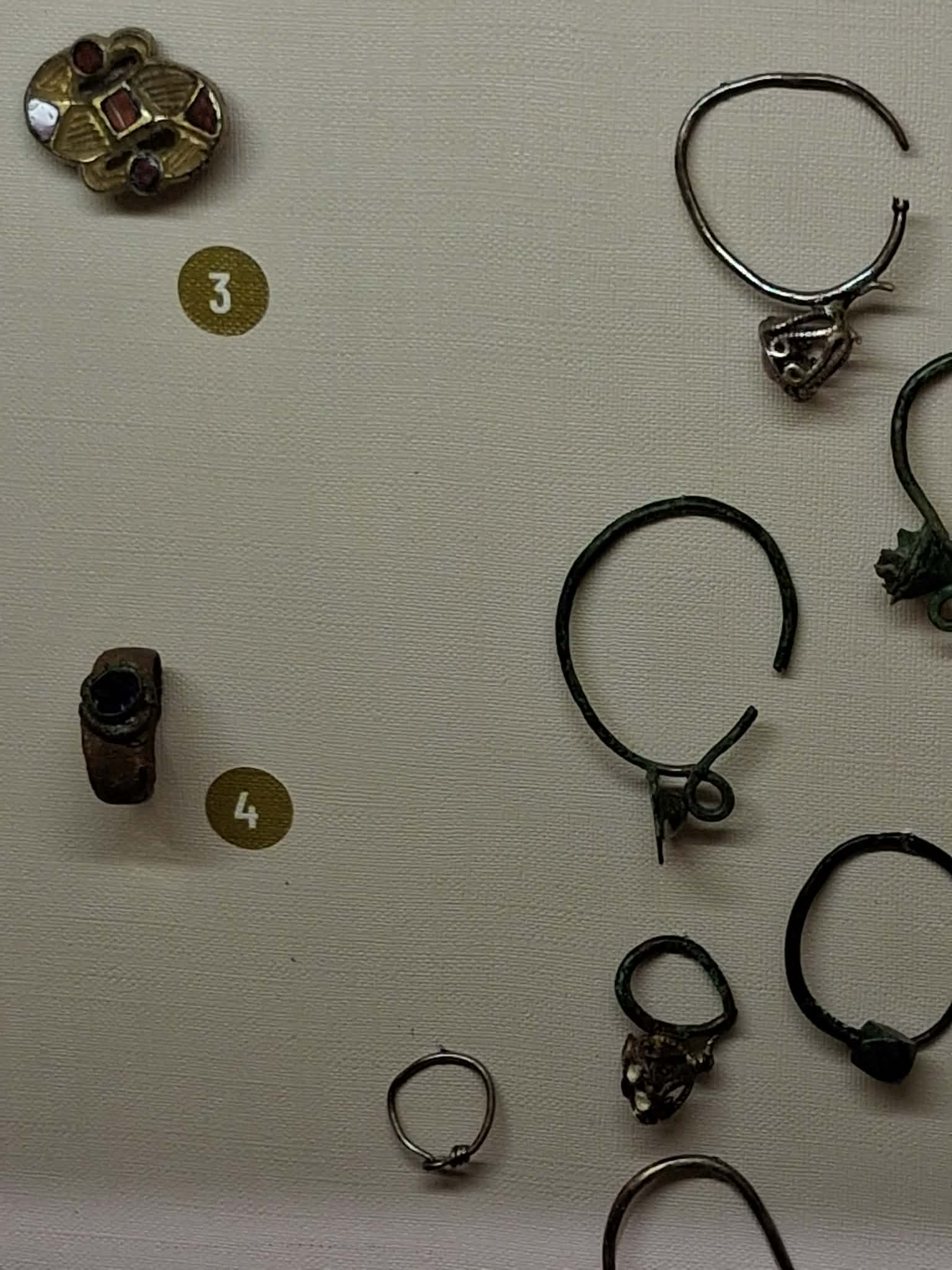
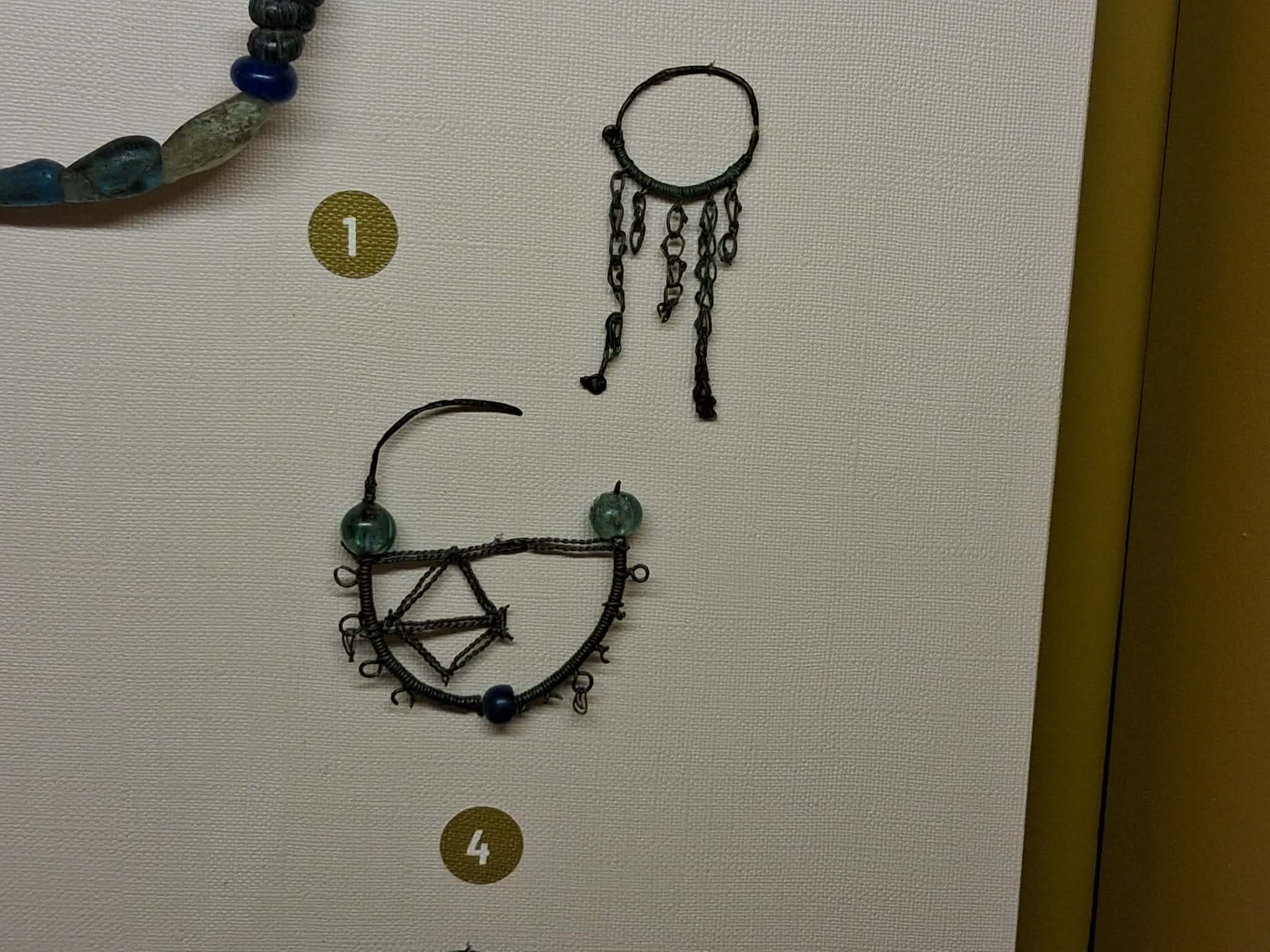
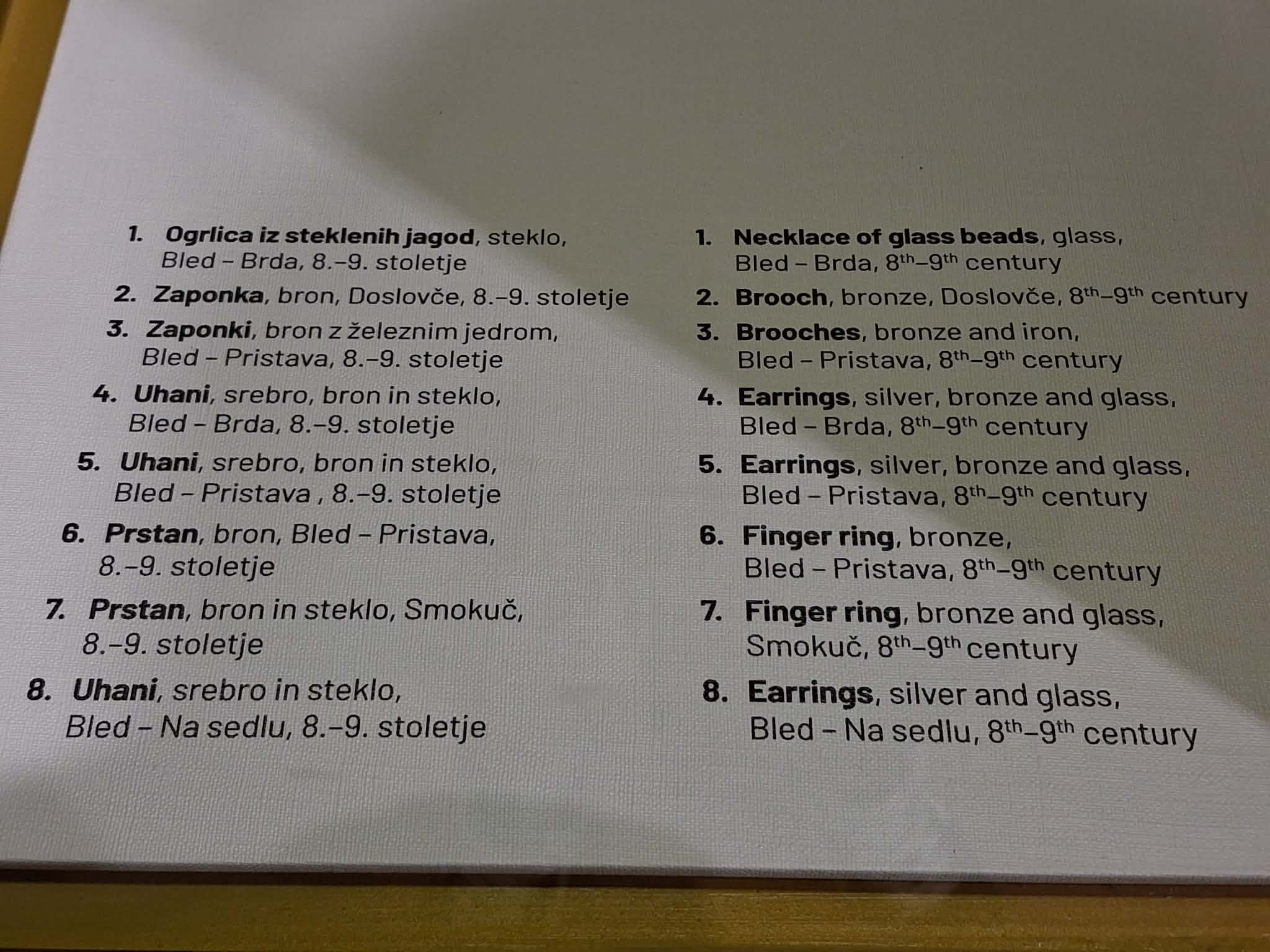
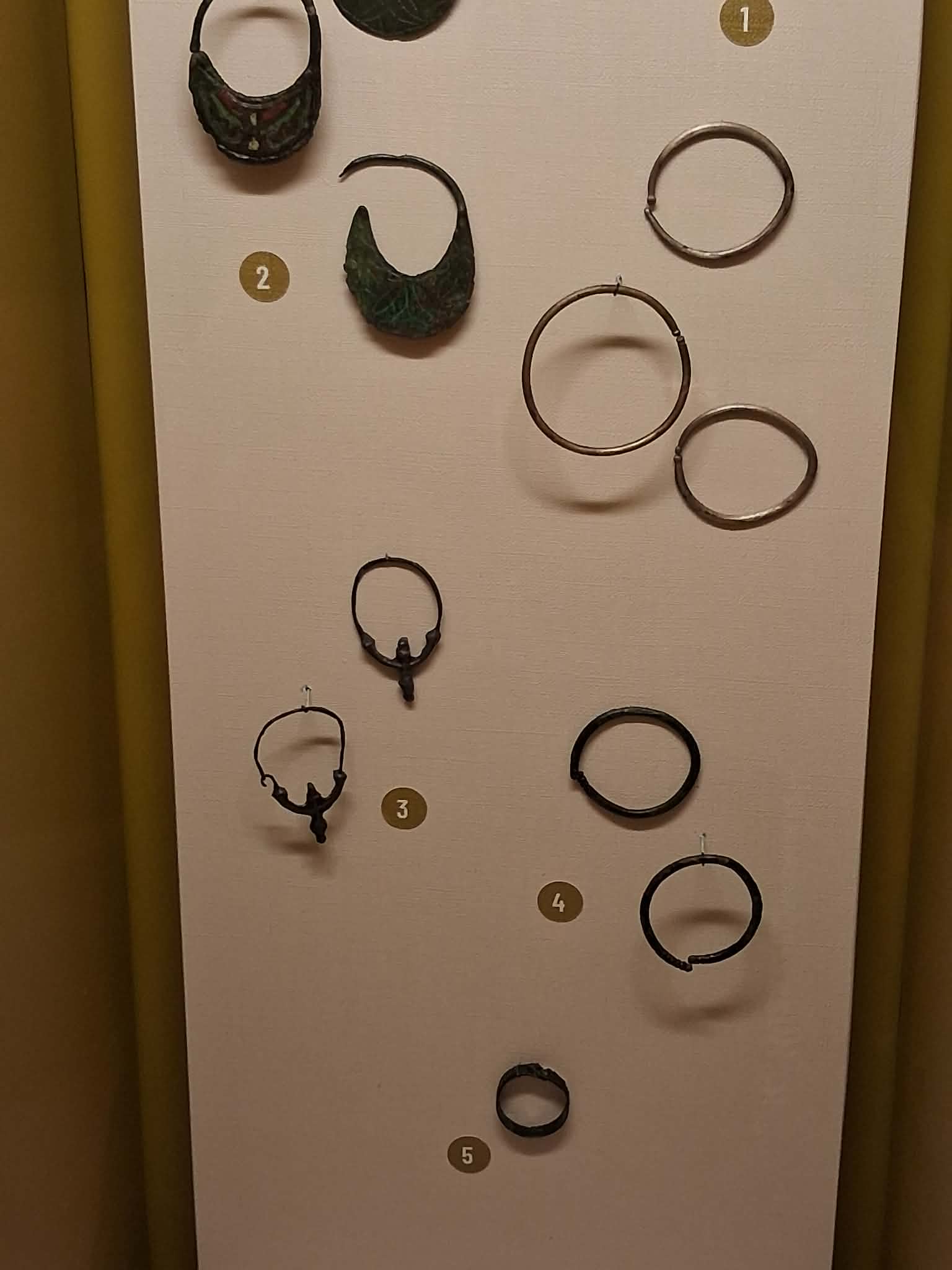
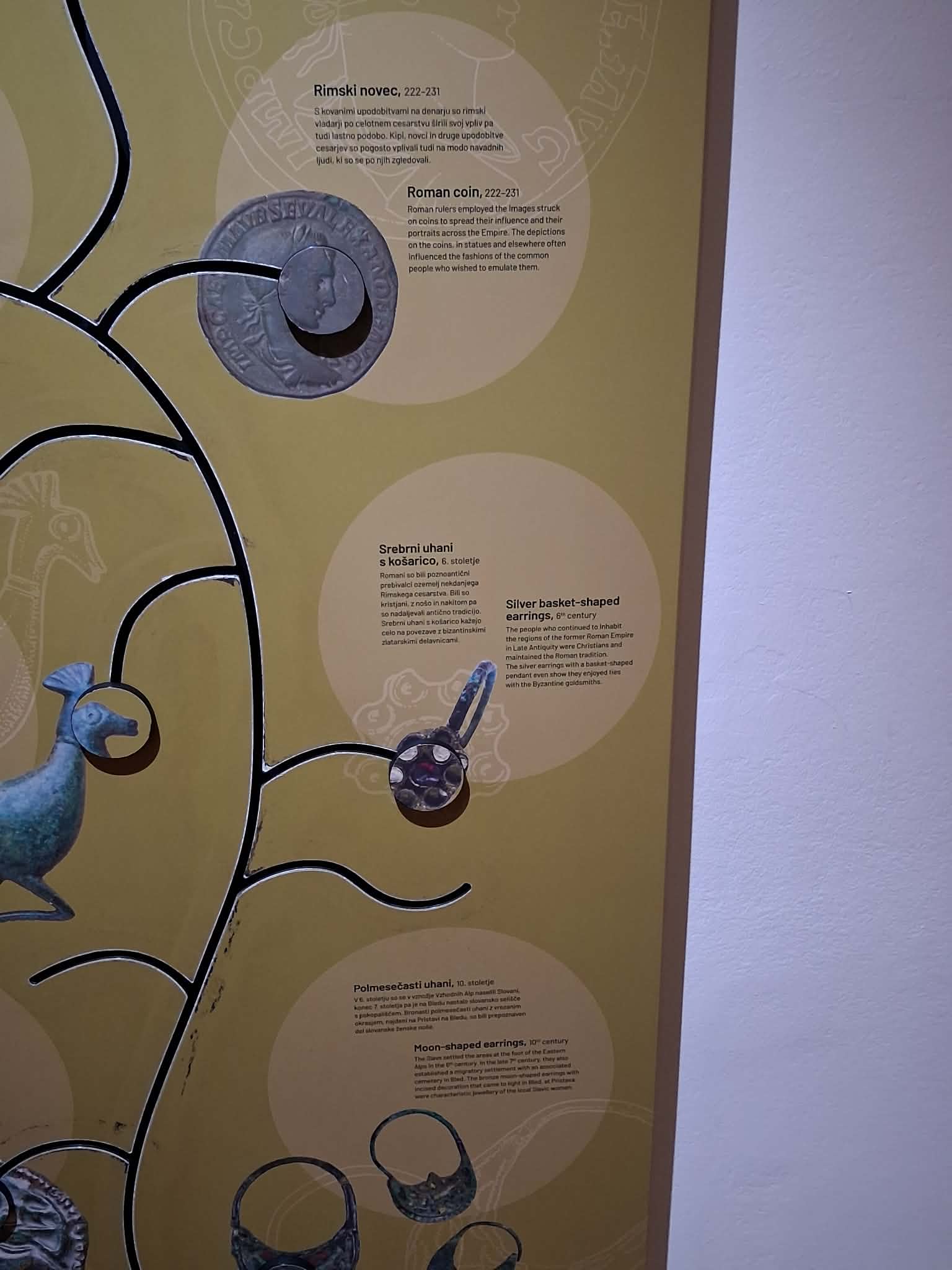
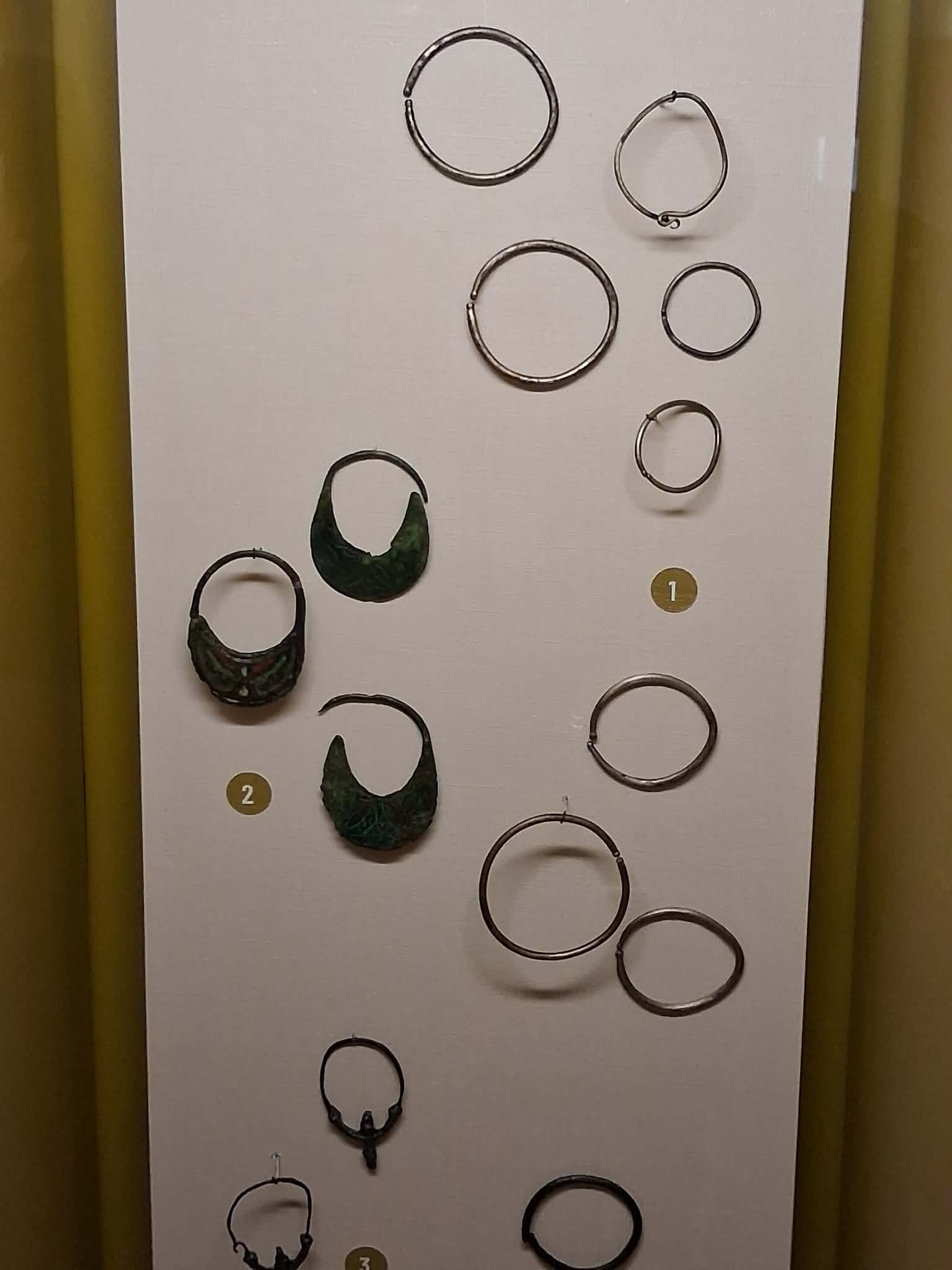
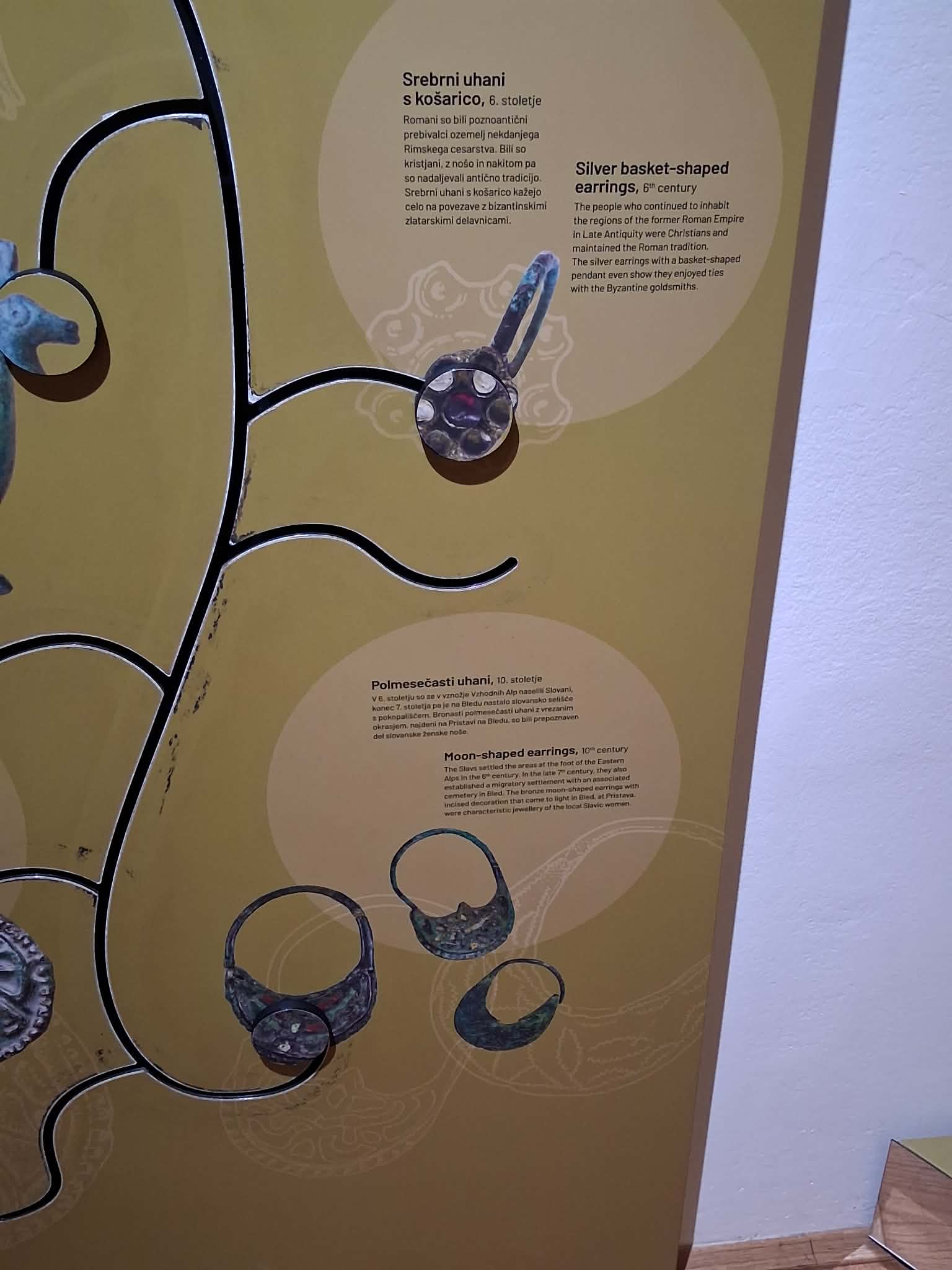
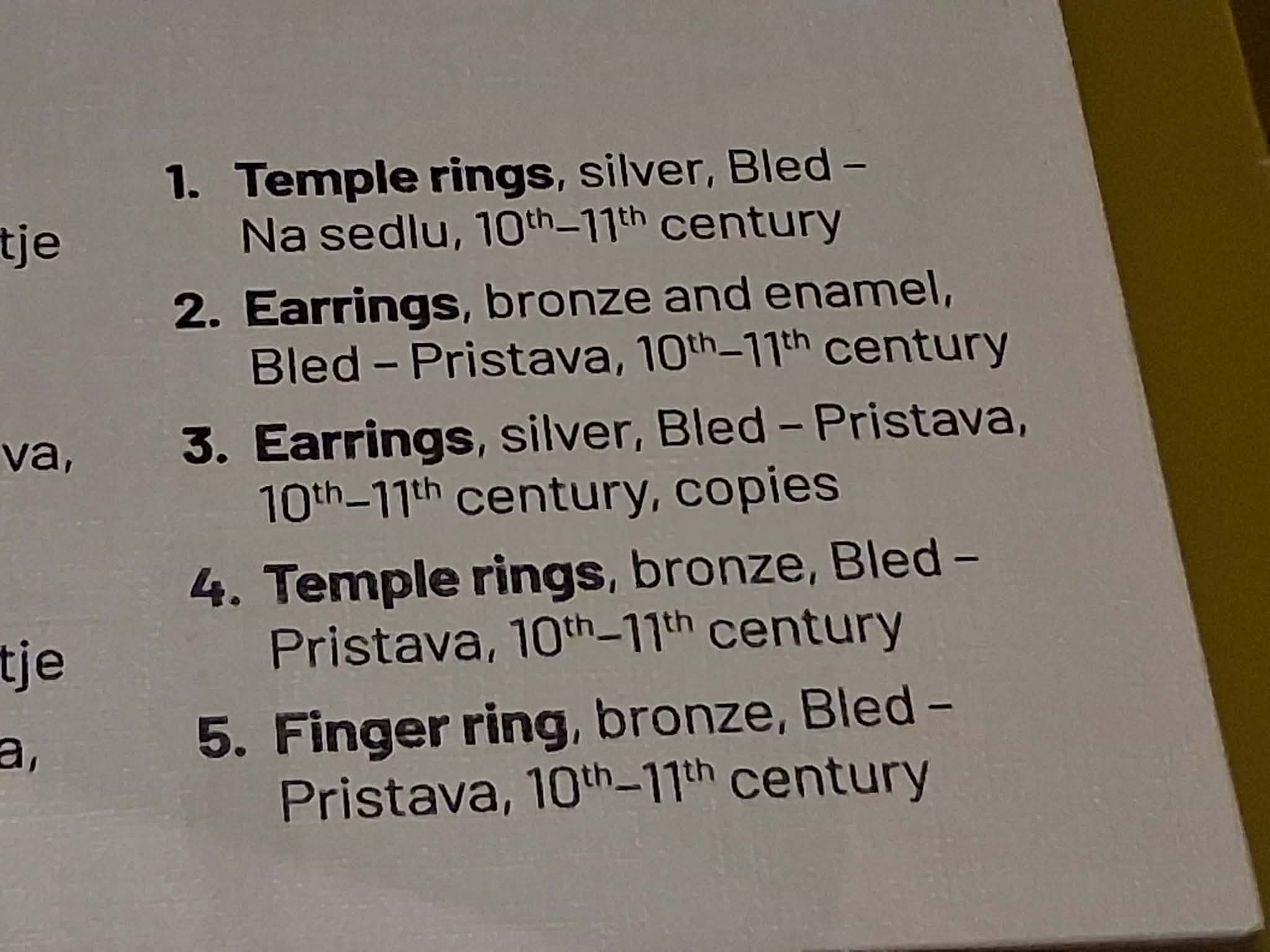
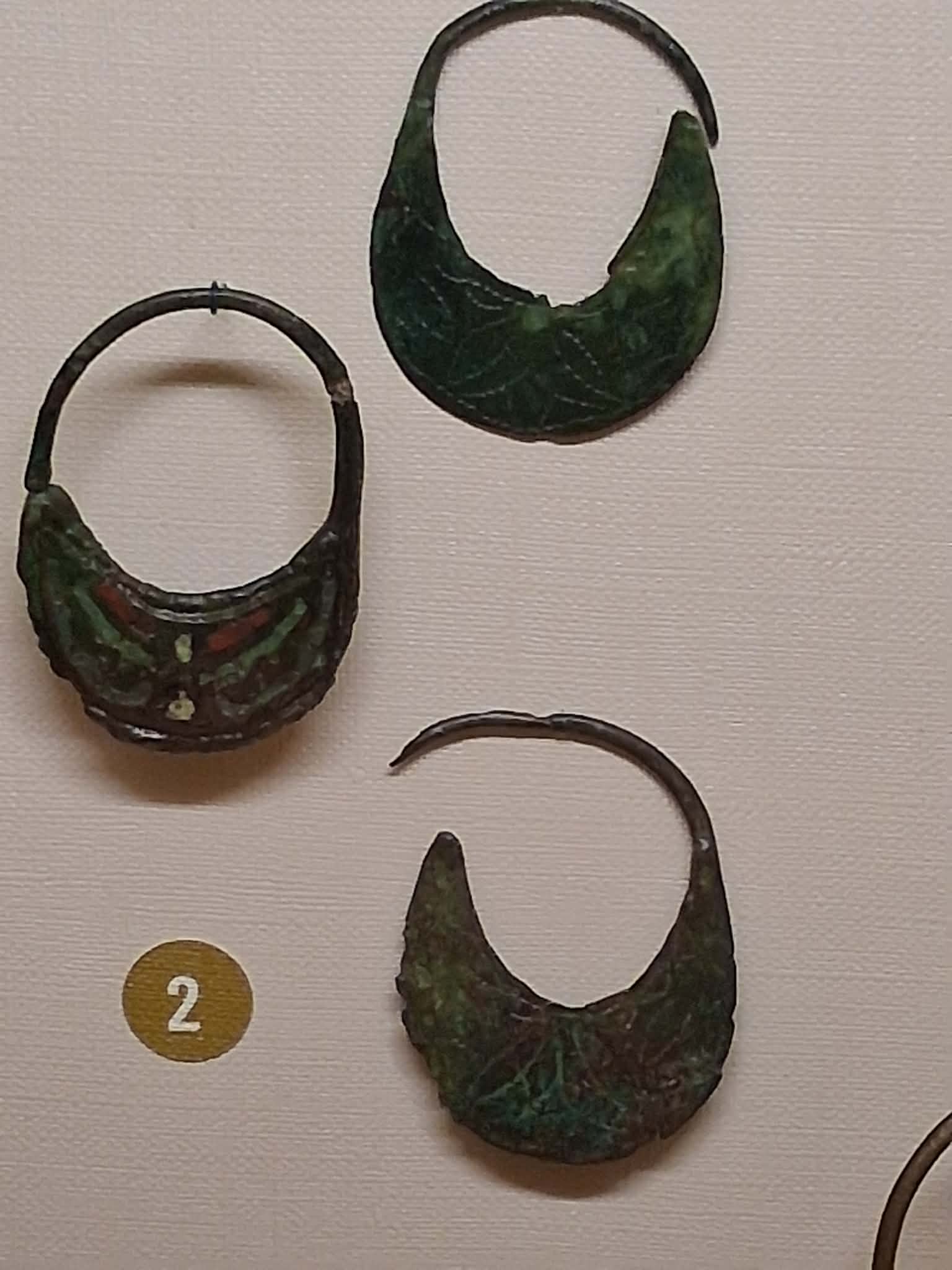
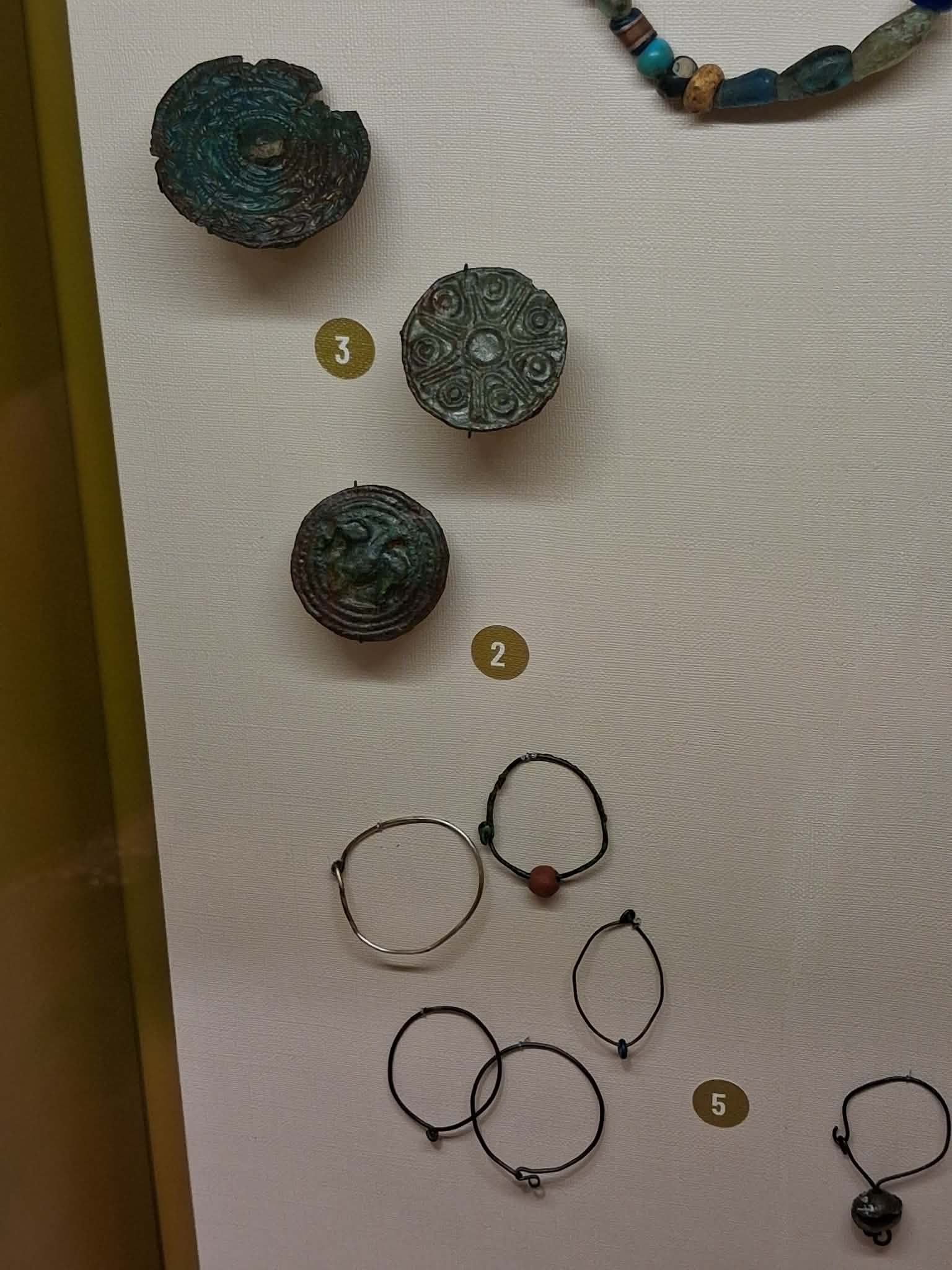
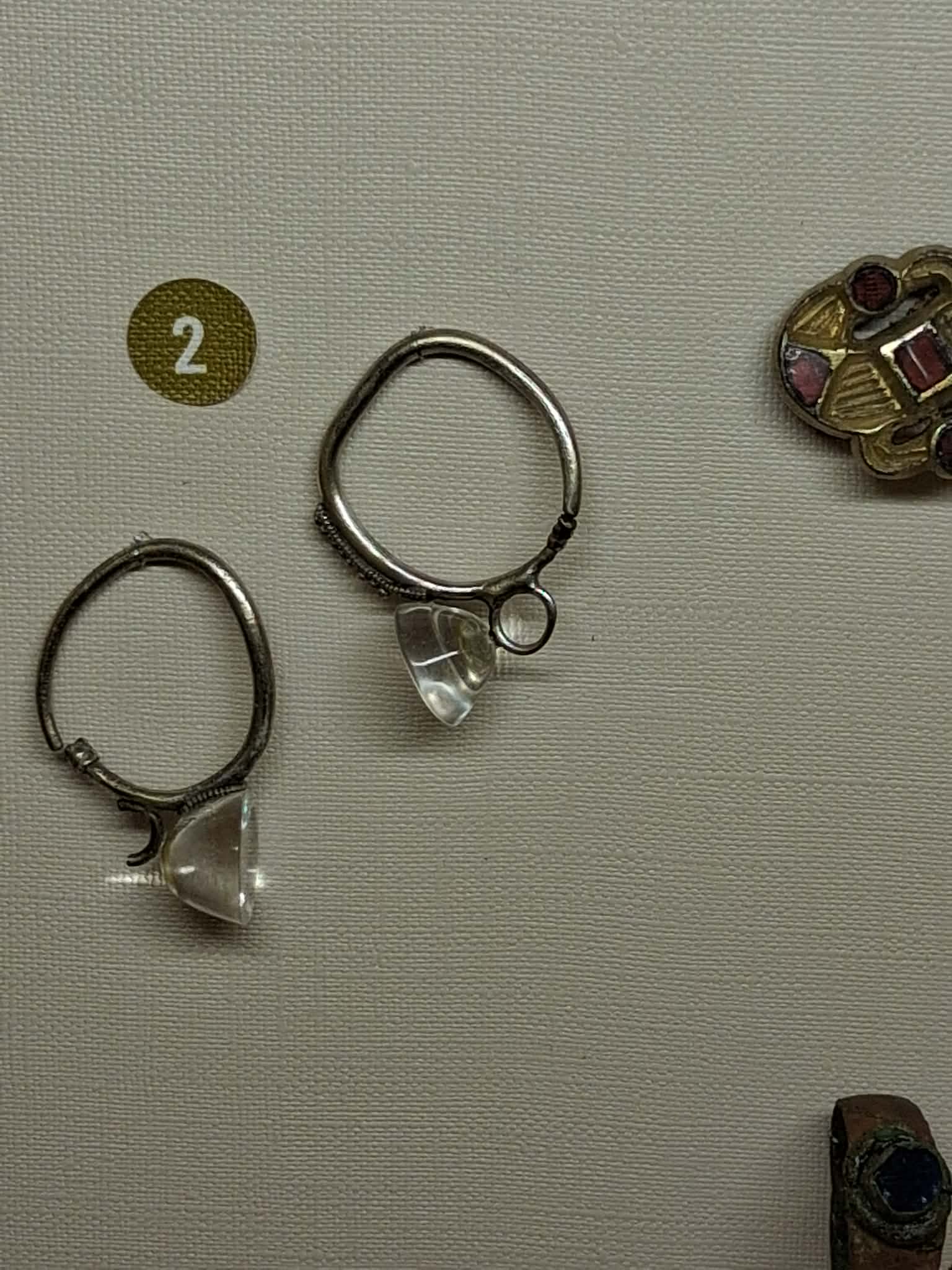
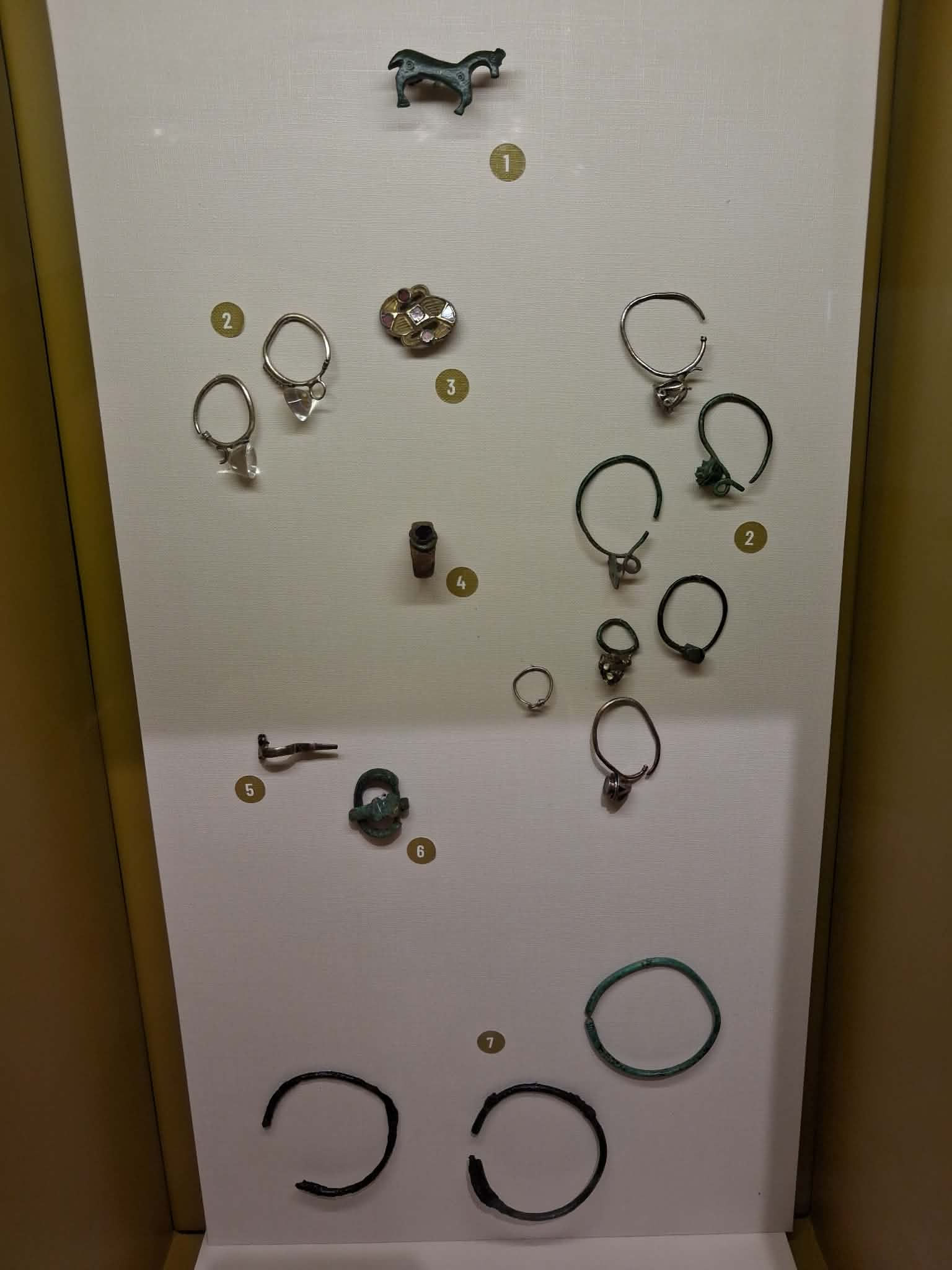
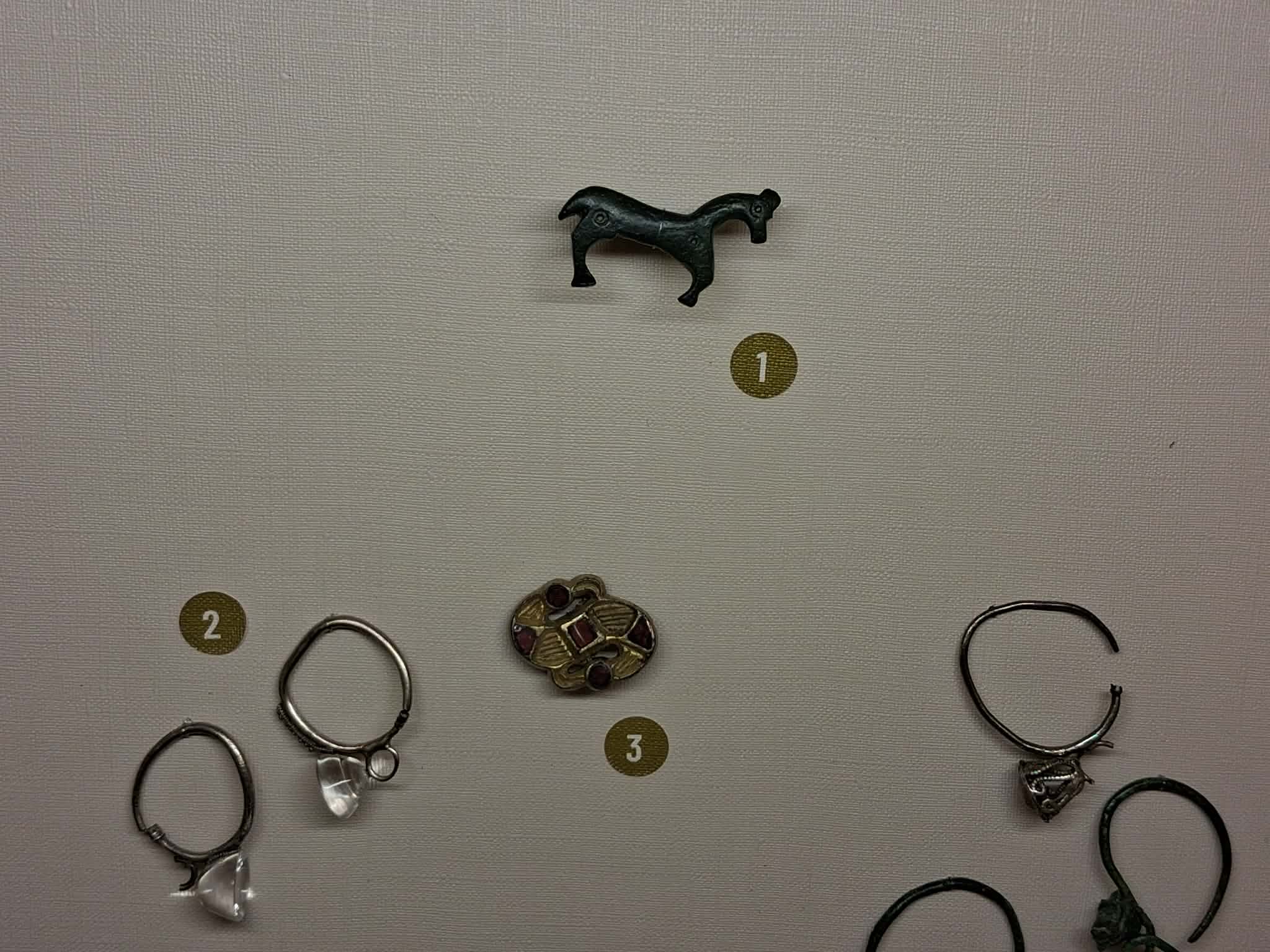
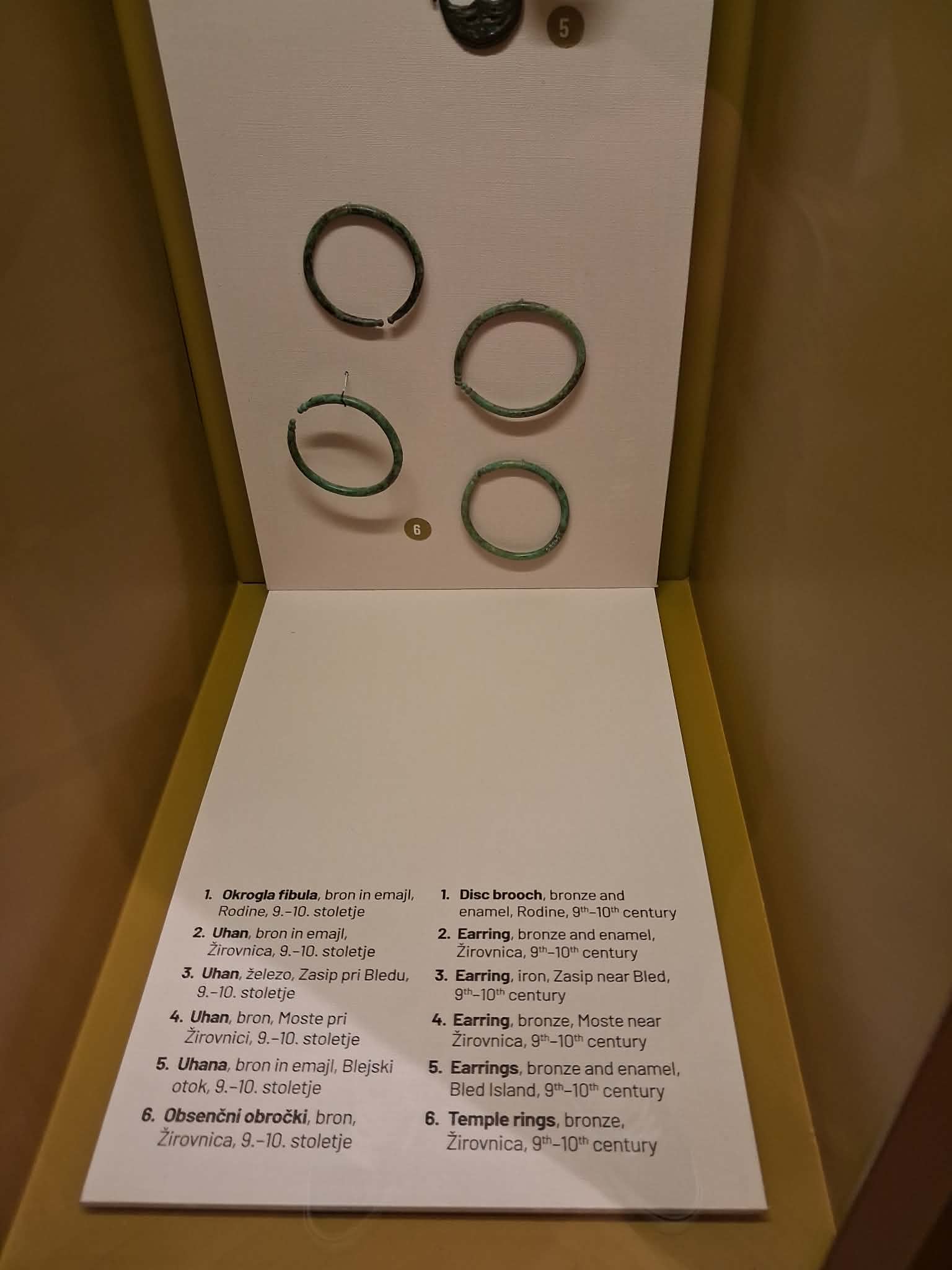
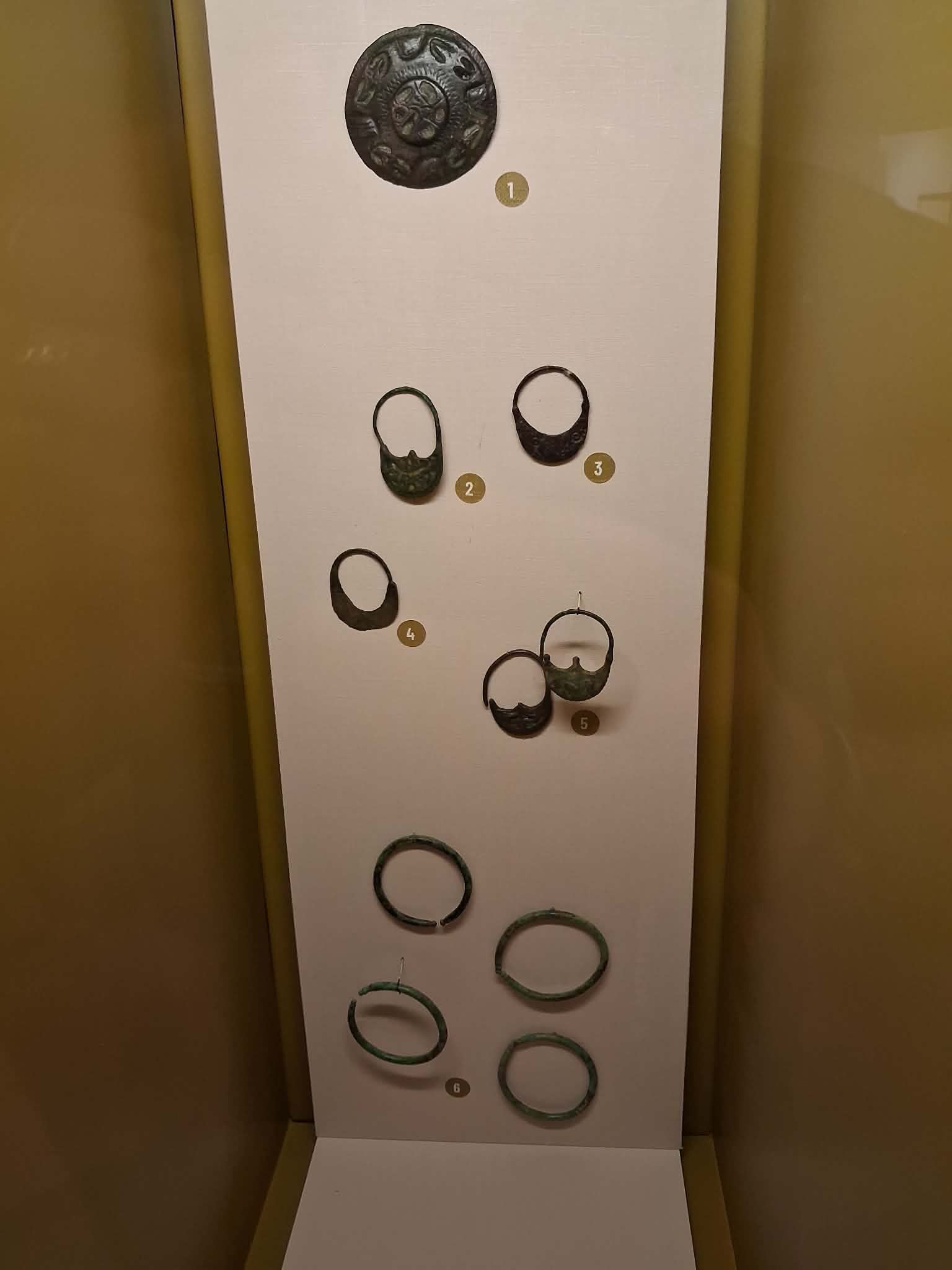
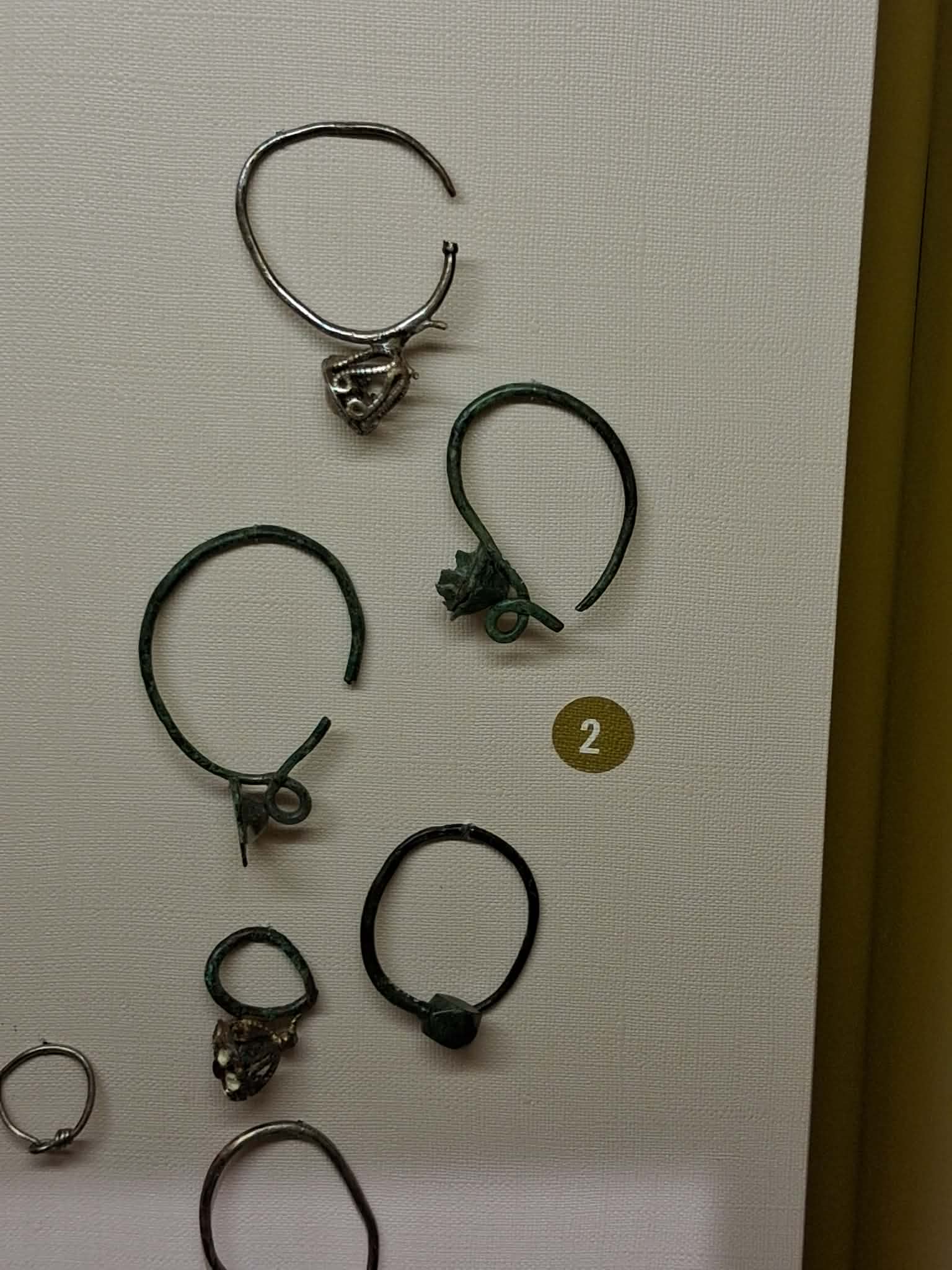
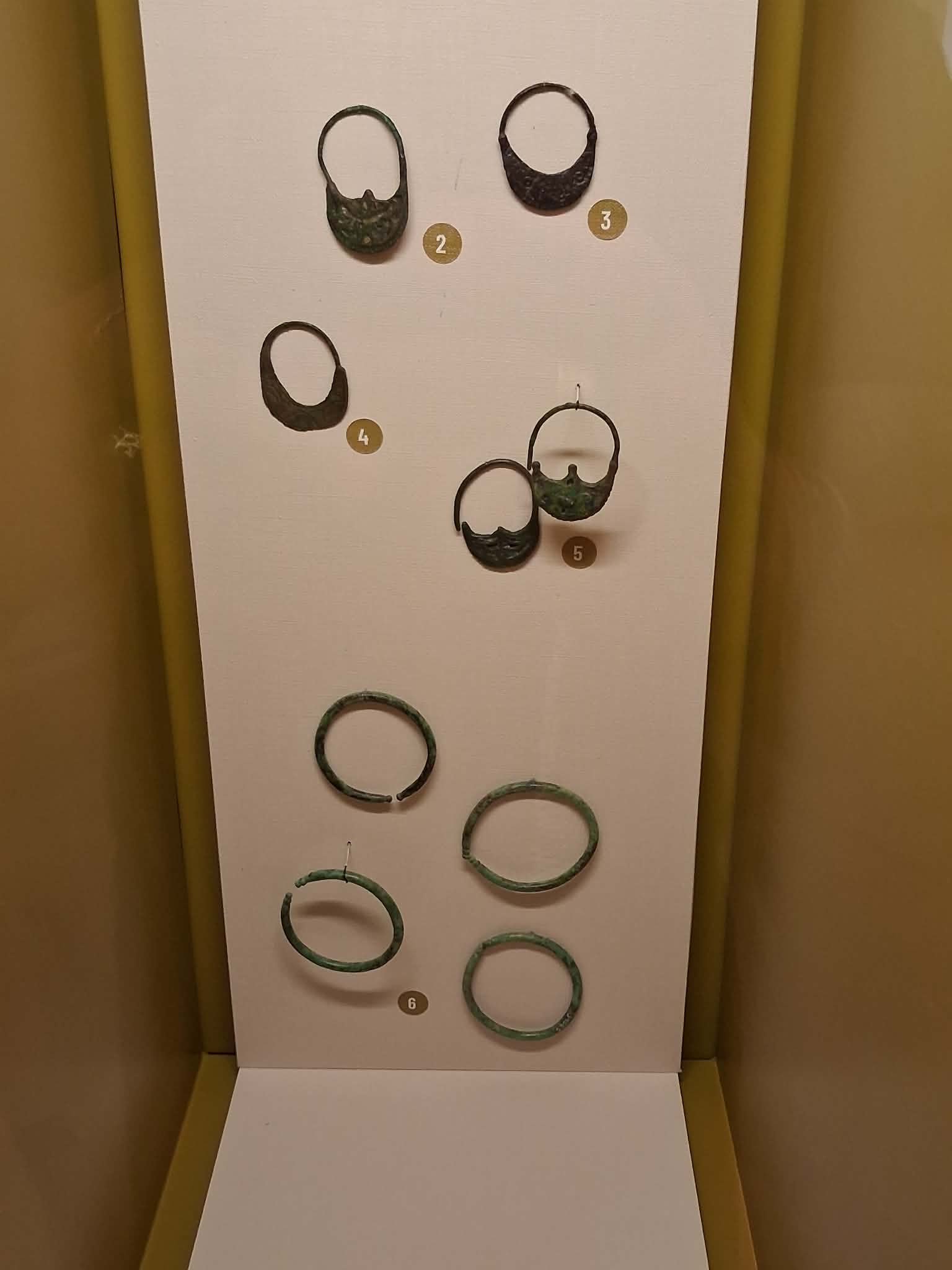
- Enamelled and engraved earrings Often crescent-shaped, they reflect the refinement of Slavic feminine adornments.
- Temple rings Typical of Western Slavs, these rings were worn near the hair and indicated the cultural identity of the clans.
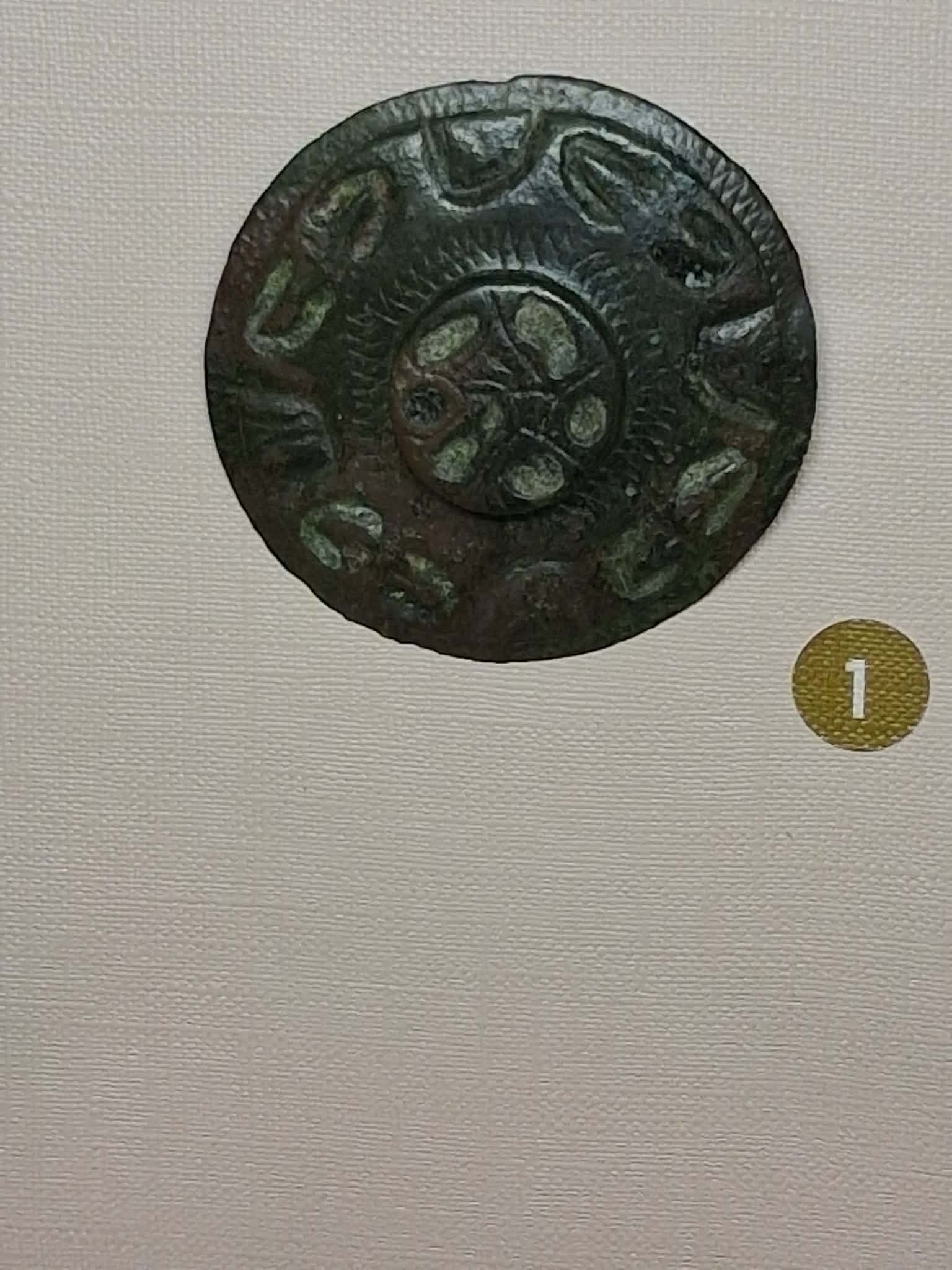
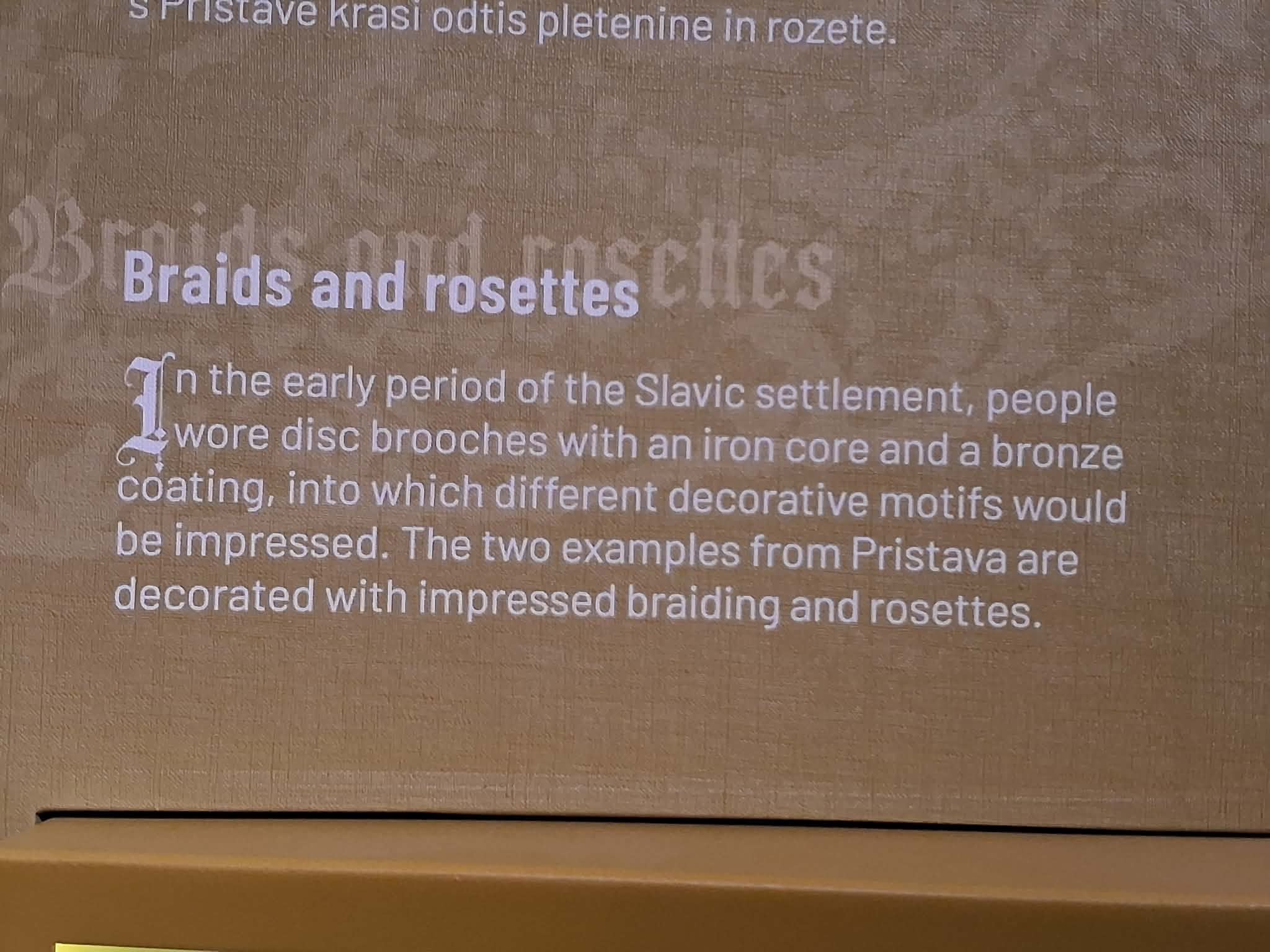
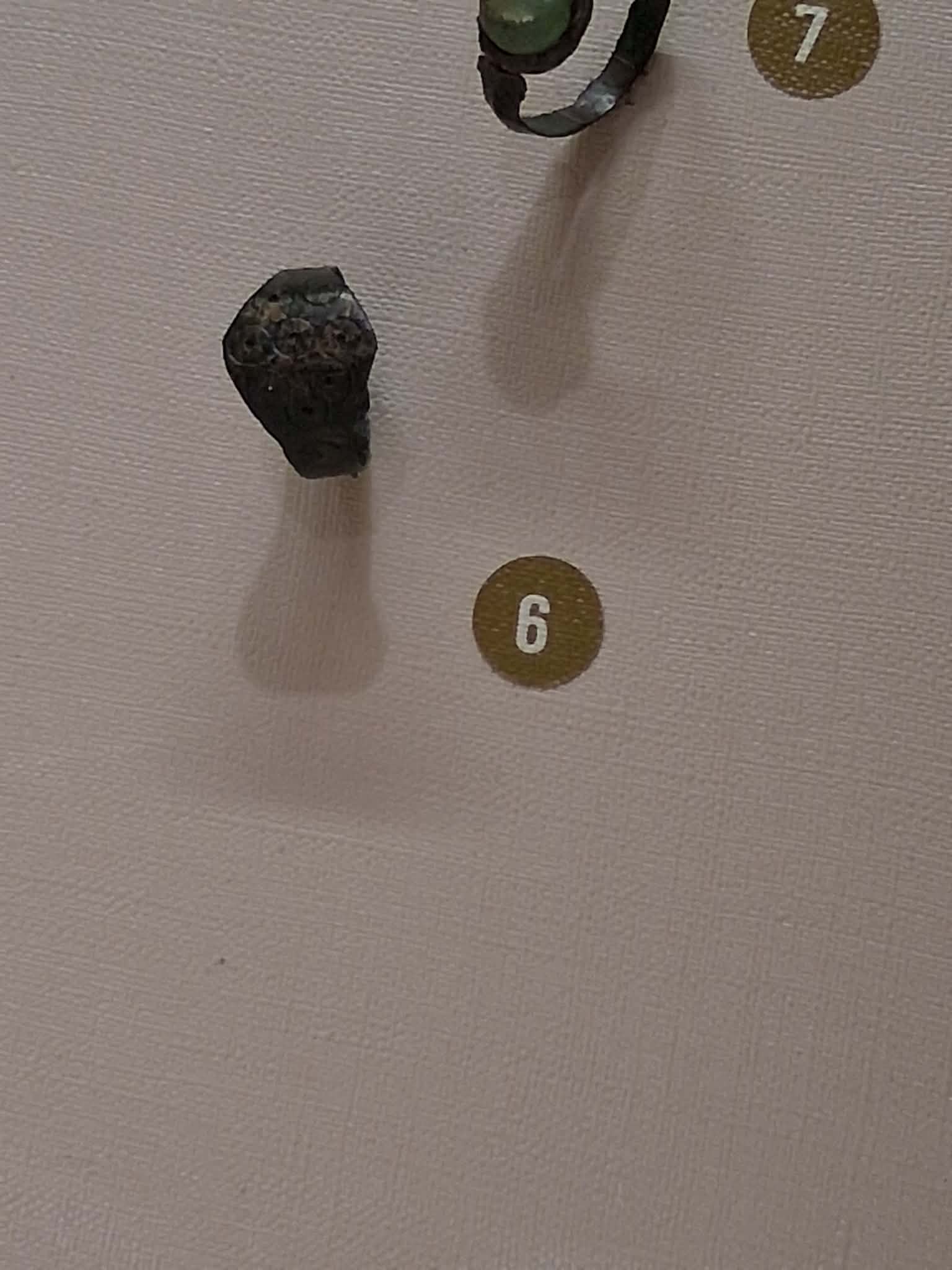
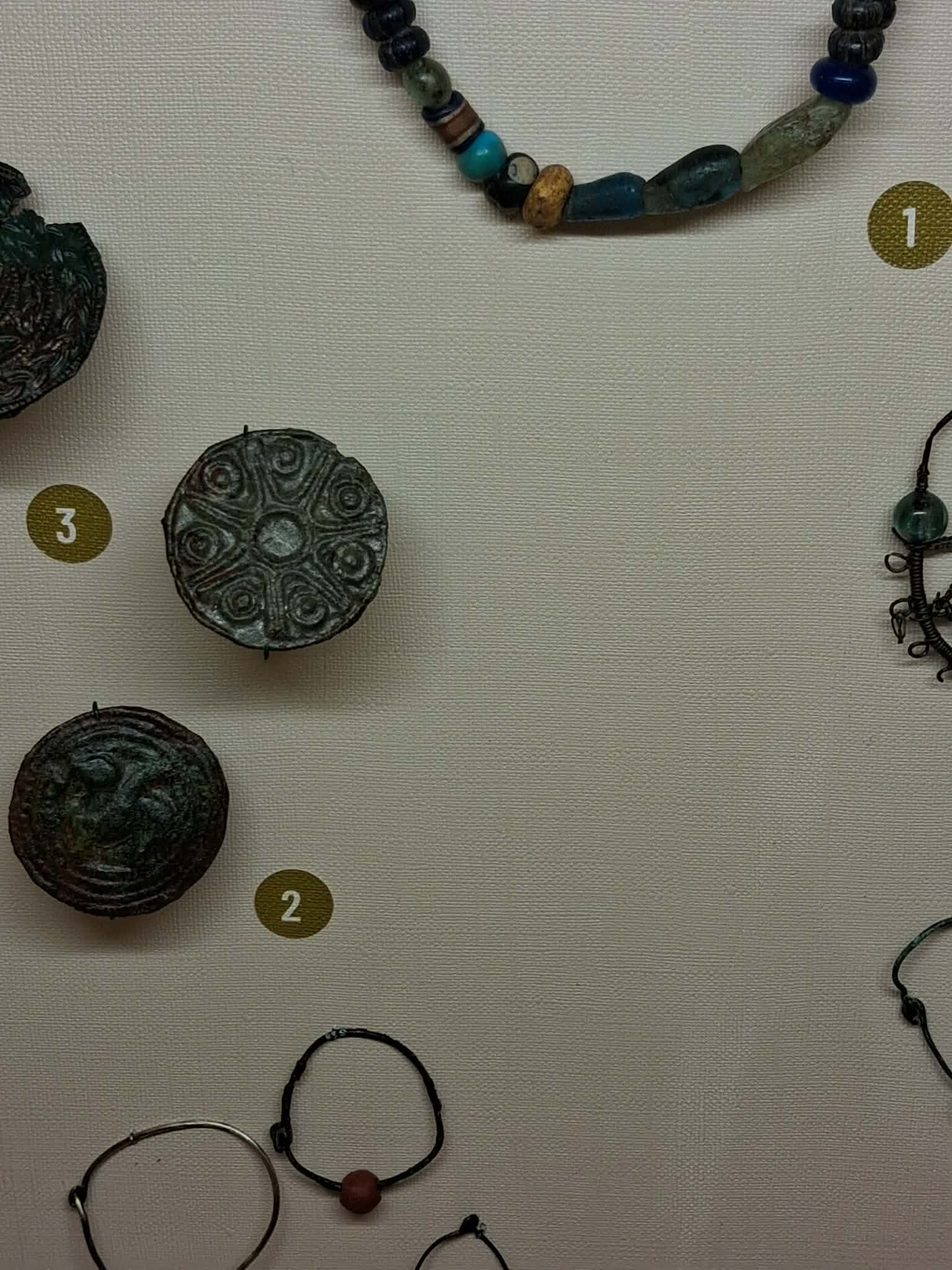
- Round fibulae Used to fasten clothing, they show the evolution of Slavic dress between the 7th and 10th centuries.
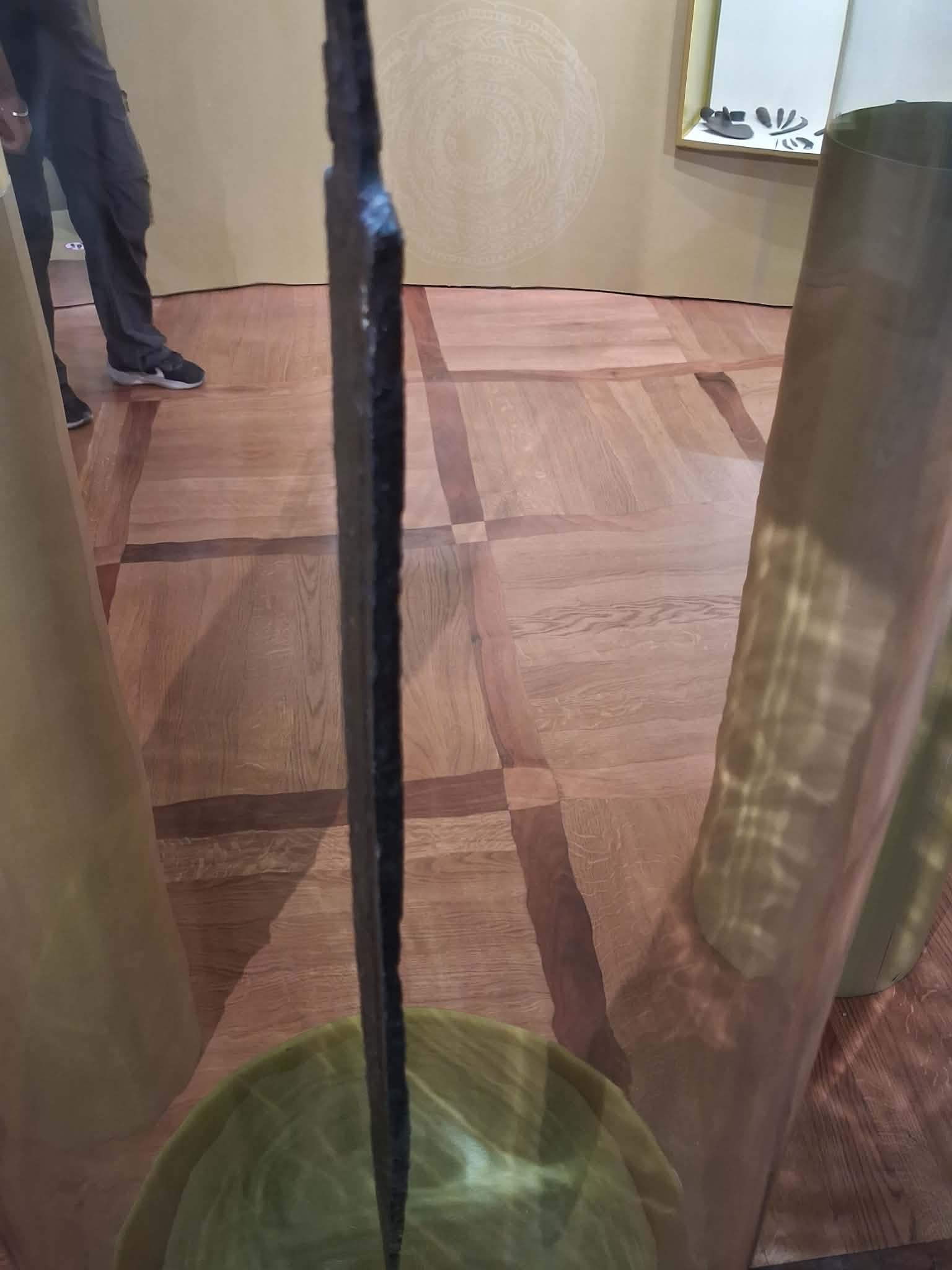
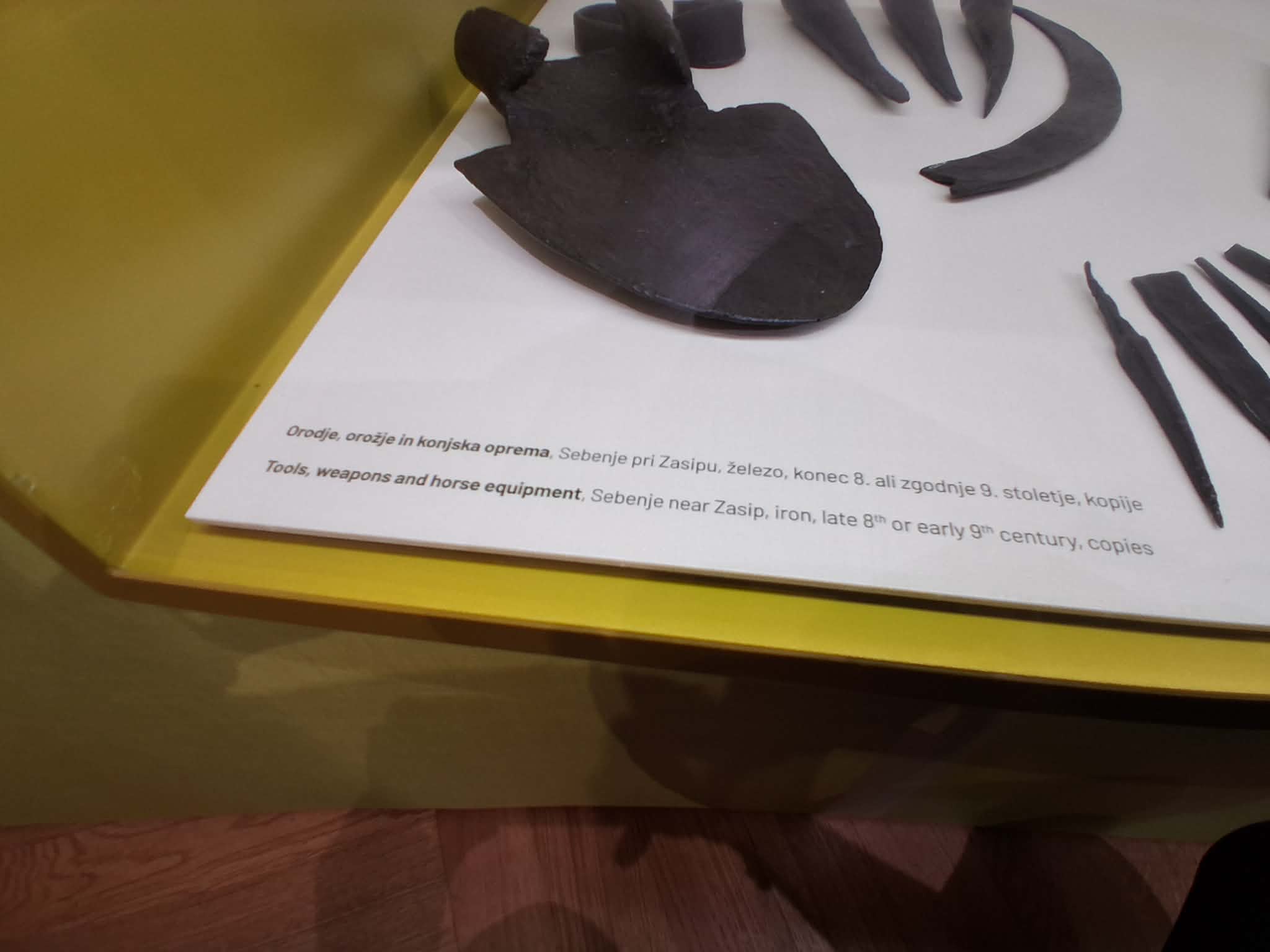
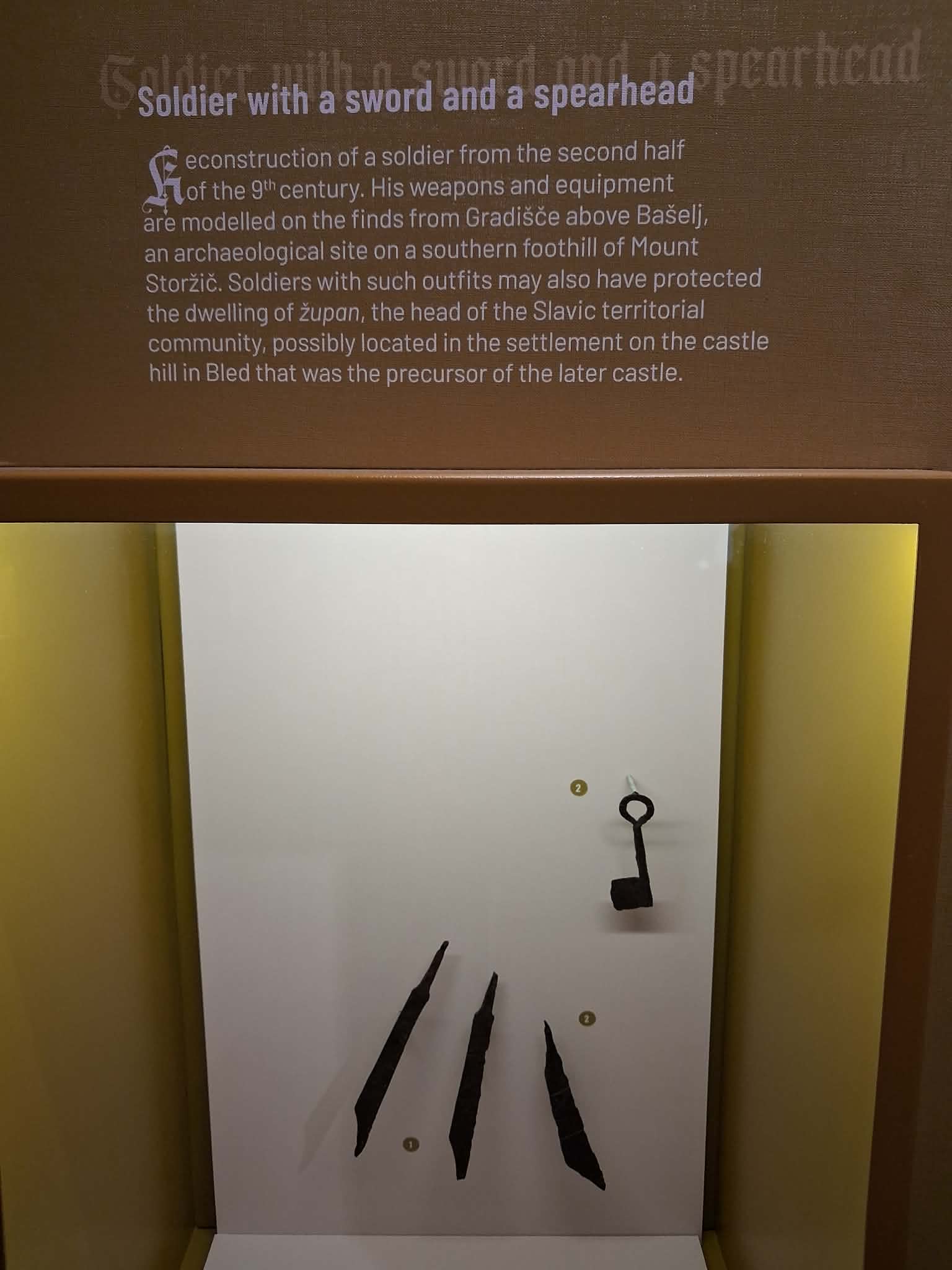
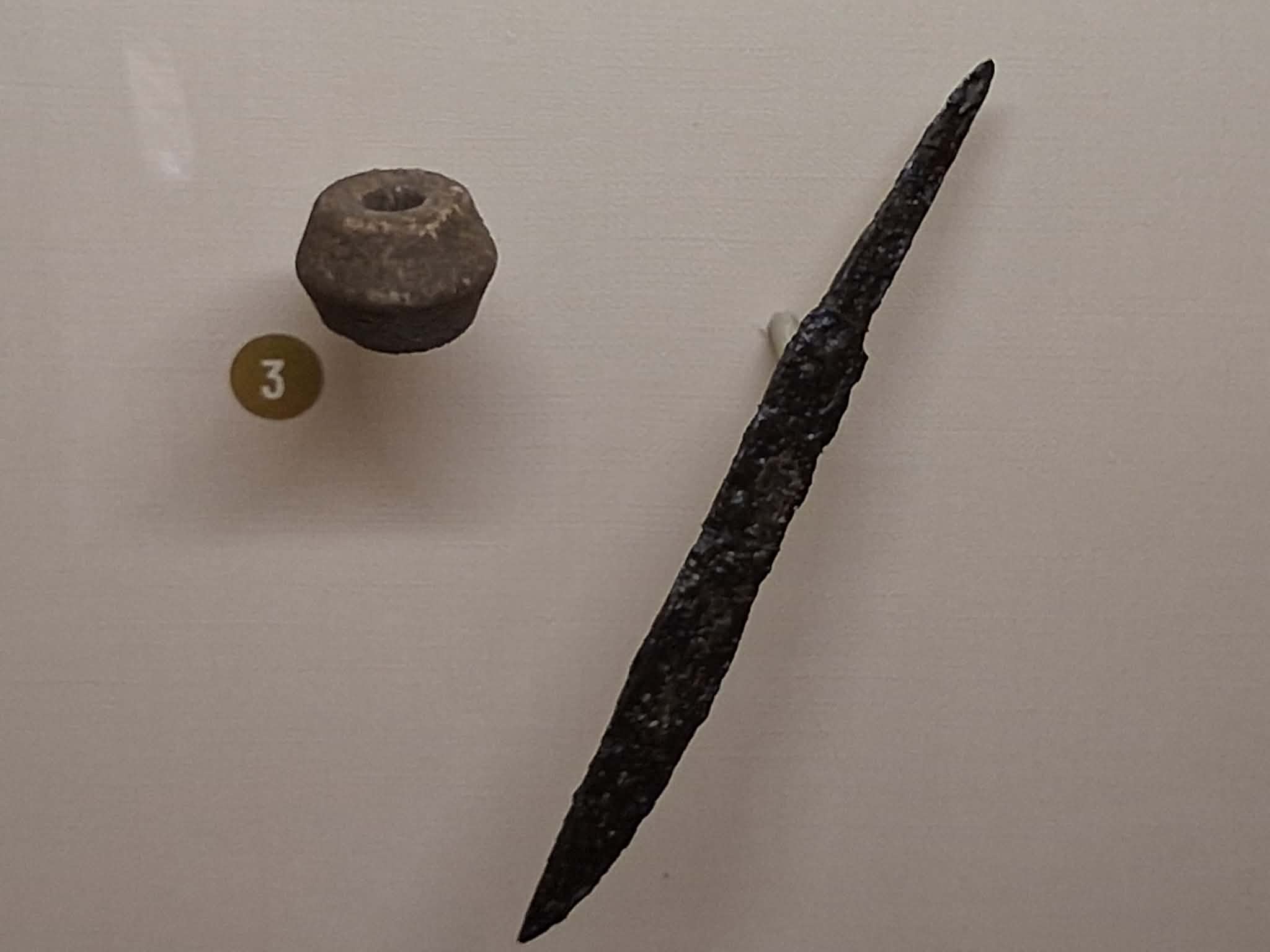
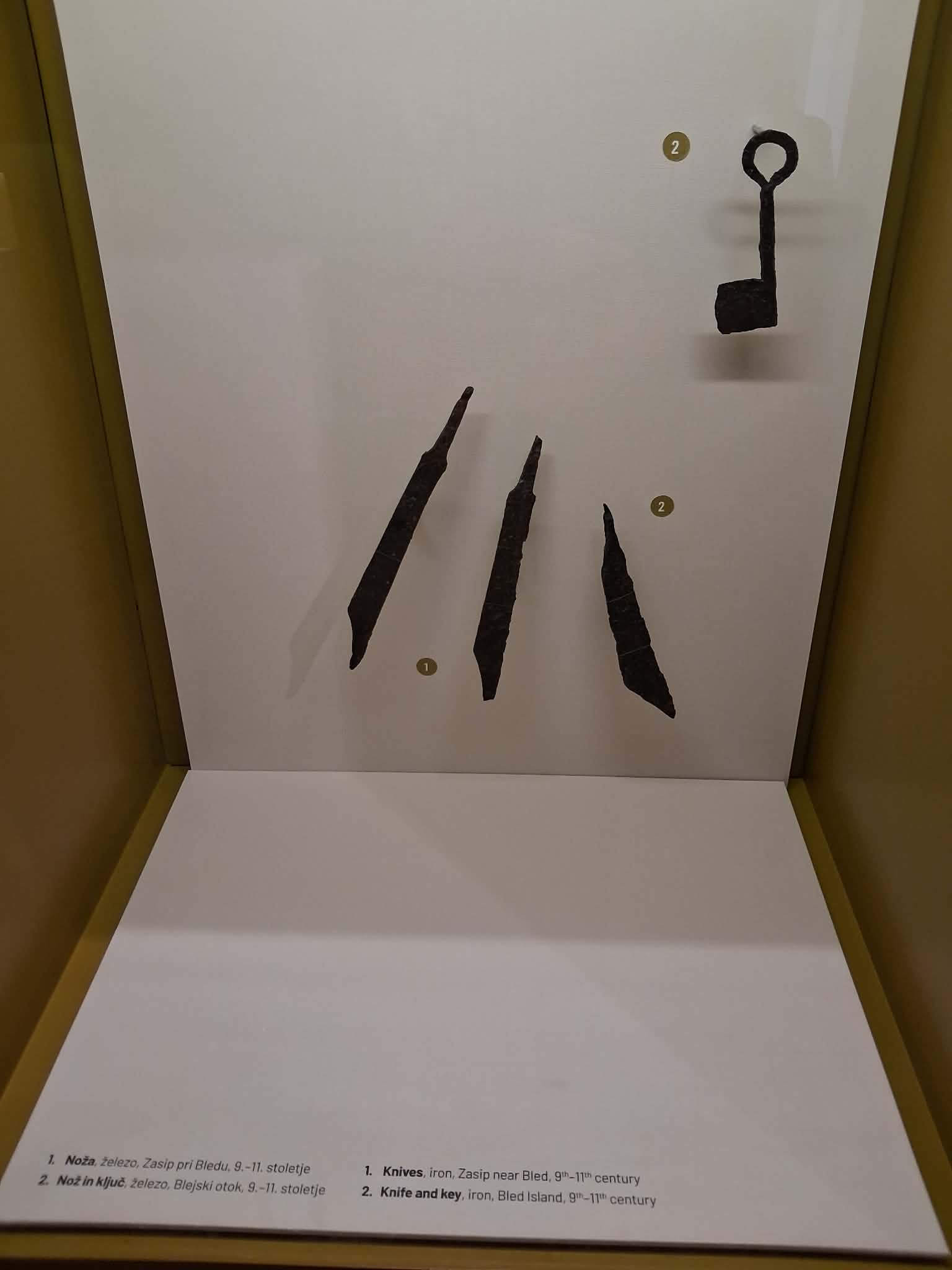
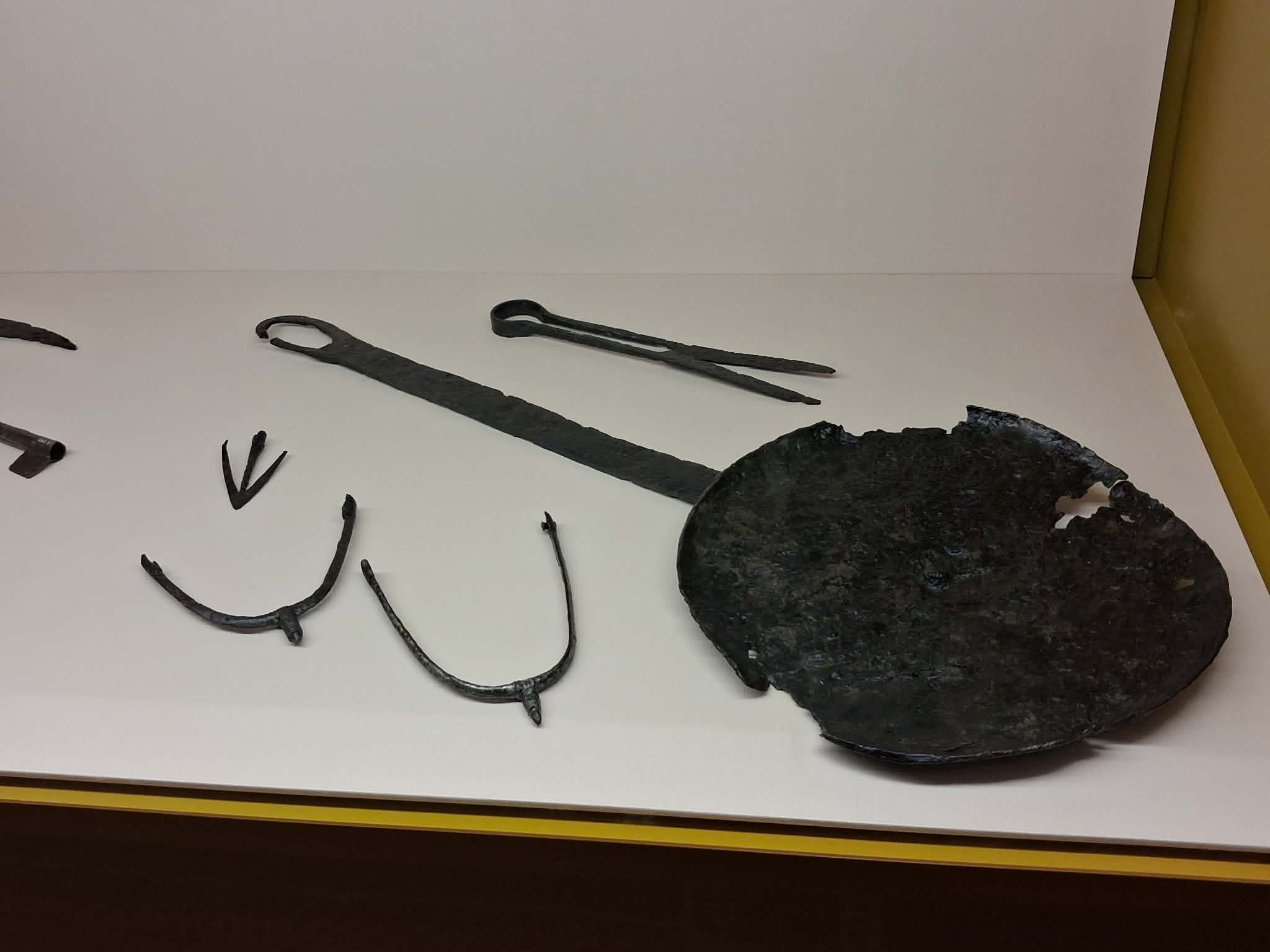
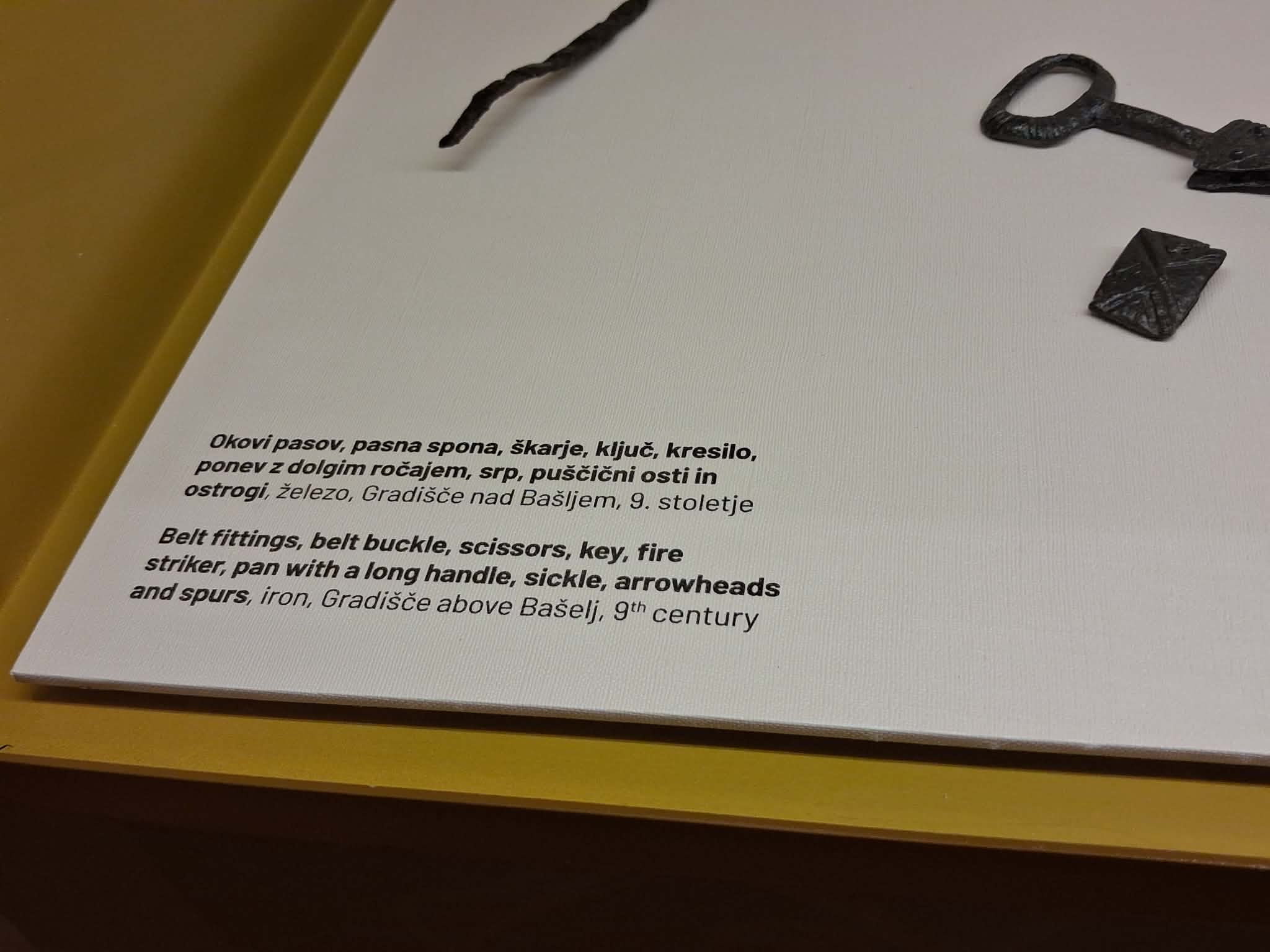
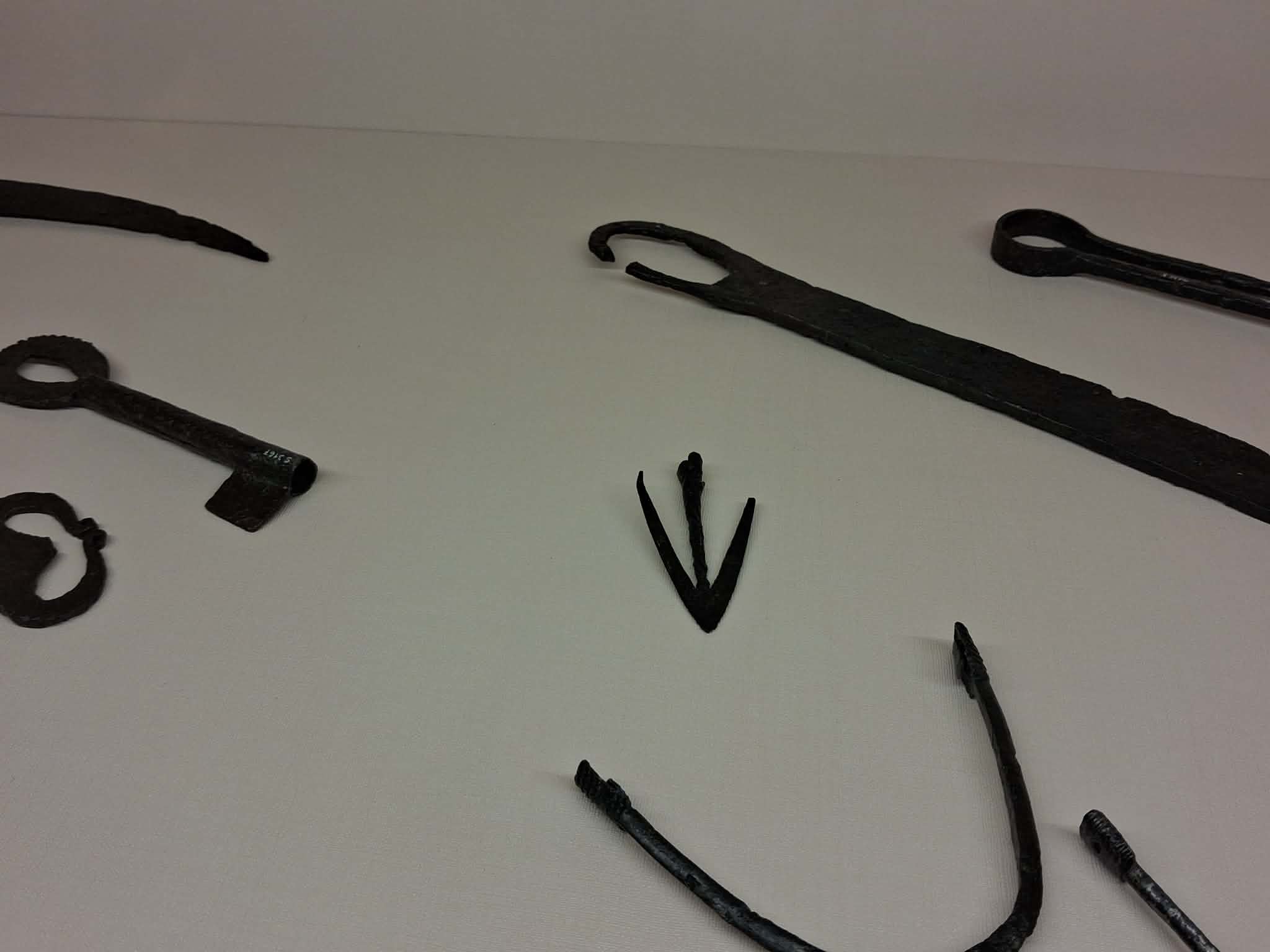
- Iron knives Everyday tools but also symbols of status, found in many burials.
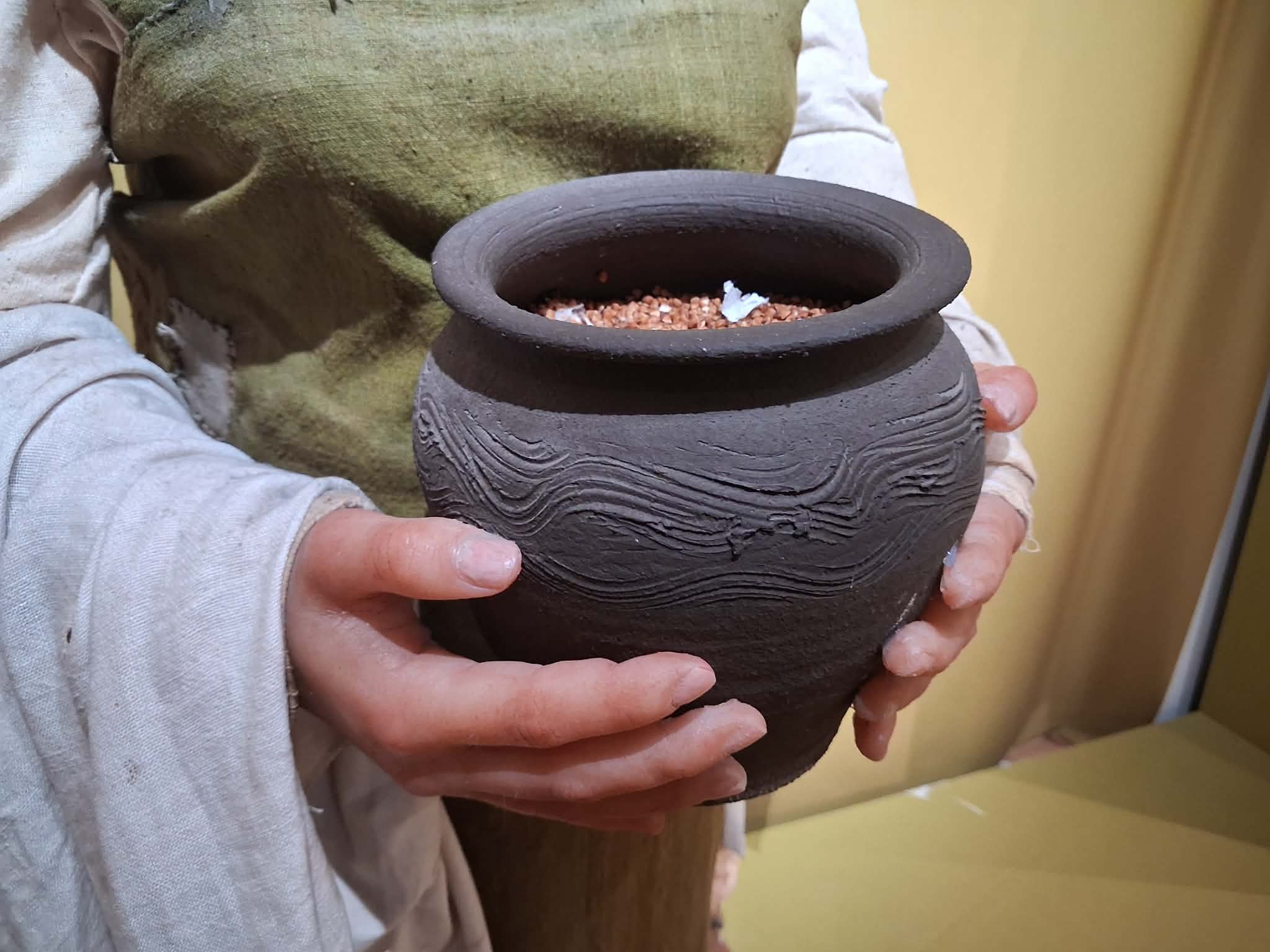
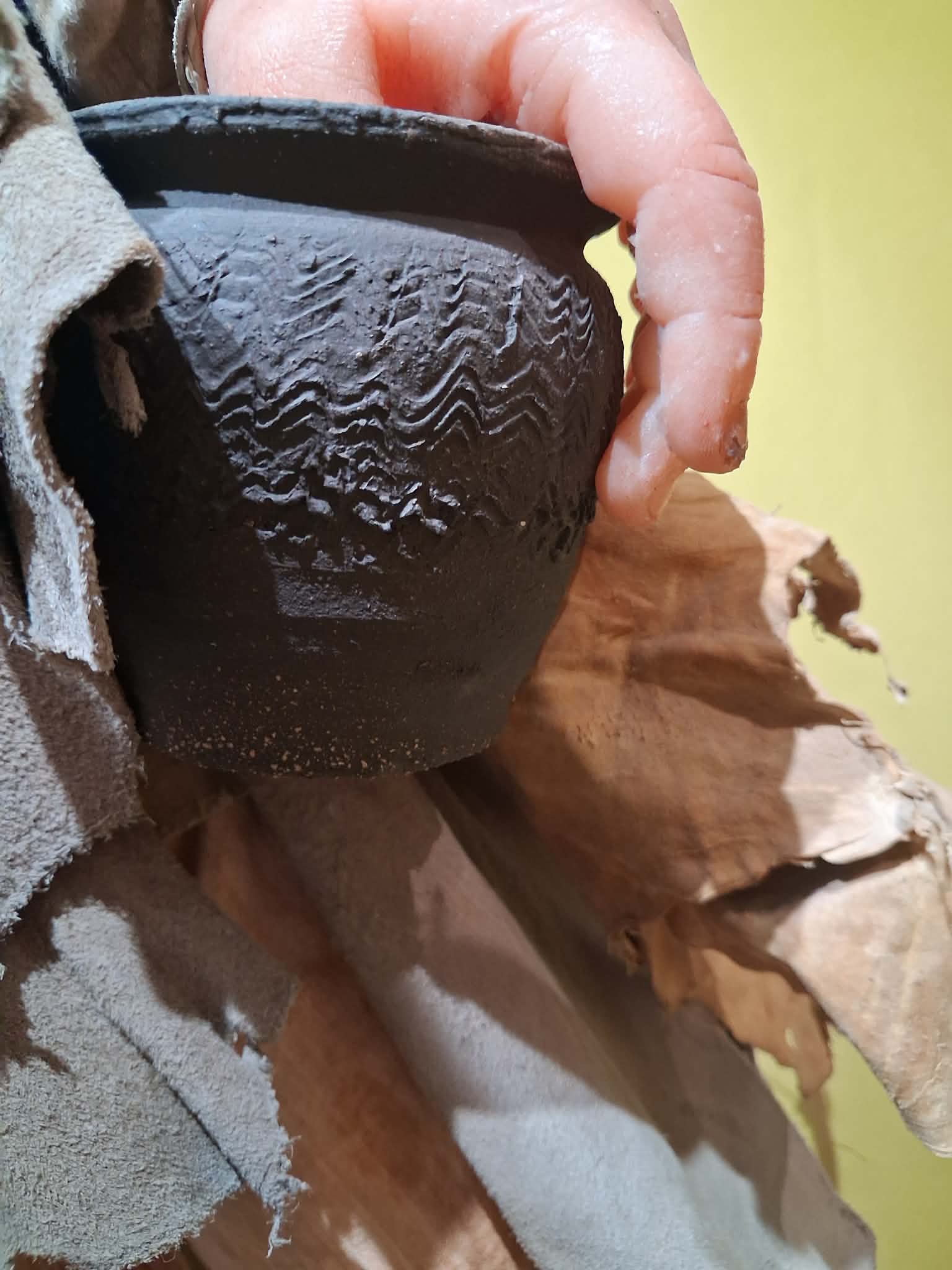
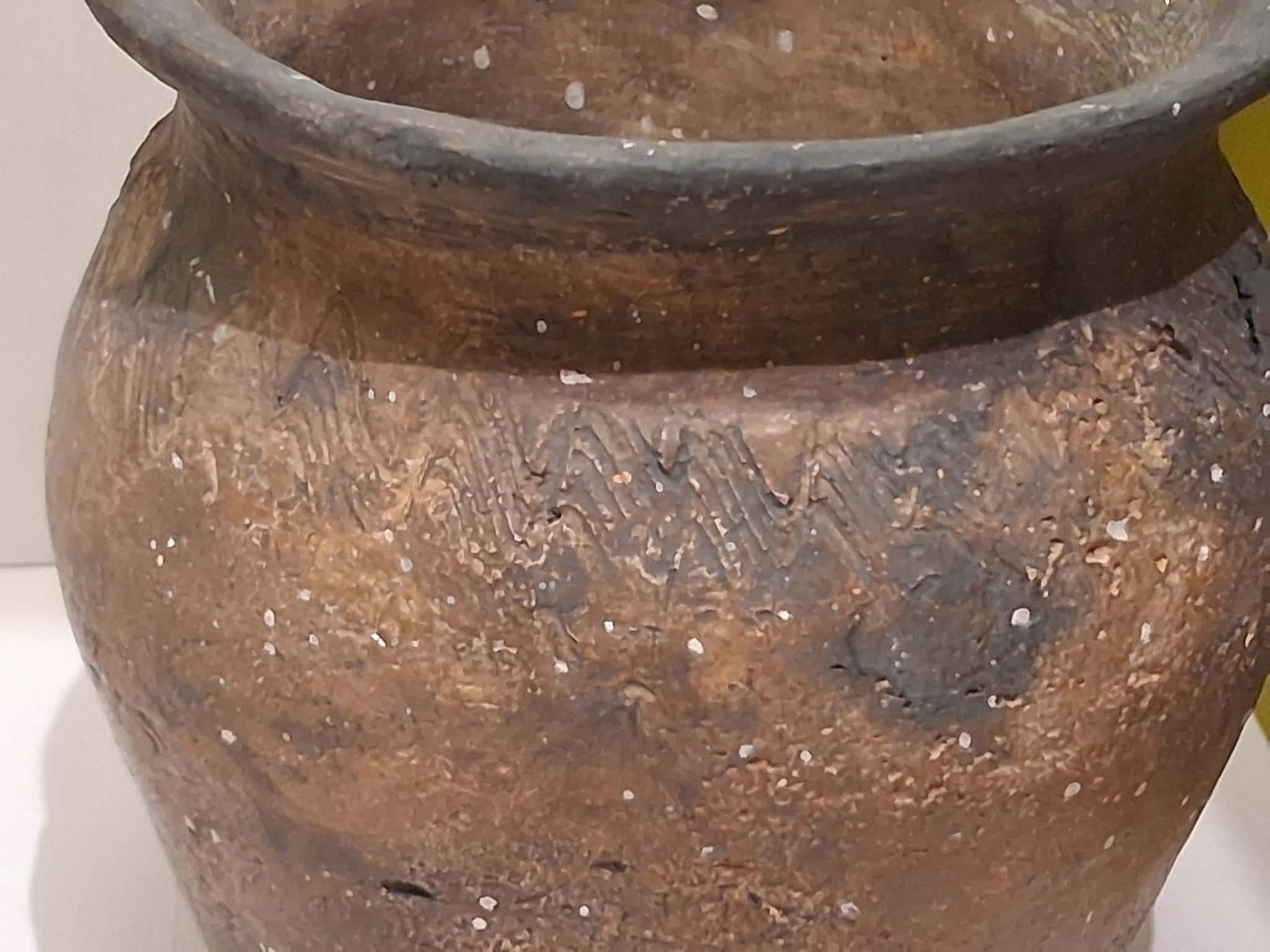
- Cremation objects The Slavs of Bled practiced cremation: urns, burnt fragments, and cremation sites are displayed in the exhibition.
-These objects help us understand the material life, funerary rites, and social organization of the first Slavs who settled in the region.
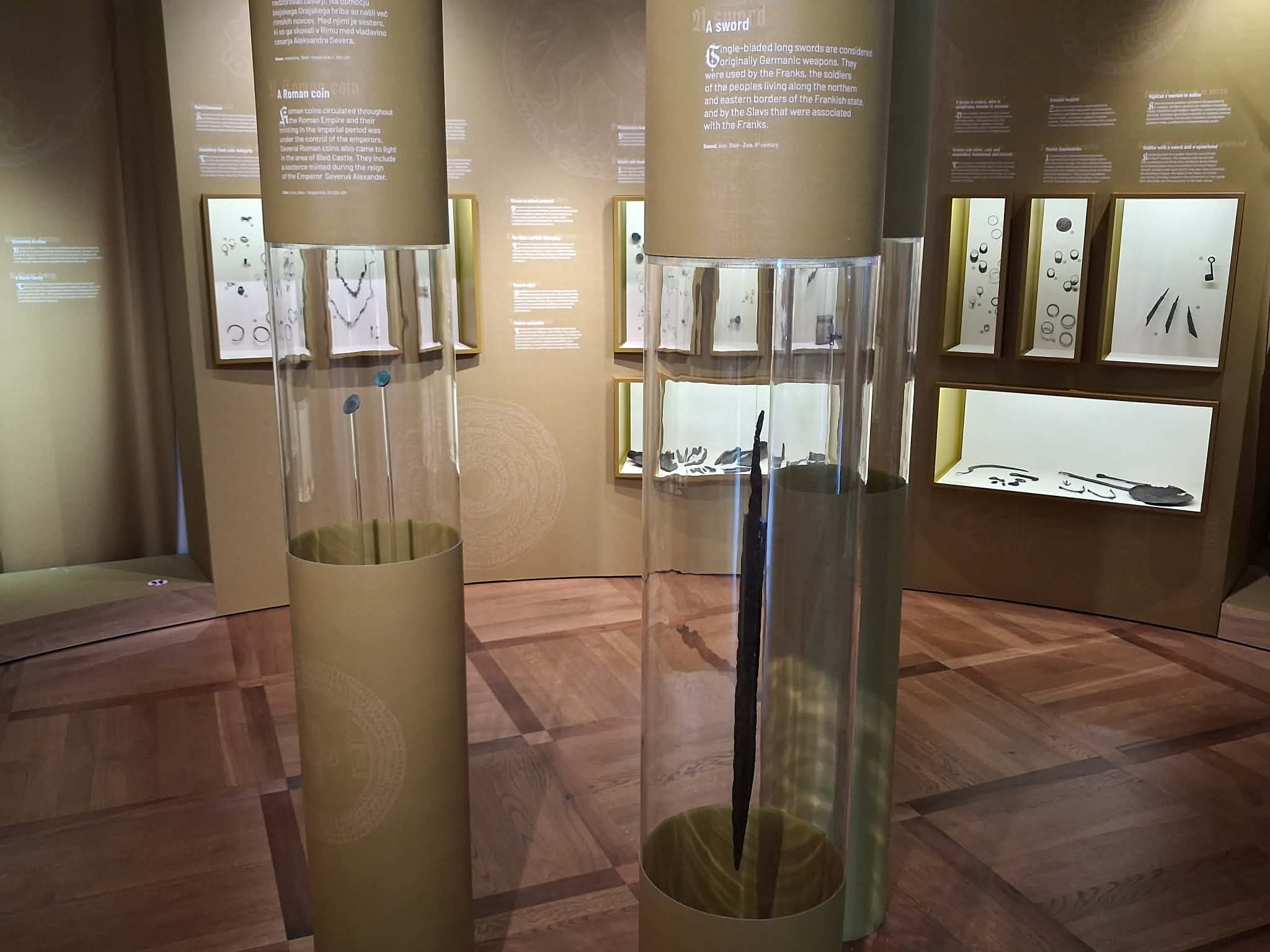
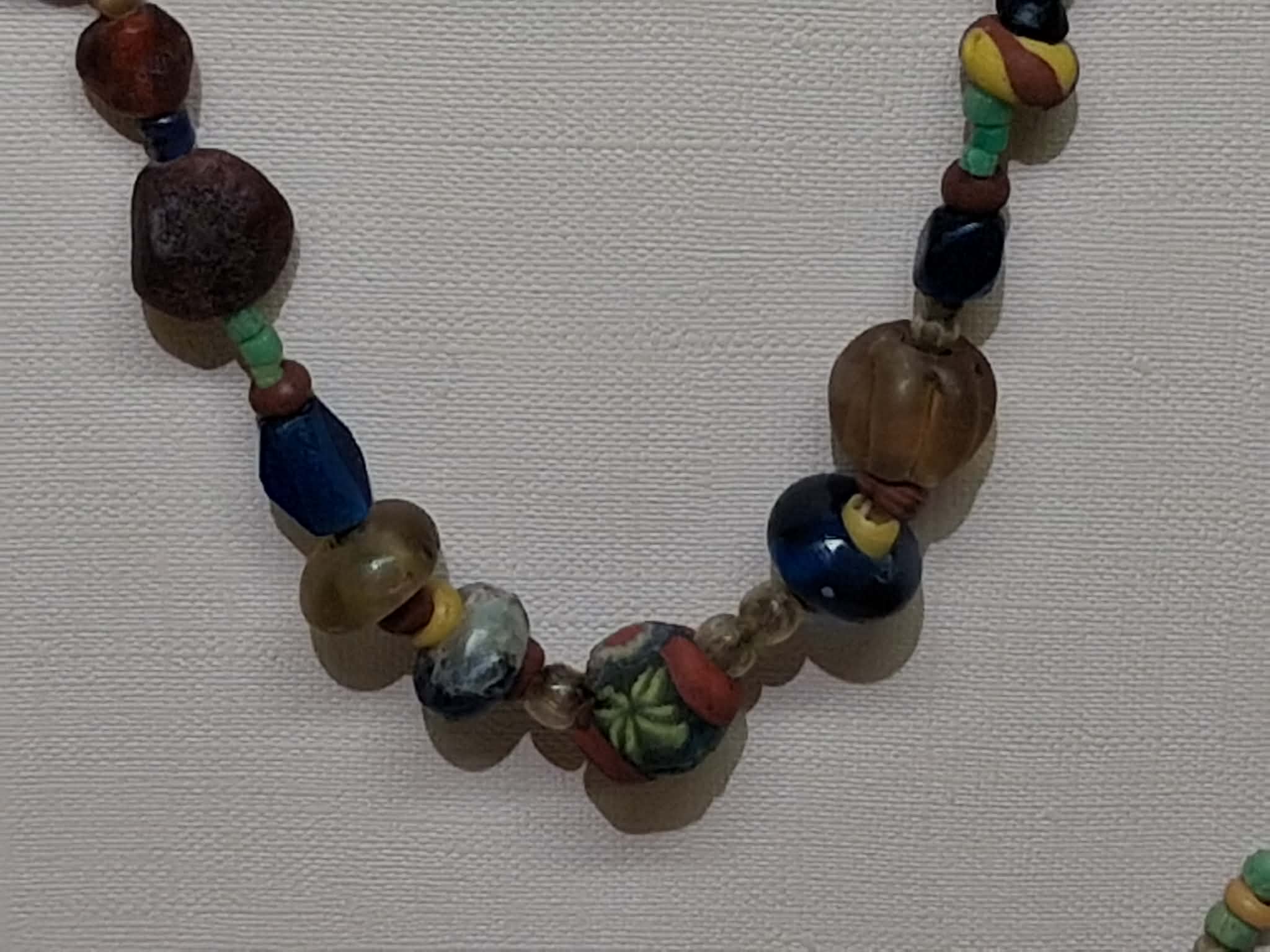
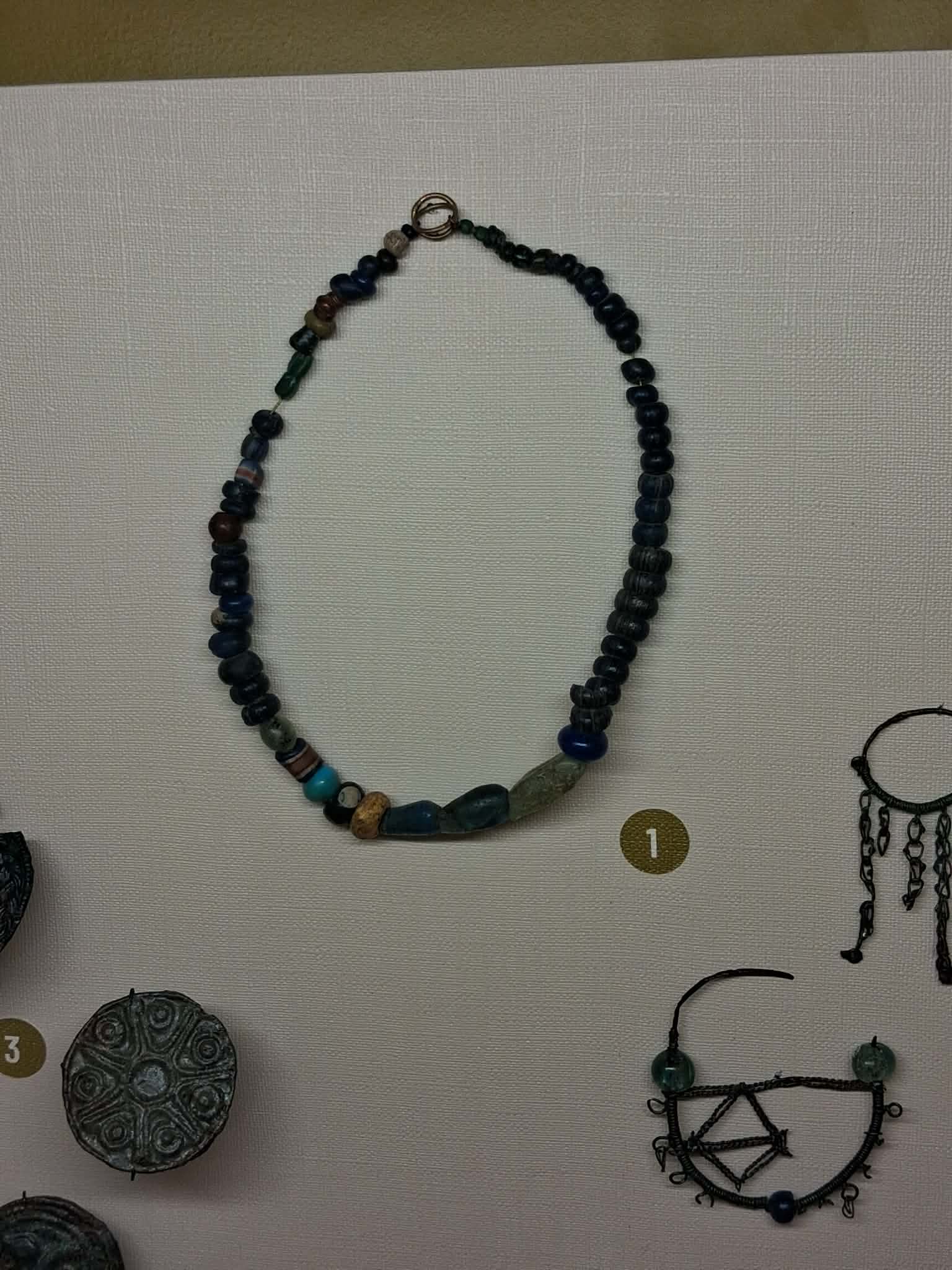
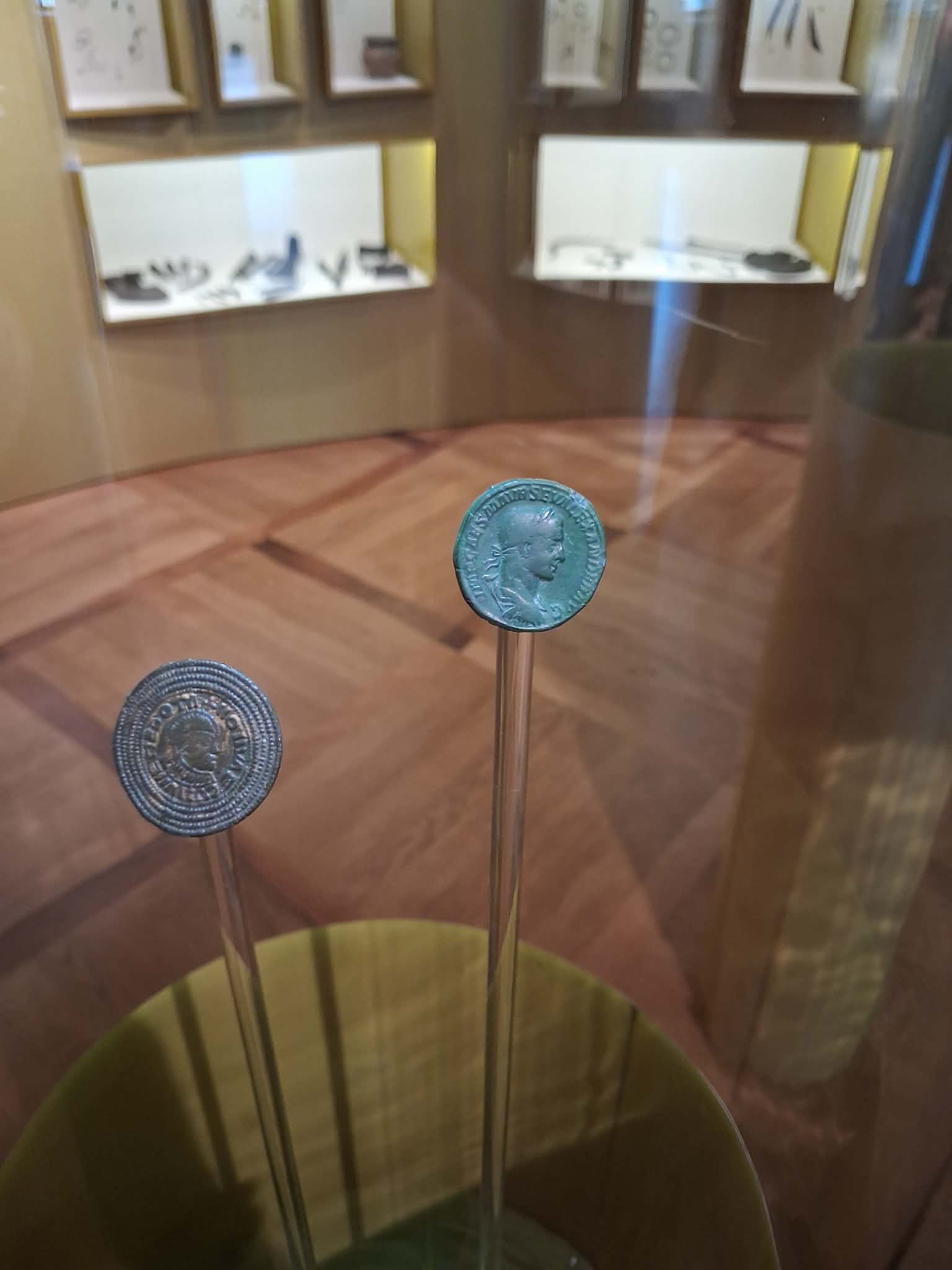
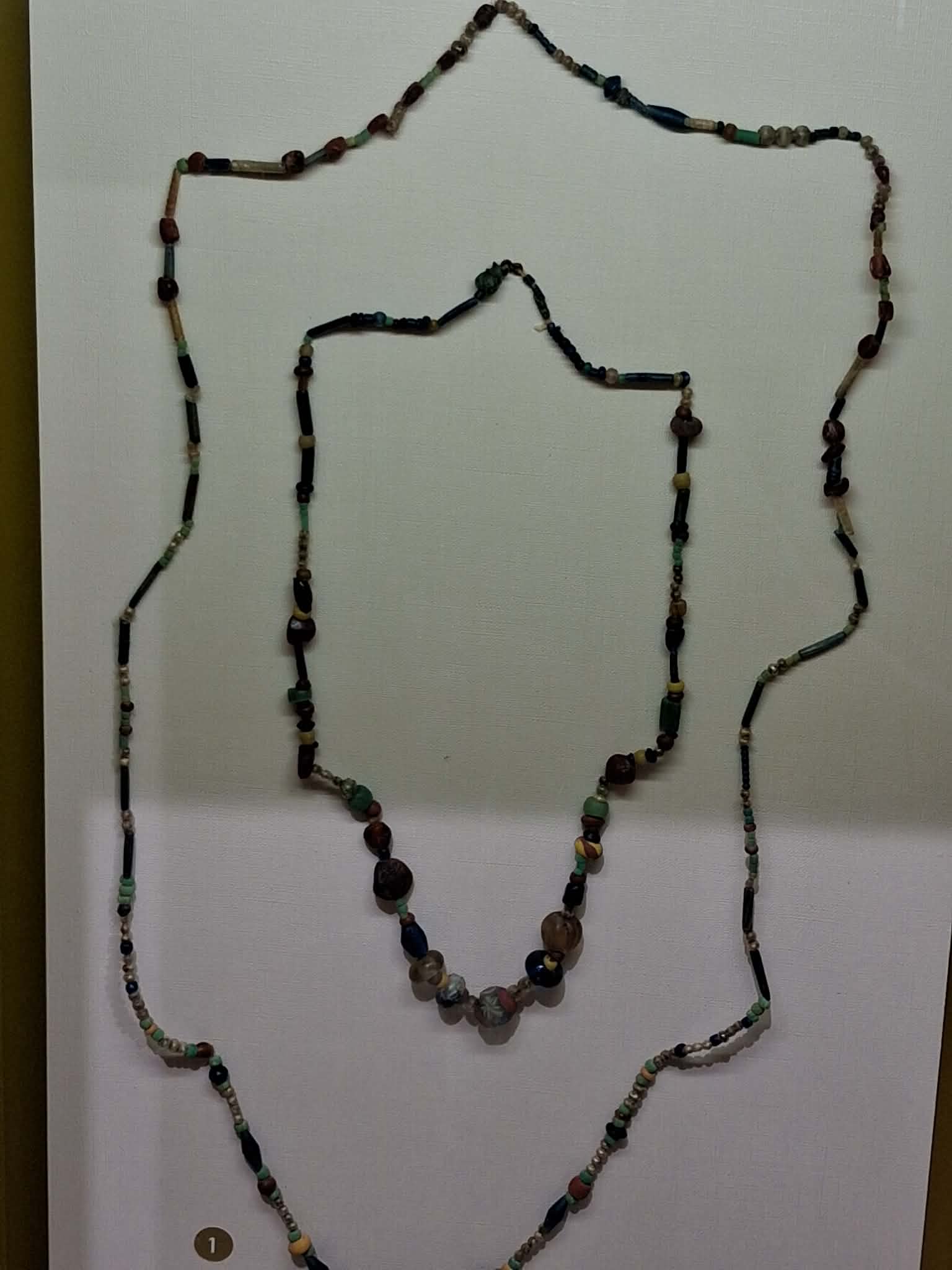
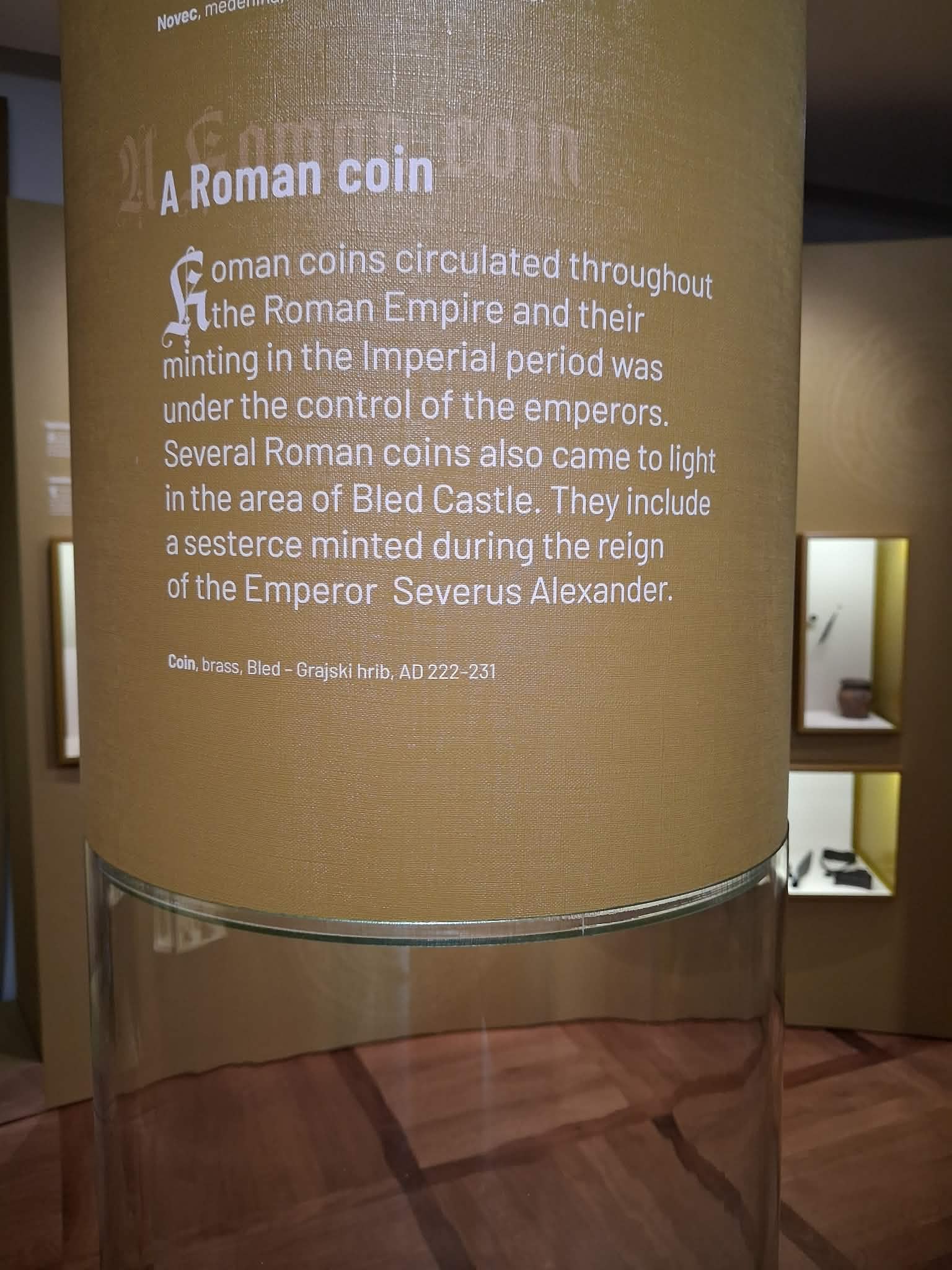
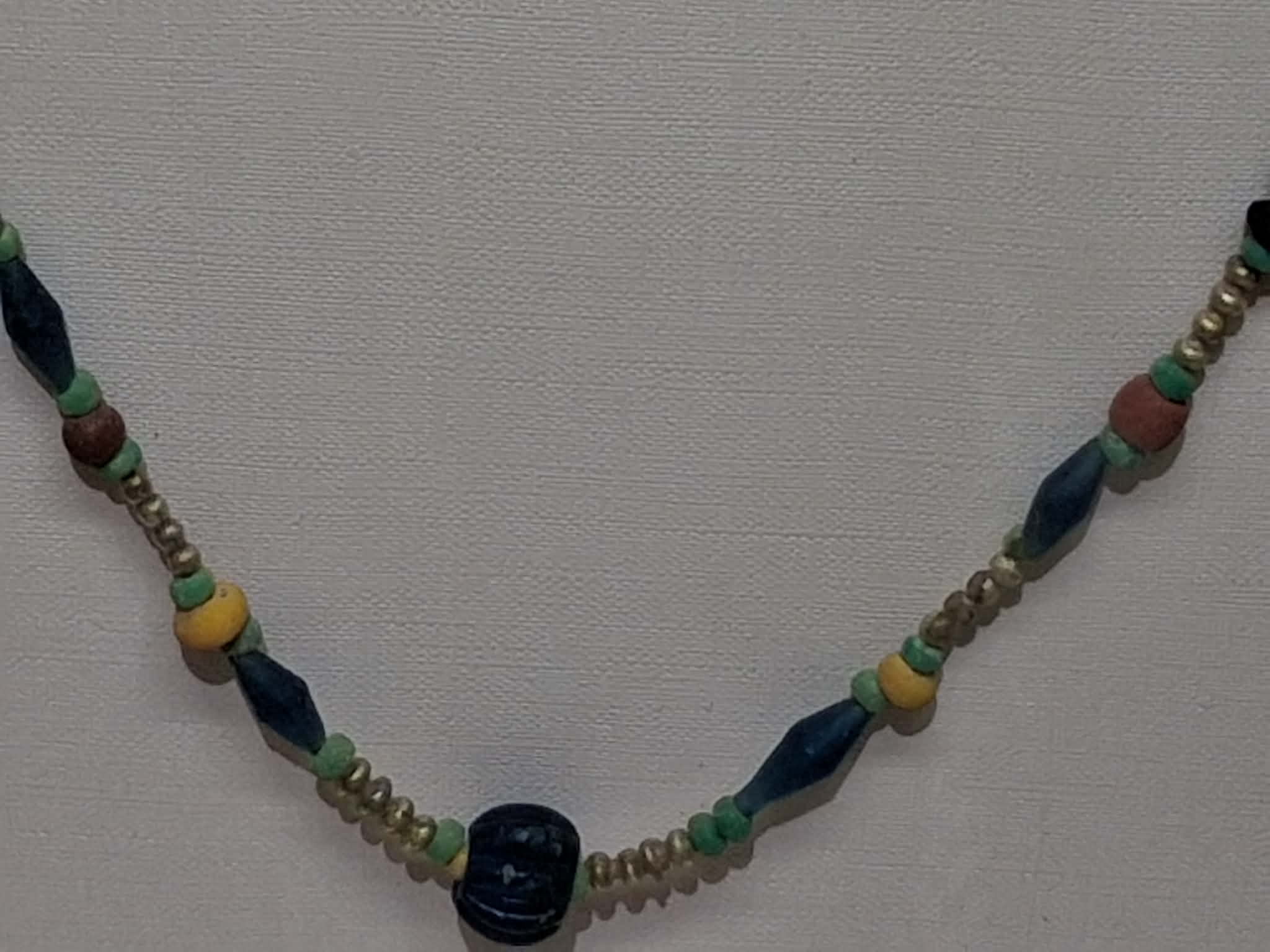
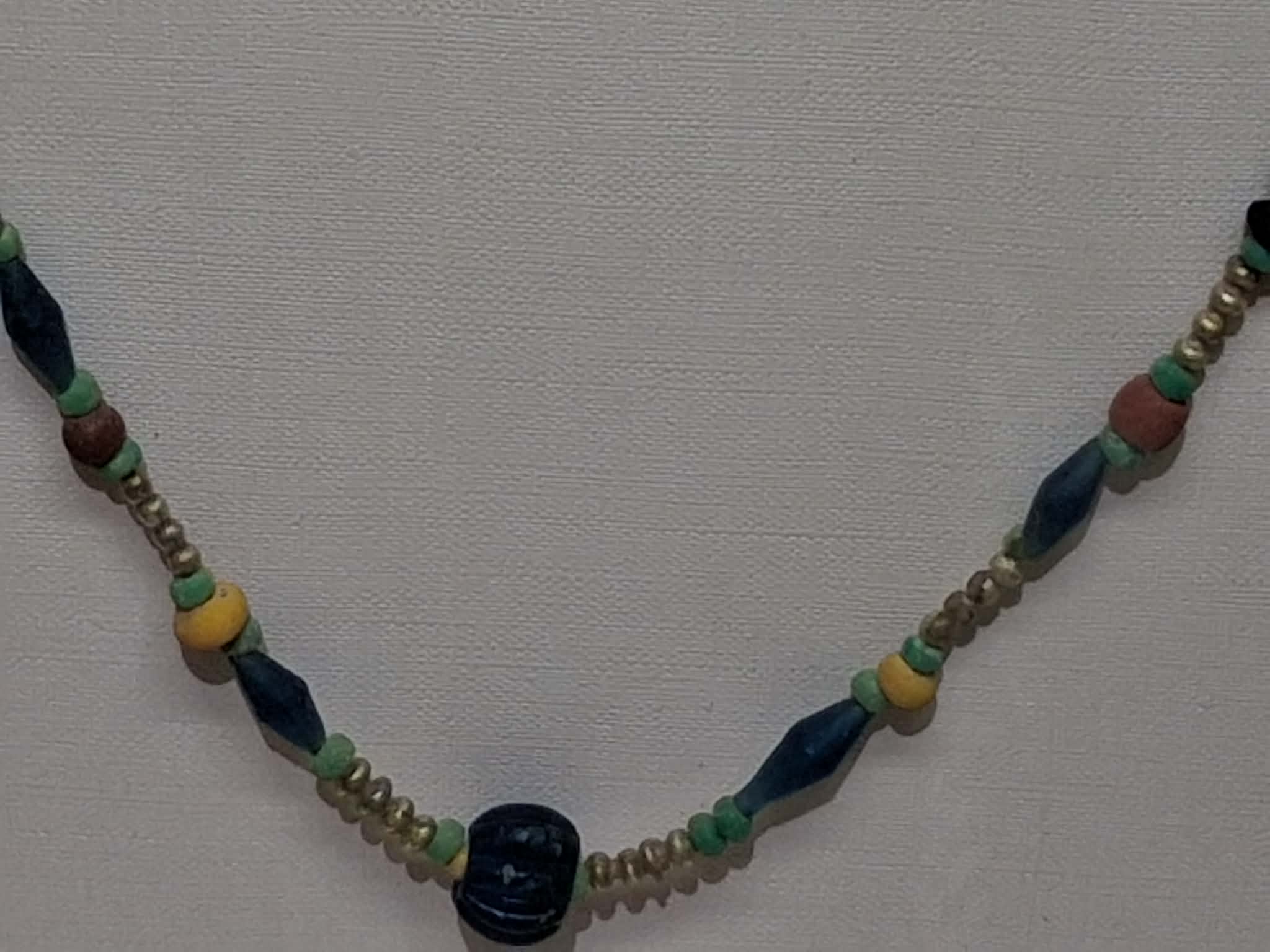
-Among the most intriguing objects in the Slavic section of the Bled Castle museum is a necklace made from Roman coins — a discovery that beautifully illustrates the meeting of two worlds: that of the newly settled Slavs in the region, and that of the ancient Roman presence still perceptible in the Alpine lands.
-This necklace, found in an early medieval Slavic burial, is composed of perforated Roman coins reused as decorative elements. For the Slavs of the Bled region, these coins were no longer economic instruments: they became amulets, symbols of prestige.
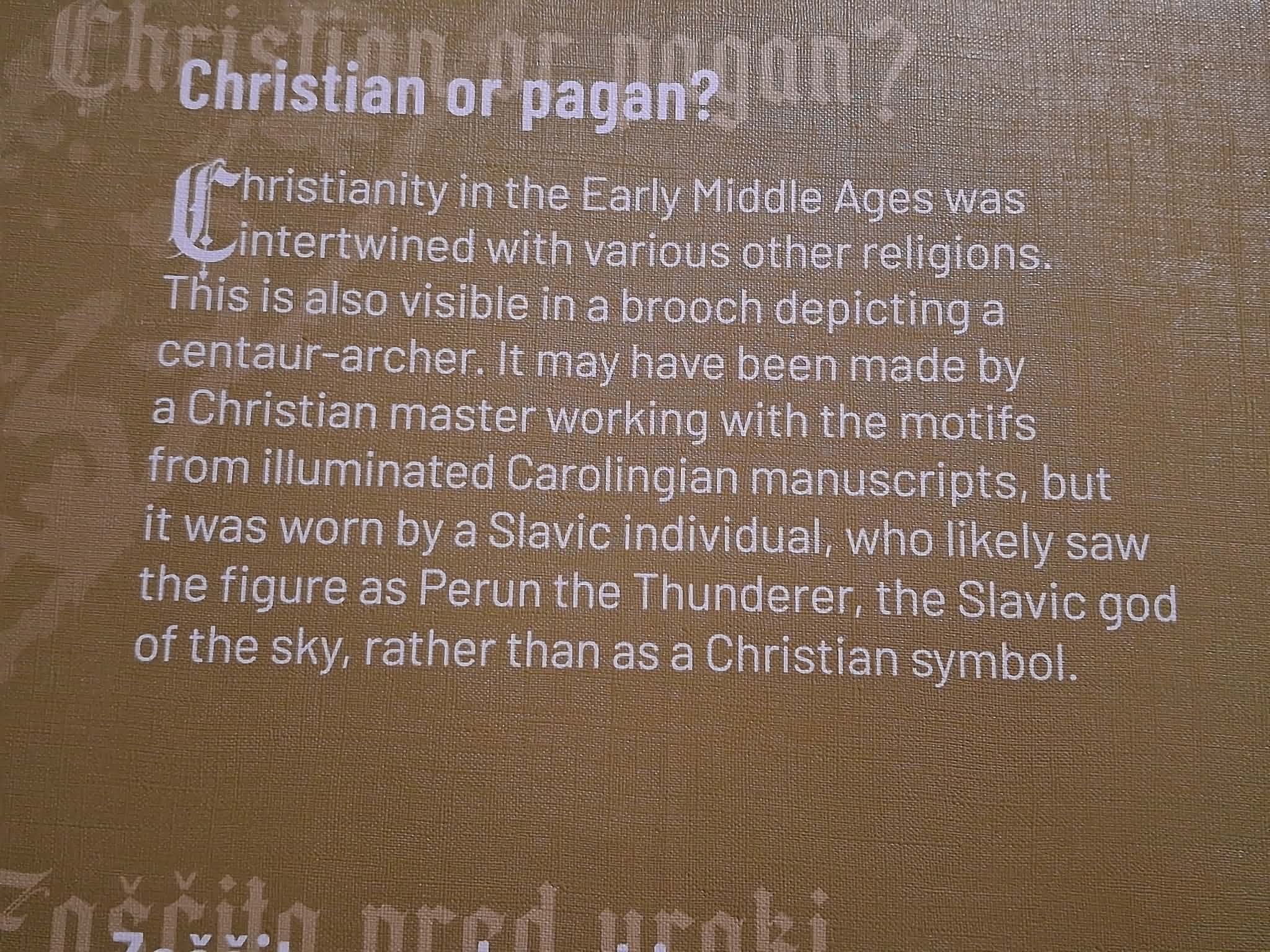
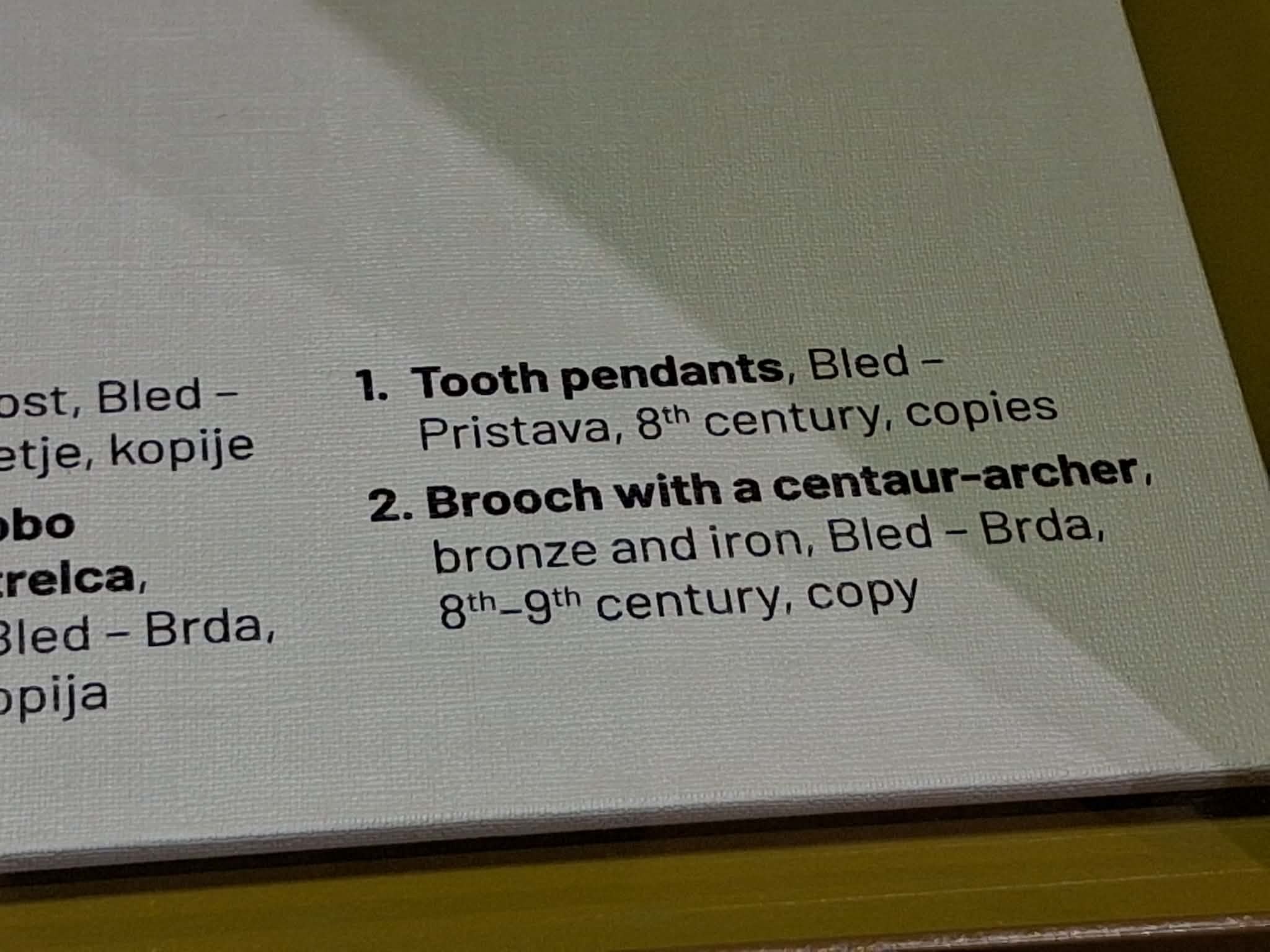
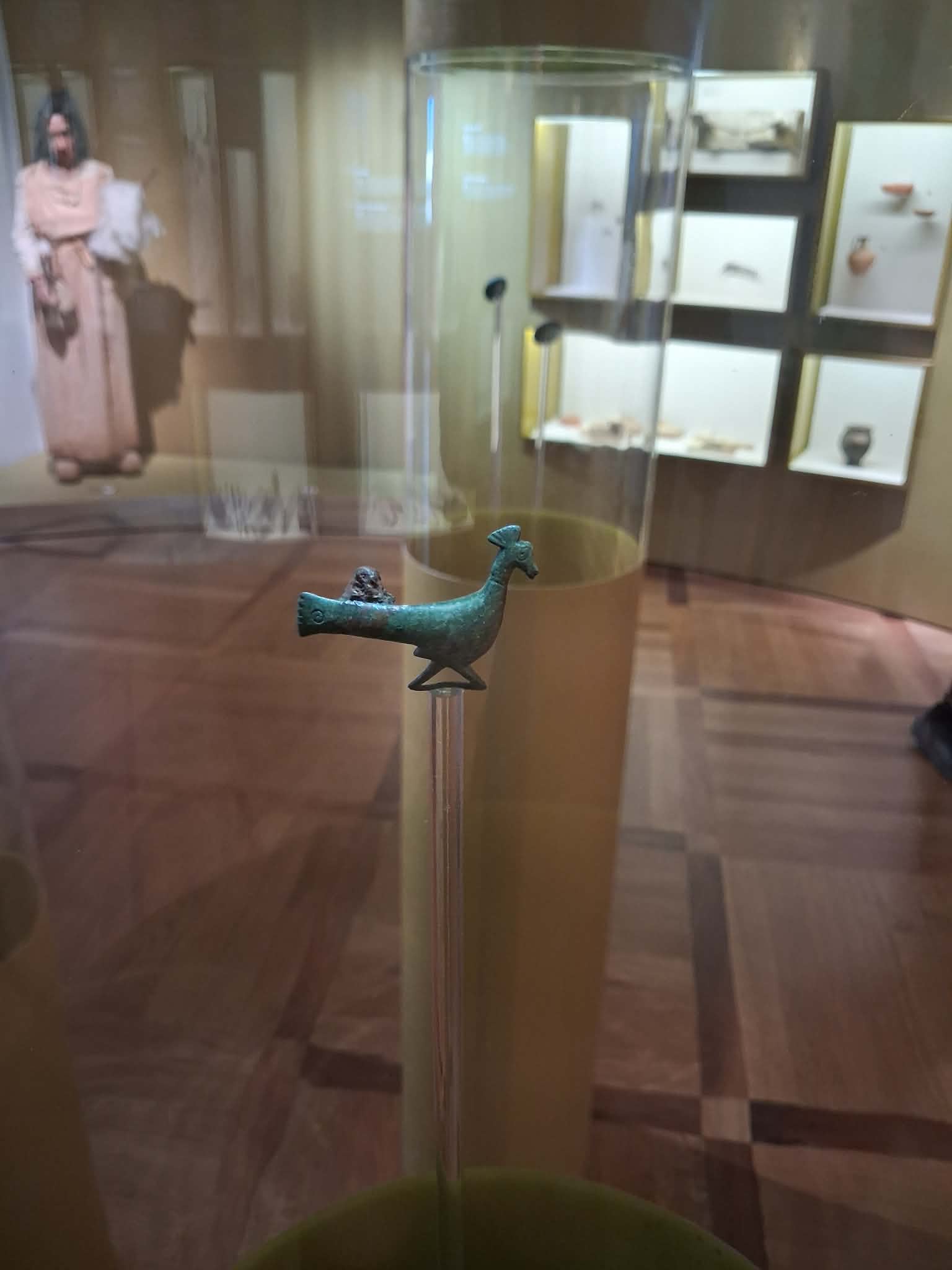
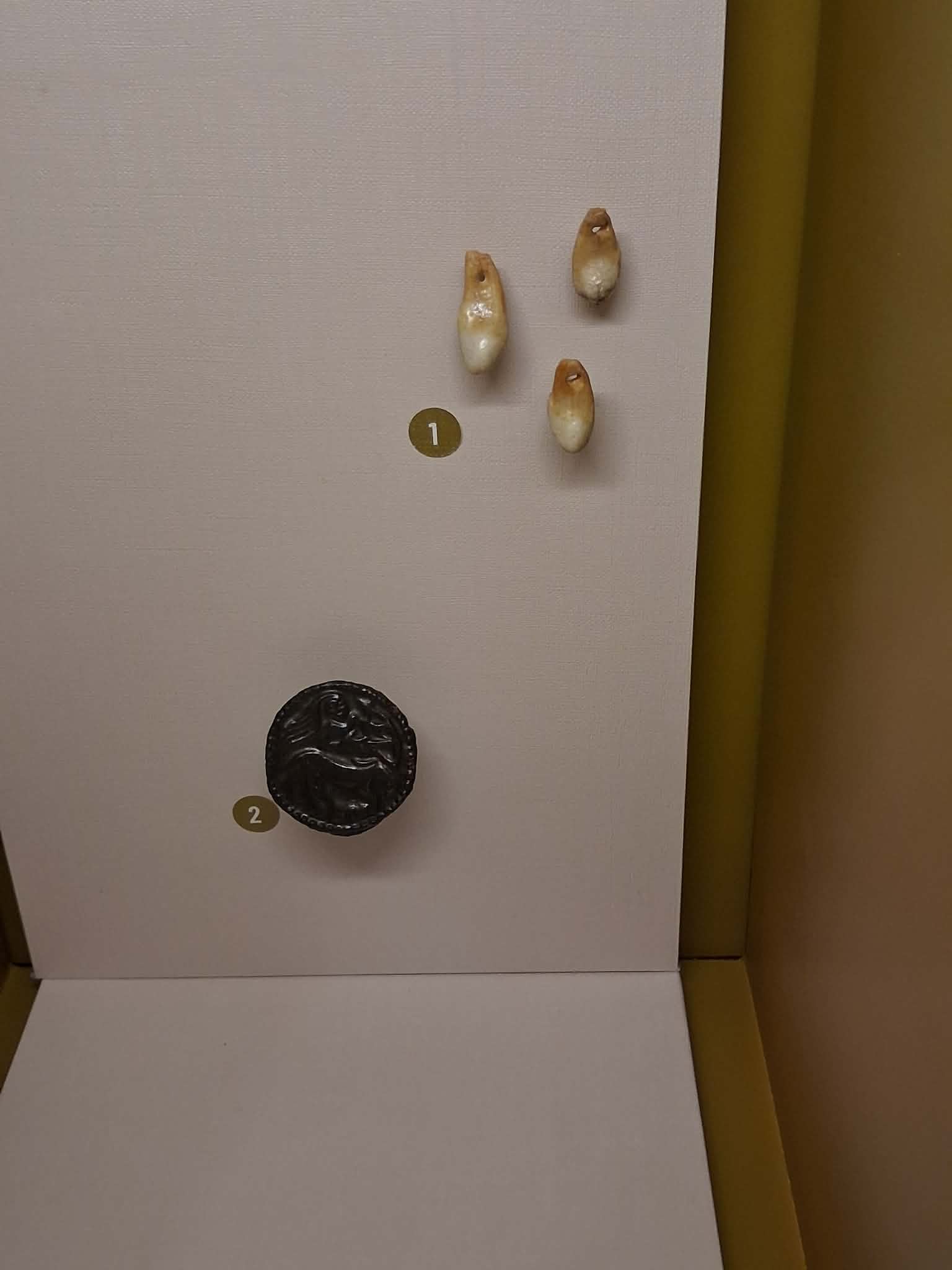
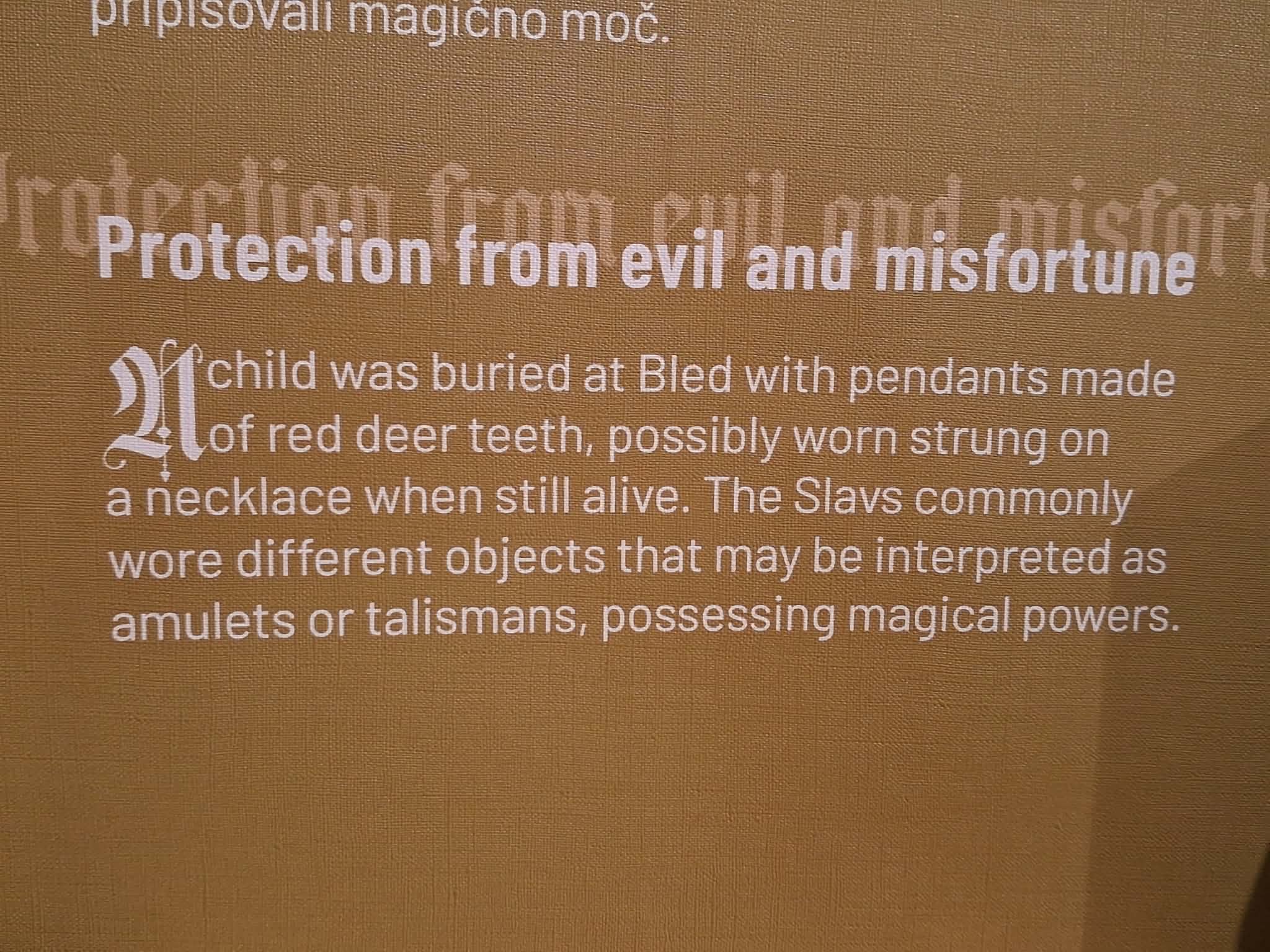
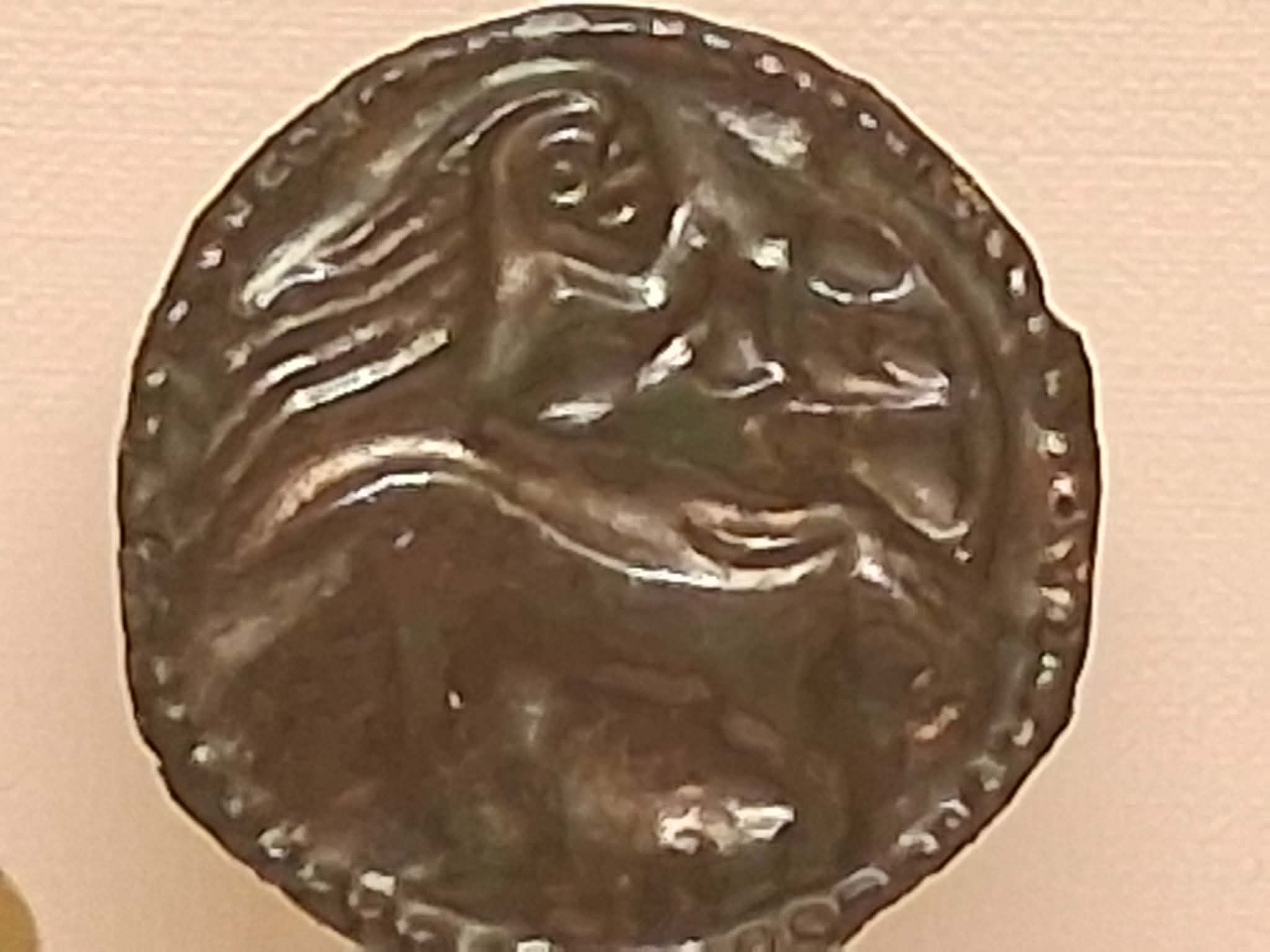
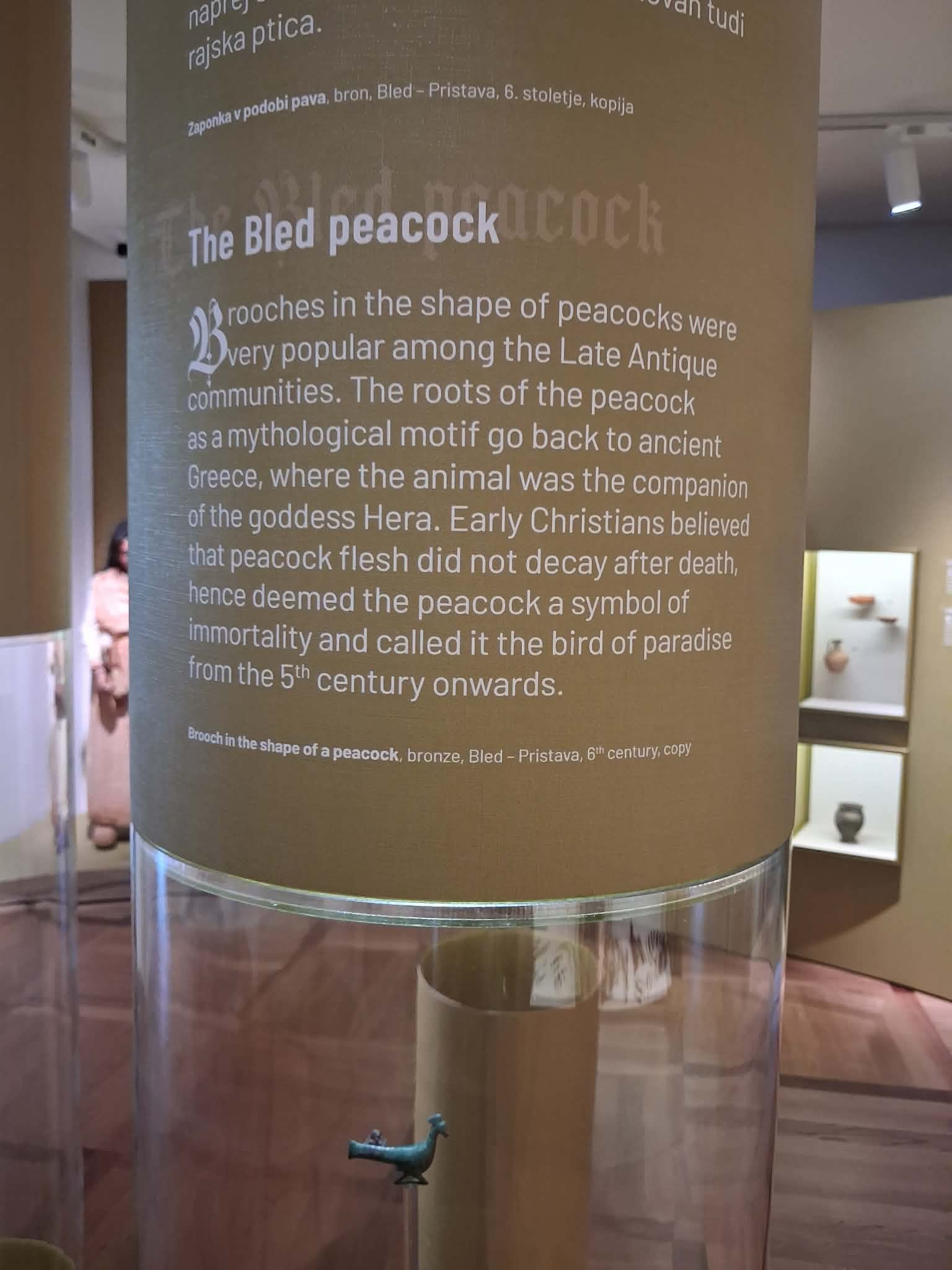
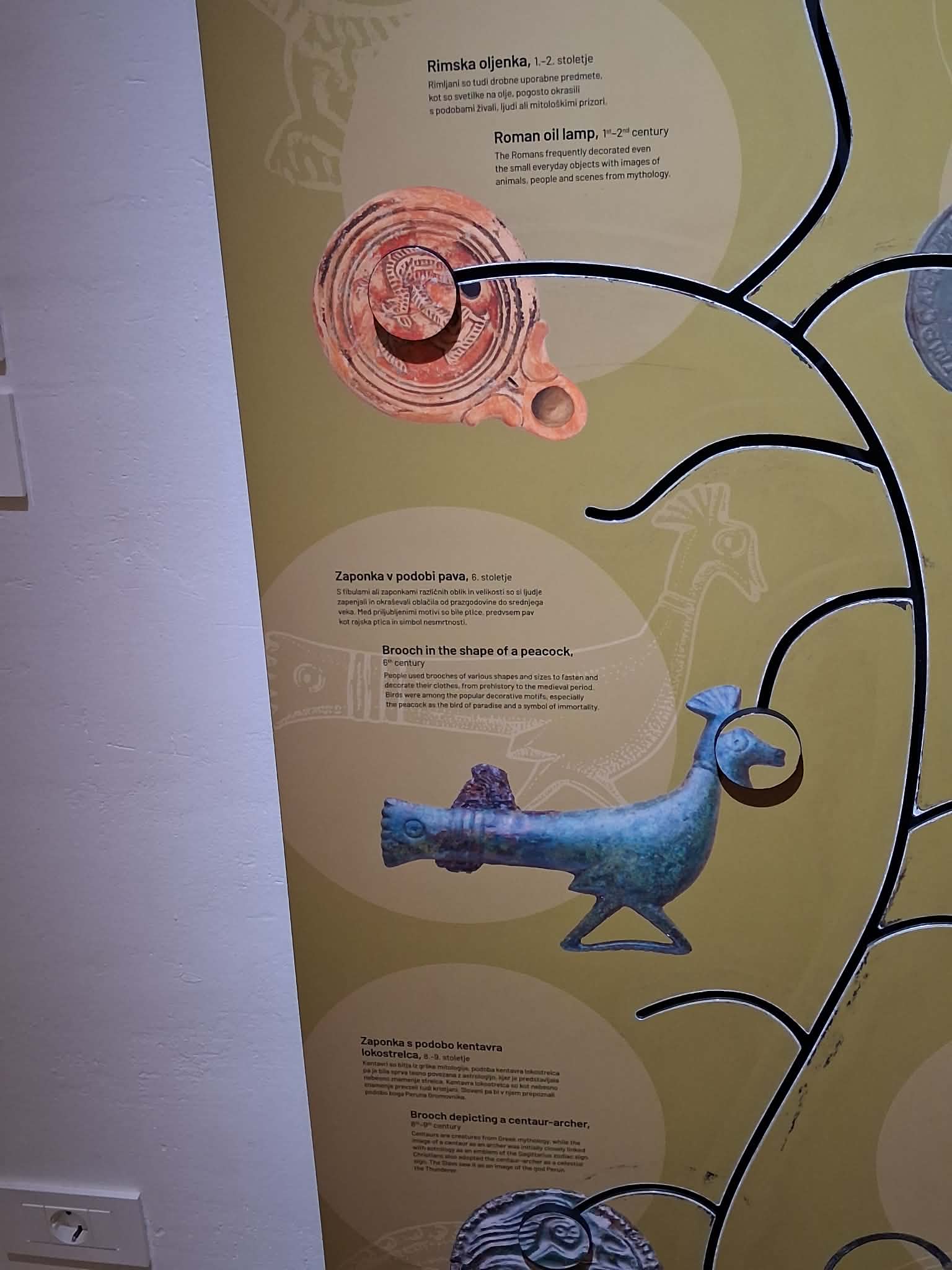
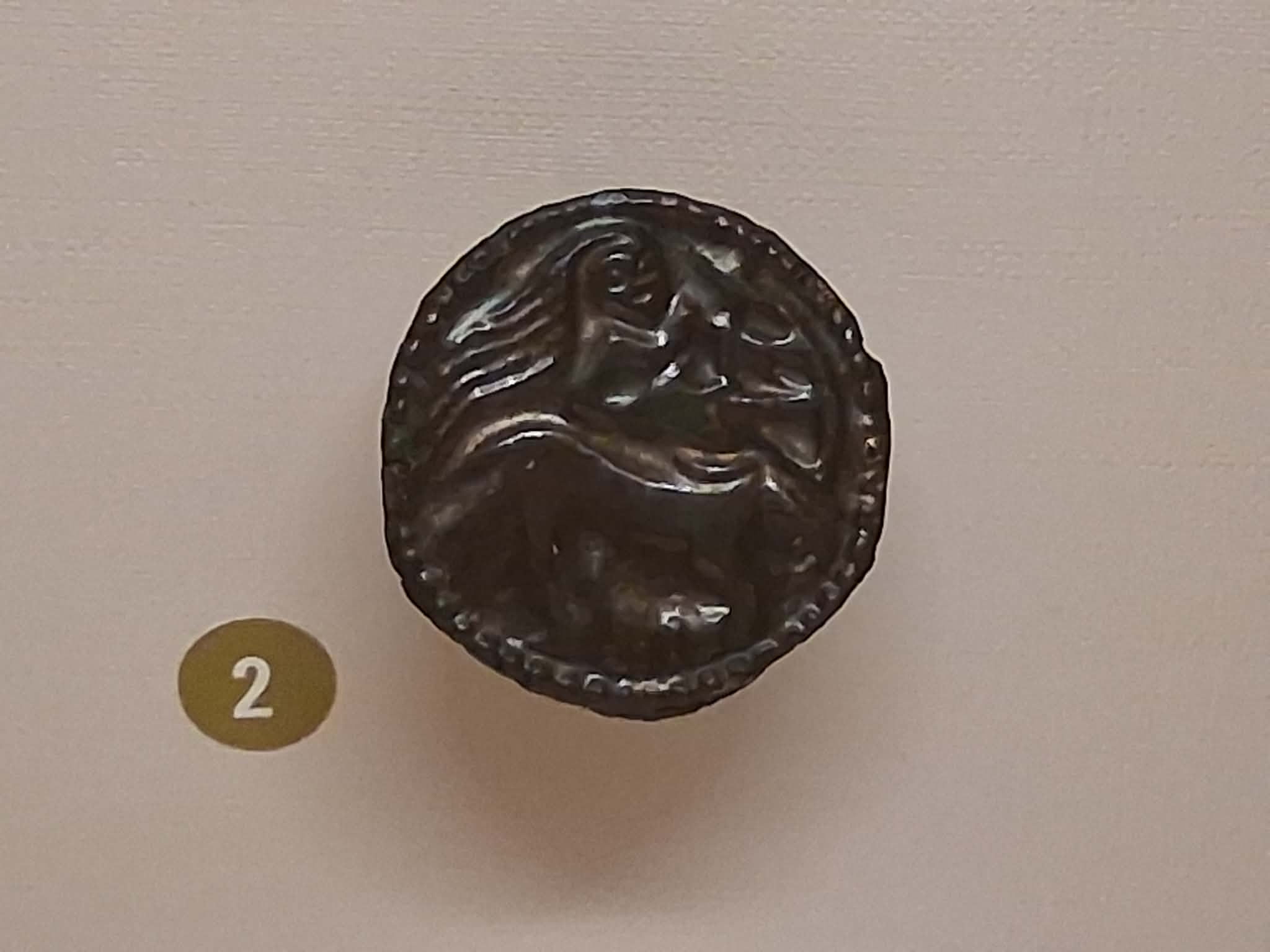
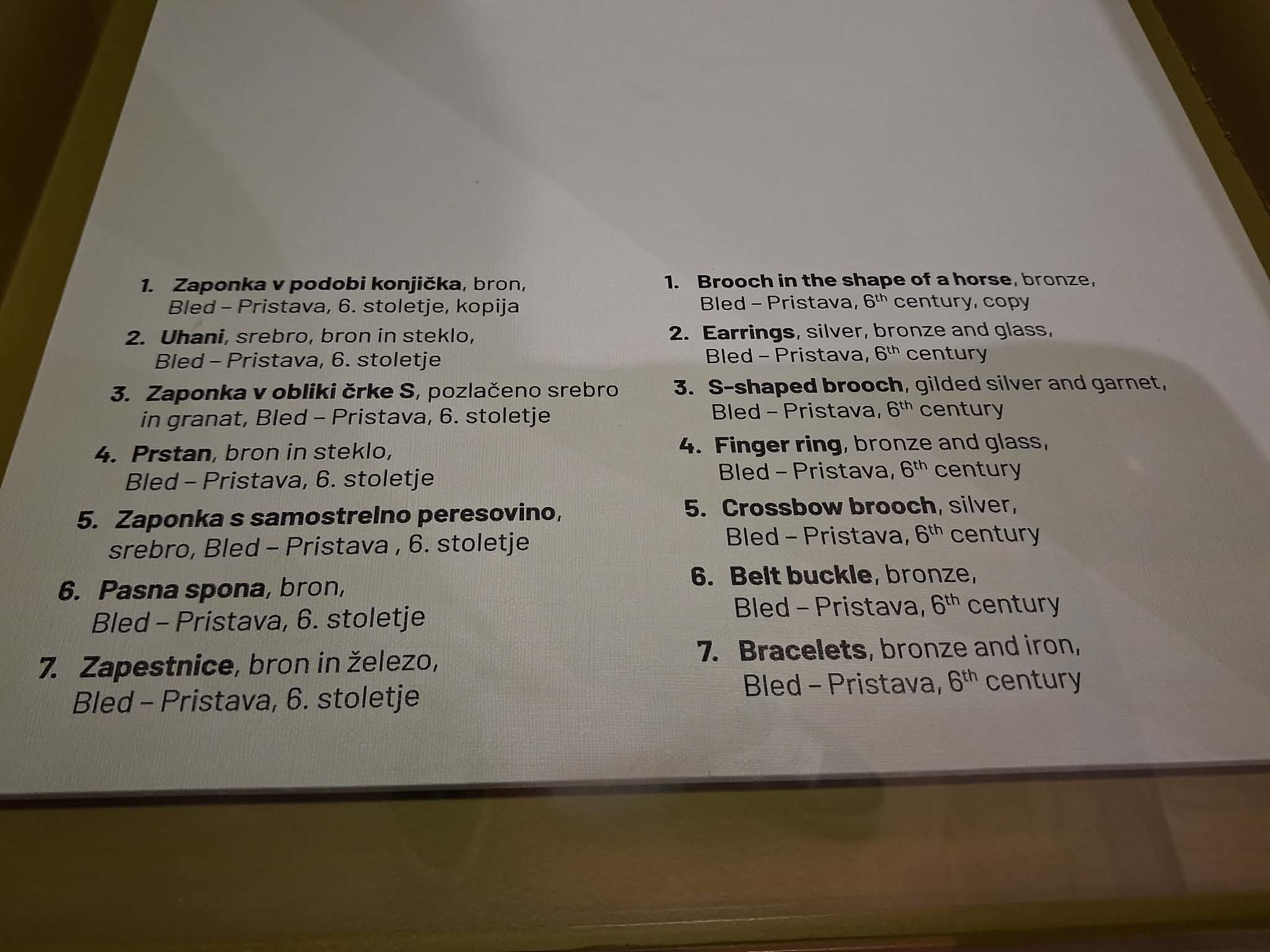
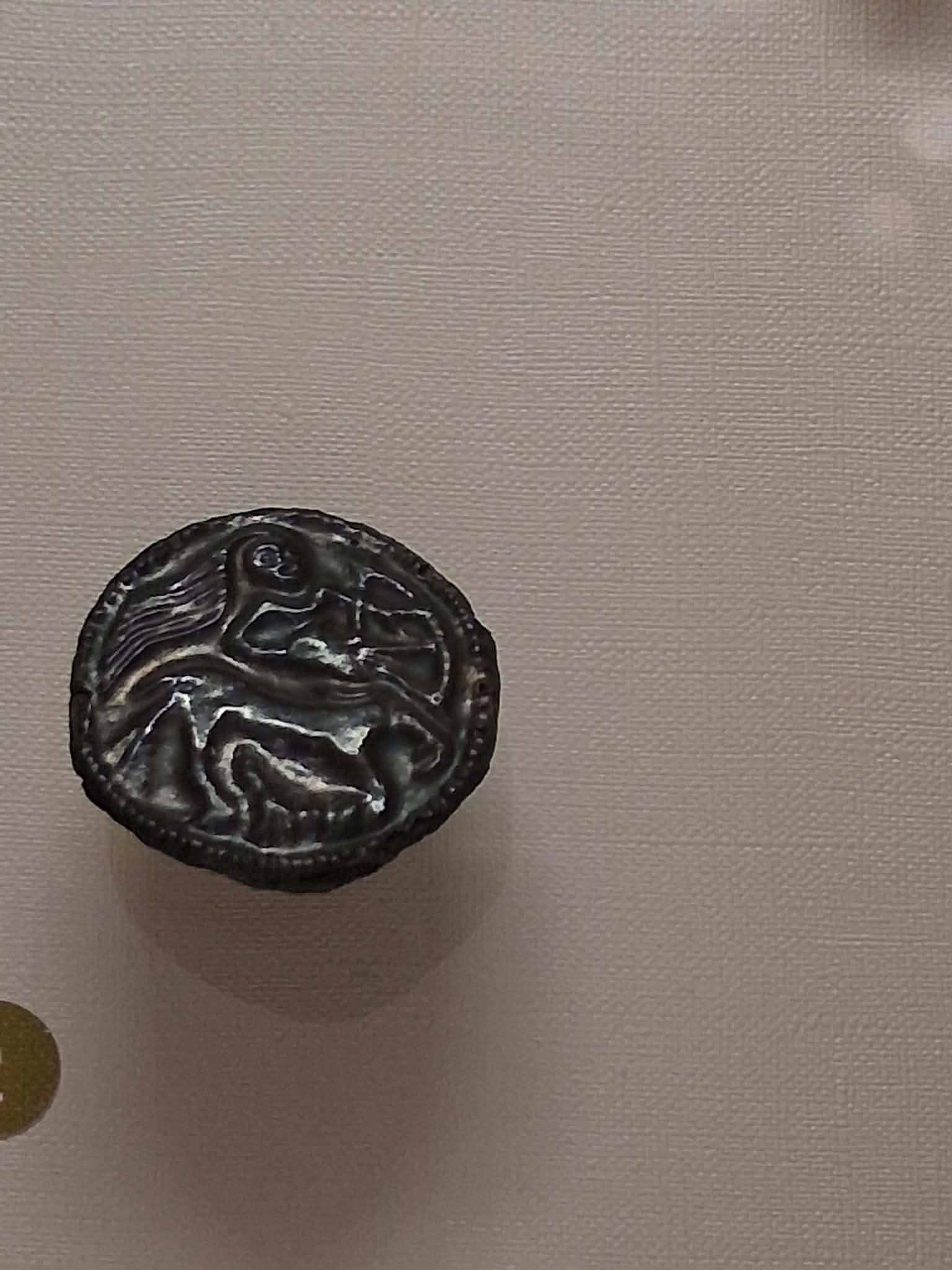
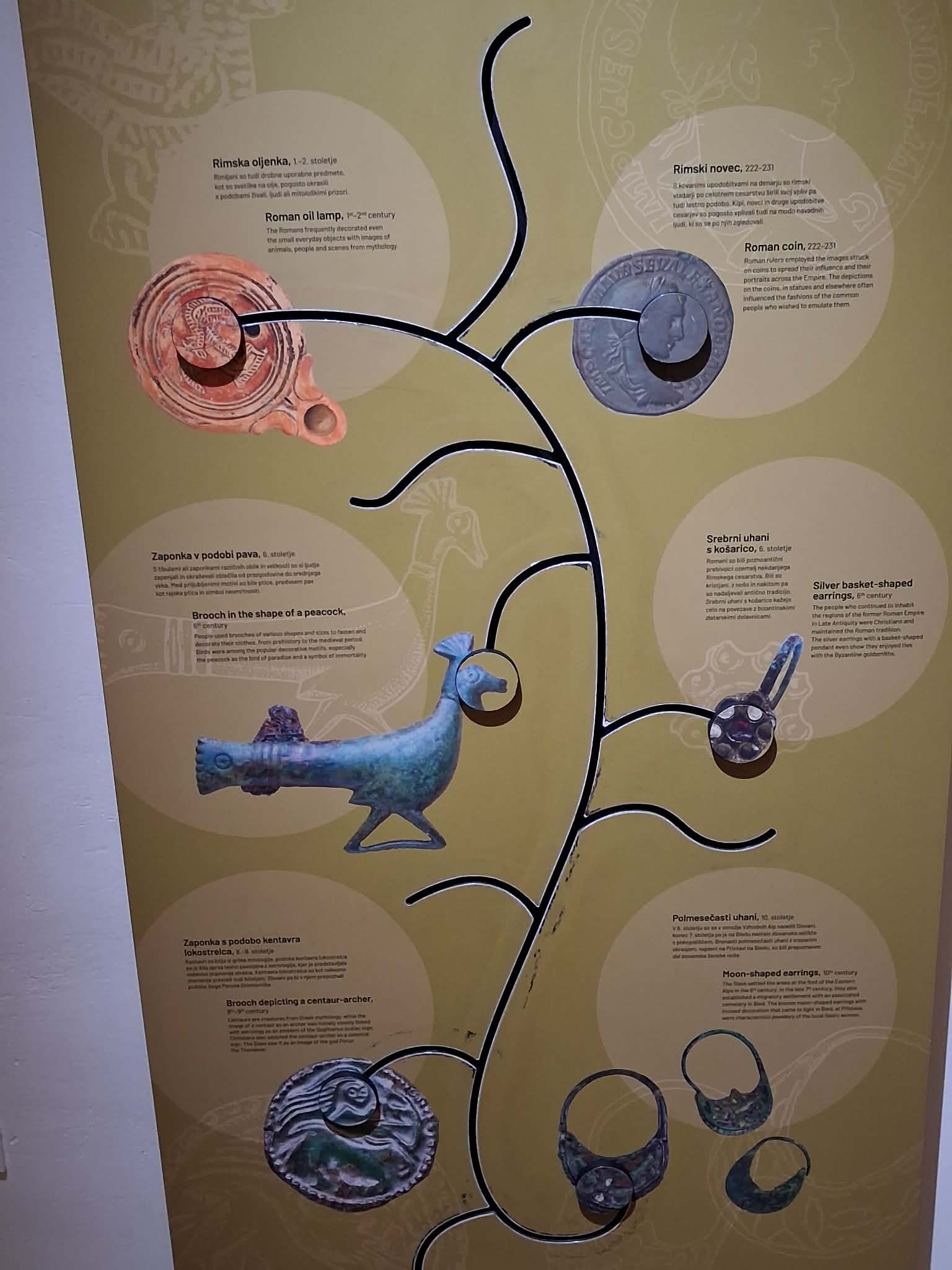
-There is also this magnificent and magical brooch (number 2)! In the early Middle Ages, Christianity was closely intertwined with various other religions. This is particularly evident in this fibula depicting a centaur archer. Although it may have been crafted by a Christian inspired by motifs from illuminated Carolingian manuscripts, it was worn by a Slavic individual who very likely saw in this figure not a Christian symbol, but Perun, the thunderer of the skies!
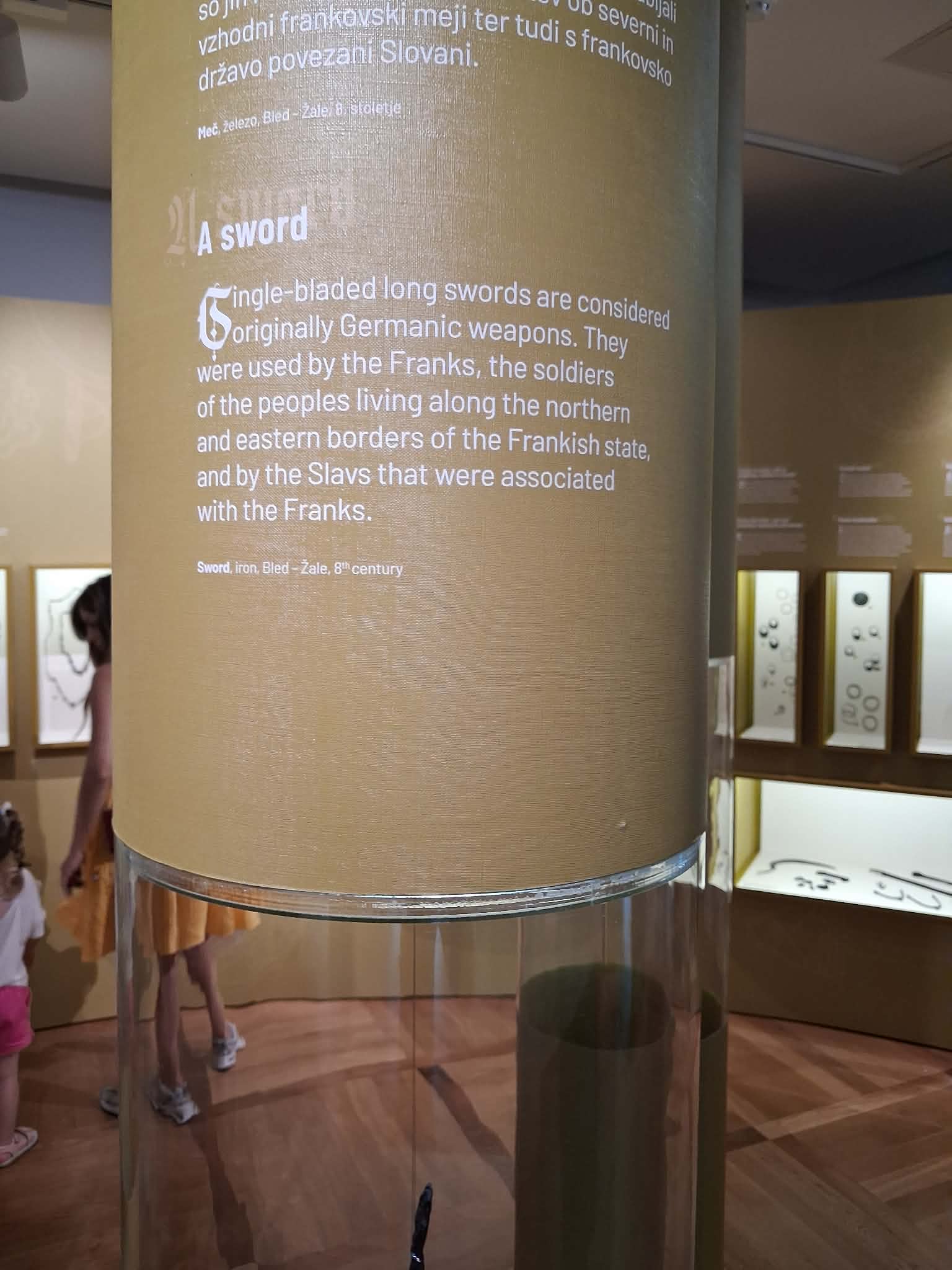
-The museum also shows how the region came under Frankish and then Germanic domination. An essential document is displayed: the copy of the 1011 donation act, in which Emperor Henry II granted Bled Castle to the Bishop of Brixen — a major turning point in local history, even though the Slovene people remained Slavic.
-Thus, the Slavic room is not isolated: it fits into a broader narrative that links the first Slavic inhabitants to the feudal evolution of the castle.
-The museum of Bled Castle is clearly a place where Slavic history comes alive! It is a modern space, renovated and enriched by the latest archaeological discoveries. It offers a rare immersion into the Slavic origins of Slovenia, showing how these peoples shaped the villages, rituals, objects, and cultural identity of the region.
-For anyone passionate about Slavic history, ancient paganism, and the mythology of Eastern peoples, this room is an essential stop!
-Slovenia is truly a fantastic country, proud of its roots, and Bled feels like a paradise on earth. This land reveals a new story: that of the mountain Slavs. And what a magnificent story it is!
Wieslaw J


Laisser un commentaire